Foam, Wraps, and Flammability
Choosing polyurethane foam by density (durability) and IFD (firmness) and support factor, cutting and gluing it, wrapping with batting, and what the federal smolder-resistance rule means for reupholstery.
- 4 min
- 5 steps
- 3 questions
- Lesson 154 of 160
In this lesson
- Reading a foam spec
- Cutting and gluing
- Wraps
- Flammability
- What to take from this
Picking up where you left off.
Reading a foam spec
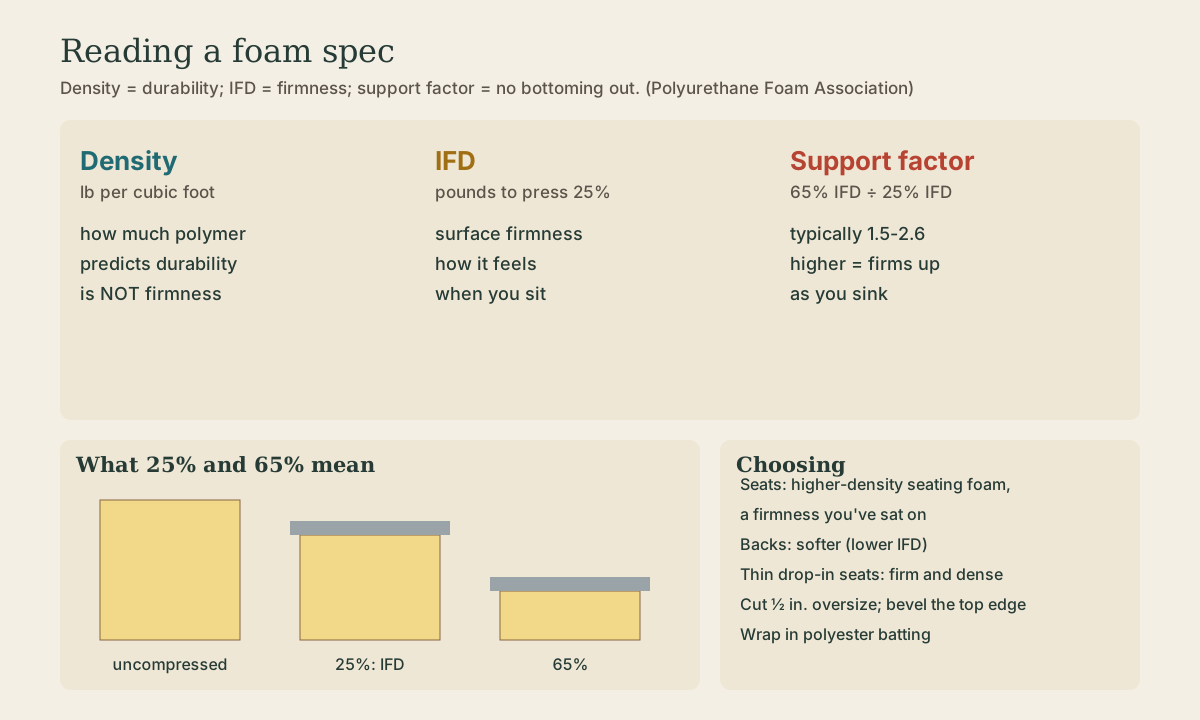
Polyurethane foam is the modern stuffing. Choosing it well means reading three numbers that the Polyurethane Foam Association distinguishes 1:
- Density (pounds per cubic foot, pcf): how much polymer is in the foam. It’s the main indicator of durability - higher-density foam keeps its properties longer. It is not firmness 1.
- IFD (indentation force deflection): the pounds of force needed to compress a sample by 25% of its height. This is firmness - how the surface feels 1.
- Support factor: the 65% IFD divided by the 25% IFD, typically 1.5 to 2.6. A higher support factor means the foam firms up as it compresses, so a sitter doesn’t bottom out 1.
A soft surface with a high support factor gives a seat that feels plush but still supports 1. A thin seat (a drop-in dining seat) needs firm, high-density foam; a soft thick-looking foam bottoms out on the board.
Practical guidance:
- Seats: the higher-density seating foams a supplier stocks, at a firmness you’ve actually sat on.
- Backs: softer (lower IFD).
- High-resilience (HR) foam: high support factor and durability for premium cushions.
- Buy from a supplier who gives density and IFD numbers, and record them for next time.
Quick check
Density (pounds per cubic foot) predicts how well foam holds up; firmness is measured separately as IFD.
Quick check
Higher IFD feels firmer. Support factor is the ratio of 65% IFD to 25% IFD; higher means less bottoming out.
Cutting and gluing
- Cut foam with a long serrated knife or, better, an electric carving knife, held vertical; mark lines with a marker and a straightedge.
- Cut cushion foam slightly oversize (about 1/2 inch in width and depth) so it fills the cover crisply.
- Bevel the top edge of seat foam slightly so the cover rolls over without a hard ridge.
- Glue foam to a board or to itself with spray adhesive made for foam, following its ventilation requirements.
Wraps
Wrap foam with polyester batting (Dacron) before covering:
- It softens edges and fills the cover so it looks full.
- It lets the cover slide on during fitting.
- For cushions, wrap and lightly glue the batting, sometimes in a stockinette sleeve, to ease the foam into the cover.
On traditional seats over hair, cotton batting serves the same purpose (see Burlap, Edge Rolls, and Stuffing).
Flammability
Upholstered furniture fires, often started by cigarettes, have killed many people. The U.S. rule today is 16 CFR 1640, which made California’s TB 117-2013 smolder-resistance test a federal standard 2:
- It covers cover fabrics, barrier materials, resilient fillings, and decking materials 2.
- It took effect June 25, 2021; the permanent label, “Complies with U.S. CPSC requirements for upholstered furniture flammability,” became required June 25, 2022 3.
- It applies to furniture reupholstered for sale. Reupholstery for personal use is exempt 3.
TB 117-2013 is a smolder test, met with smolder-resistant fabrics or barrier layers rather than added flame-retardant chemicals. If you ever sell reupholstered work, use compliant materials and label it; for your own pieces, choosing smolder-resistant fabrics and barriers is still sensible.
Quick check
Since June 25, 2021, furniture (including reupholstery) sold in the U.S. must meet TB 117-2013 smolder resistance; reupholstery for personal use is exempt.
What to take from this
Foam density predicts durability, IFD measures firmness, and support factor (65%/25% IFD) predicts bottoming out. Use firm, high-density foam on seats, cut oversize with an electric knife, bevel edges, and wrap in polyester batting. Upholstered furniture sold in the U.S. must meet 16 CFR 1640 (TB 117-2013 smolder resistance) with a permanent label; reupholstery for personal use is exempt.
Lesson complete
Nice work.
Sources for this lesson
- 1Foam Performance. Polyurethane Foam Association. verifiedTechnical trade guidance distinguishing polymer density, firmness or IFD, support factor, flex fatigue, strength, resilience, and durability.
- 216 CFR Part 1640 - Safety Standard for Upholstered Furniture. Legal Information Institute. verifiedIncorporates TB 117-2013 smolder-resistance tests for cover fabrics, barrier materials, resilient fillings, and decking materials.
- 3Upholstered Furniture (Flammability) FAQ. U.S. Consumer Product Safety Commission. verifiedFederal rule adopting California TB 117-2013 smolder resistance, effective June 25, 2021, label required from June 25, 2022; applies to reupholstery for sale, not reupholstery for personal use.