Dust Collection and Respiratory Protection
Wood dust is a known human carcinogen, and the fine dust you can't see does the damage. Collect at the source, filter what escapes, and wear a real respirator for sanding and machining.
- 4 min
- 7 steps
- 3 questions
- Lesson 36 of 160
In this lesson
- Why dust matters
- Control it in order
- Dust collectors and shop vacuums
- Respirators
- Other hazards to protect against
- At the bench
- What to take from this
Picking up where you left off.
Why dust matters
The International Agency for Research on Cancer classifies wood dust as carcinogenic to humans (Group 1), with adenocarcinoma of the nasal cavity and sinuses clearly associated with hardwood dust 1. Wood dust also causes asthma, chronic bronchitis, and allergic reactions, and some species (western red cedar, many tropical woods) are strong sensitizers.
The danger is the fine dust: particles smaller than about 10 microns that you can barely see, which stay airborne for hours and reach deep into the lungs. Big chips and shavings fall to the floor. Sanding, routing, and table saw cuts produce the most fine dust; hand planes and chisels make almost none, one of the quieter benefits of hand-tool work.
Quick check
IARC’s 1995 monograph found sinonasal adenocarcinoma clearly associated with hardwood dust exposure.
Quick check
Fine dust from sanding and machining hangs in the air for hours. Hand-plane shavings are essentially dust-free.
Control it in order
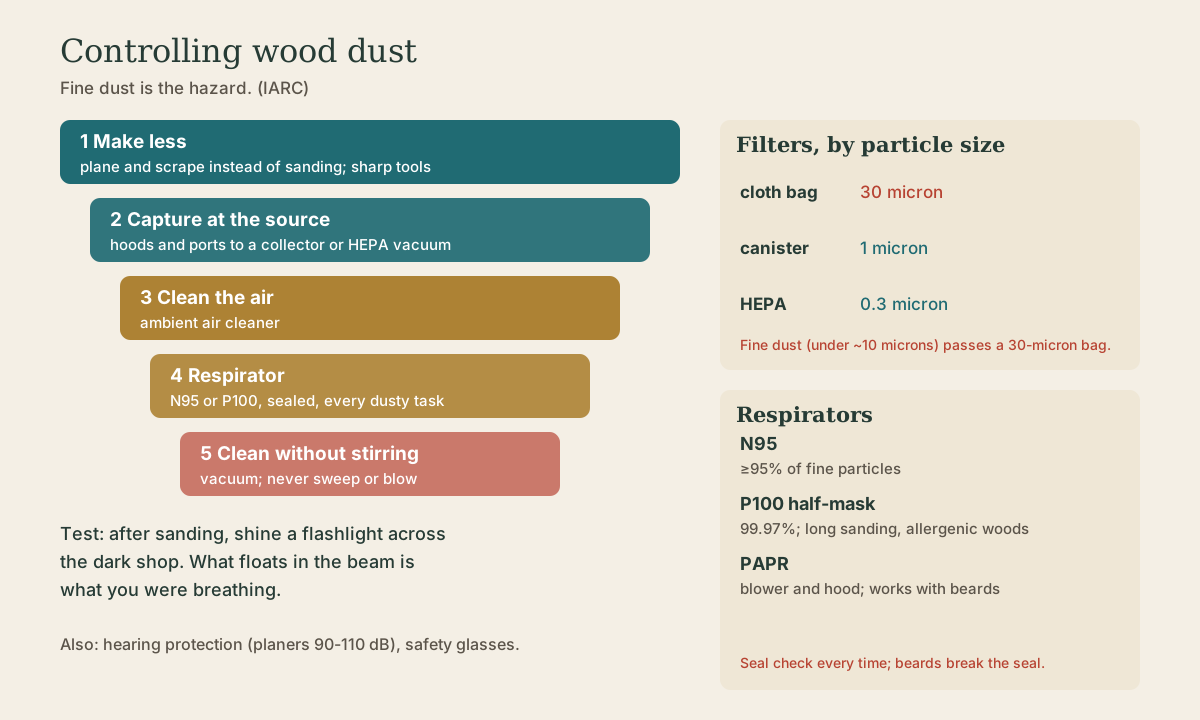
The same hierarchy industrial hygienists use applies in a home shop:
- Make less dust: plane and scrape instead of sanding where you can; use sharp tools.
- Capture at the source: hoods and ports at each machine, connected to a collector.
- Clean the air: an ambient air cleaner filters what escapes.
- Protect yourself: a respirator for dusty tasks.
- Clean without stirring it up: vacuum with a fine filter instead of sweeping or blowing with compressed air.
Dust collectors and shop vacuums
- Shop vacuums (high suction, low airflow) suit small ports: sanders, routers, track saws. Use a fine (HEPA) filter and a cyclone separator ahead of it to save the filter.
- Dust collectors (high airflow, low suction) suit large machines: table saw, jointer, planer, bandsaw.
- Filters matter most: a single-stage collector with a cloth bag rated at 30 microns blows fine dust right back into the room. Look for a canister filter rated around 1 micron or finer, or HEPA.
- Cyclones separate chips before the filter, keeping airflow high.
- Keep duct runs short, use smooth pipe with few sharp bends, and size ducts to the machine’s port.
Respirators
Dust collection never catches everything, so wear a respirator for sanding, machining, and cleanup:
- N95 filtering facepiece: filters at least 95% of fine particles; good for most woodworking.
- P100 half-mask with cartridges: filters 99.97%; better for long sanding sessions and allergenic woods; reusable.
- Powered air-purifying respirators (PAPRs) blow filtered air into a hood or face shield; comfortable with beards and glasses.
Fit is everything. A respirator only works if it seals; facial hair under the seal defeats it. Do a seal check each time you put it on: cover the filters and inhale (it should pull in) and exhale (no leaks at the edges). Loose single-strap “nuisance dust” masks don’t seal and don’t protect.
Quick check
N95 and P100 respirators filter at least 95% and 99.97% of fine particles - if they seal to your face.
Other hazards to protect against
- Hearing: planers, routers, and table saws run 90 to 110 decibels. Wear earplugs or muffs.
- Eyes: safety glasses for every machine and for chopping and hammering.
- Finishes: solvent vapors need ventilation or an organic-vapor cartridge (covered in Finishing Safety).
At the bench
Turn off the lights, shine a bright flashlight across the shop air after sanding, and look at what’s floating in the beam. That’s what you were breathing. Then fix the biggest source first, which is usually the sander.
What to take from this
Wood dust is a Group 1 carcinogen linked to nasal and sinus cancer, and the invisible fine dust is the hazard. Make less of it (planes and scrapers), capture it at the machine with a collector filtering to about 1 micron, clean the air, vacuum instead of sweeping, and wear a sealed N95 or P100 respirator for dusty work, plus hearing and eye protection.
Lesson complete
Nice work.
Sources for this lesson
- 1Wood Dust (IARC Monographs Volume 62). International Agency for Research on Cancer (via IPCS INCHEM). 1995. verifiedWood dust is carcinogenic to humans (Group 1); adenocarcinoma of the nasal cavities and paranasal sinuses is clearly associated with hardwood dust exposure.