Mouldings with Hollows and Rounds
Making any moulding profile with a few wooden planes: what hollows and rounds are, why rabbets and chamfers come first, the unfenced rabbet plane technique, working backward from a drawn profile, and the sticking board.
- 5 min
- 7 steps
- 3 questions
- Lesson 58 of 160
In this lesson
- Hollows and rounds
- Rabbets and chamfers first
- The simple rabbet plane
- Working the profile
- Buying and tuning
- Try it
- What to take from this
Picking up where you left off.
Hollows and rounds
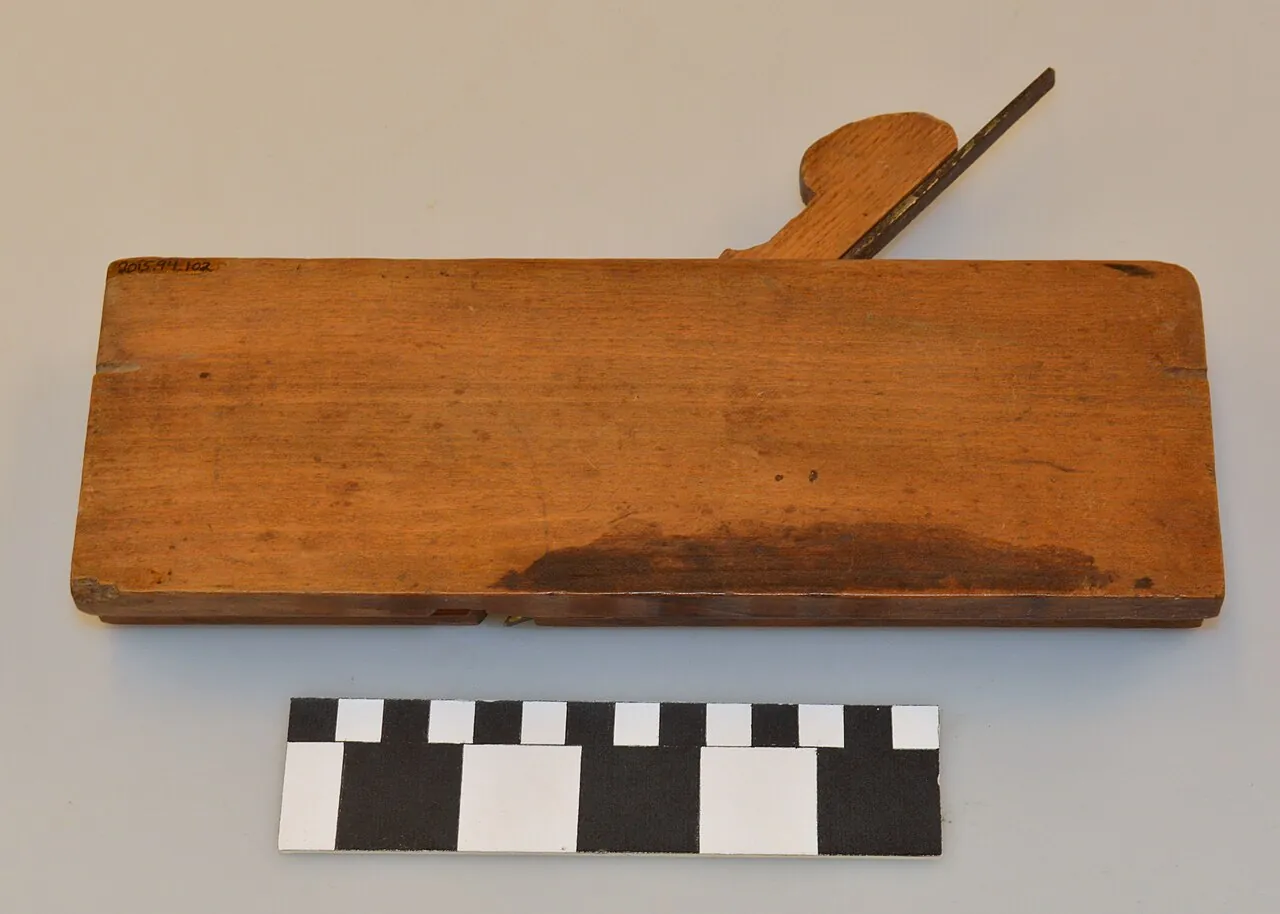
Before routers and shapers, mouldings were cut with wooden moulding planes. Some were fixed-profile planes, one plane per shape: a beading plane, an ogee, an ovolo. More versatile were hollows and rounds, sold in matched pairs of different radii:

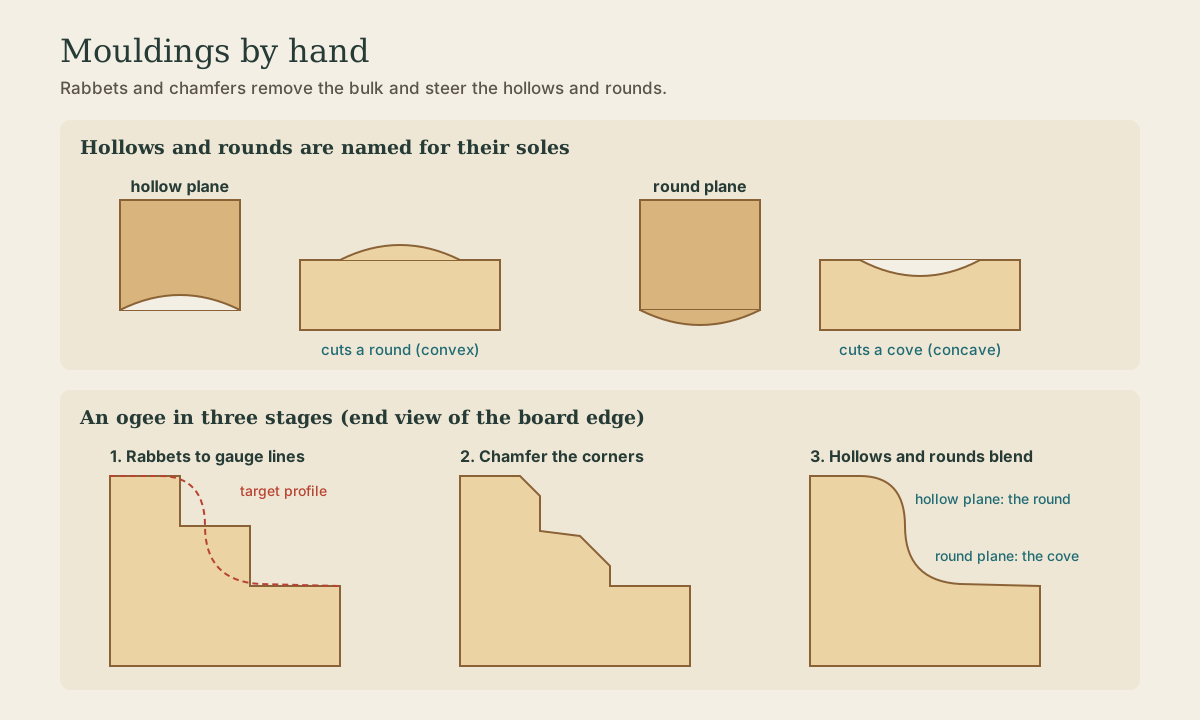
- A hollow has a concave sole and cuts a convex shape, a round.
- A round has a convex sole and cuts a concave shape, a cove.
With a few pairs and a rabbet plane, you can make nearly any profile. A 1633 Plymouth carpenter’s inventory lists “1 halferound plaine” 1.
Quick check
Planes are named for their soles; a round plane cuts a cove.
Rabbets and chamfers first
Hollows and rounds have no fences and no depth stops, and their curved irons are fiddly to sharpen. Matt Bickford’s answer in Mouldings in Practice is to break every moulding into a series of rabbets and chamfers first 2. The rabbets:
- create chutes the hollows and rounds ride in,
- act as gauges showing how far to go, and
- remove most of the waste with a flat iron that’s easy to sharpen and guide 2.
Then the hollows and rounds only have to blend the facets into curves.
Quick check
The rabbets act as chutes and gauges, and the simple rabbet iron is easy to sharpen.
The simple rabbet plane
Bickford uses a wooden rabbet plane with no fence and no depth stop, about 7/8 in. wide, because most profiles need several rabbets of different sizes, and a fence and stop would have to be reset for each 2. A rabbet plane can cut any width narrower than itself; a 1/16-in. rabbet is easy with a 7/8-in. plane 2.
His technique 2:
- Gauge the rabbet’s width and depth on the face, edge, and both ends.
- Tilt the plane toward 45 degrees with its corner in the face gauge line, fingers under the sole as a fence, and take two passes to make a small V.
- Stand it upright in the V and plane down, keeping it vertical (a full-width shaving tells you it’s square), until the last shaving takes off the depth gauge line.
- Clean the wall: lay the plane on its side to square up the vertical fillet if you wandered.
Chamfers go on with the same plane, angled and guided by your fingers, judged by eye against the surrounding facets 2.
Quick check
A 7/8-in. rabbet plane can cut a rabbet of any width narrower than itself.
Working the profile
- Draw the profile full size on the end of the board.
- Work backward: decide which rabbets remove the most waste without cutting into the final curves, then which chamfers bring each corner close to the curve 2.
- Cut rabbets, then chamfers.
- Hollows and rounds: choose a plane whose radius fits each curve, set it in the chute formed by the facets, and plane until the facets disappear into a smooth curve.
- Clean up with a scraper shaped to the profile, if needed.
Work moulding on a sticking board: a long board with a stop at one end and a fence or a few nails along one side to hold the stock while you plane, so the bench needs no vise.
Playback is optional. If the player is unavailable, open the video at its source.
Buying and tuning
Old hollows and rounds turn up cheaply at tool sales, often in mismatched sizes. Check that the sole profile matches the iron, the iron isn’t pitted to the edge, and the body isn’t badly warped or cracked. Sharpen the curved edges with slips and rounded stones, and keep the iron’s profile matched to the sole. A half dozen pairs of mid-size planes covers most furniture.
Try it
Draw a simple ogee about 3/4 in. wide on the end of a pine board. Plan two or three rabbets, cut them to gauge lines with an unfenced rabbet plane, chamfer the corners, and finish with one hollow and one round on a sticking board.
What to take from this
Hollows cut rounds and rounds cut coves; pairs of them make any profile. Remove the bulk with rabbets and chamfers first, which also guide the fenceless hollows and rounds. Cut rabbets with an unfenced rabbet plane (tilt into the gauge line, then plane upright), work backward from a full-size profile, and hold the work on a sticking board.
Lesson complete
Nice work.
Sources for this lesson
- 1Peter Follansbee. Joiner's Work. Lost Art Press. 2019. verifiedNew England oak joinery from about 1620-1630 to the late 17th century, when joiners' riven oak work gave way to cabinetmakers' sawn maple, pine, and later mahogany; frame-and-panel, carving, carved boxes, joined chests; 1633 Plymouth probate inventories of tools.
- 2Matthew Sheldon Bickford. Mouldings in Practice. Lost Art Press. 2012. verifiedRabbets and chamfers as chutes and guides for hollows and rounds; unfenced rabbet plane technique (tilt into the gauge line, then vertical); profiles from eight Connecticut River Valley pieces.
Previous: Drawers: Half-Blind Dovetails, Bottoms, and Runners