How Coatings Protect Wood
Sunlight, water, and mildew are what a coating has to stop; traditional finishes either penetrate and erode away slowly or form a film, and that choice decides how you maintain them.
- 5 min
- 6 steps
- 3 questions
- Lesson 92 of 160
In this lesson
- What wood needs protecting from
- The “sunburn” problem
- Two strategies: penetrate or form a film
- Breathing
- Inside: what changed
- What to take from this
Picking up where you left off.
What wood needs protecting from
Bare wood outdoors is attacked by three things, and every coating in this course is a different answer to them 1:
- Sunlight. Ultraviolet light breaks down lignin, the polymer that glues wood cells together and makes up about 20 to 30 percent of wood. At the surface, lignin starts degrading within a few hours of exposure. The loosened fibers wash away, the surface turns gray, and over time the wood erodes, about 1/4 inch per century, faster in light woods and in soft earlywood, which is why weathered boards look washboarded.
- Water. Repeated wetting and drying swells and shrinks the surface, opening checks, and lets decay fungi in wherever wood stays wet.
- Mildew and mold. Surface fungi darken wood and finishes; they feed on dirt, sugars in the wood, and some finish ingredients.
Indoors, sunlight still changes wood’s color and handling wears it, but water and mildew mostly drop out of the picture, which is why interior finishes can be much thinner and simpler.
Quick check
Lignin, the glue between cells, starts degrading under UV within hours. The loosened surface weathers gray and erodes about 1/4 inch per century.
The “sunburn” problem
UV damage matters even under a coating, because a film-forming finish is only as strong as the wood fibers it’s stuck to. The Wood Handbook calls UV-damaged wood sunburned. Its test: press a strong tape firmly to the bare wood and snap it off. If wood fibers come away on the tape, a paint film will pull them off too, and peel. Sand off about 0.004 inch of surface and test again, then prime before it sunburns again 1. Wood that’s already gray and silver is badly sunburned and needs much more sanding before a film will hold. Penetrating finishes, by contrast, actually do better on weathered wood, because the open surface soaks them up.
Quick check
A paint film can only hold as well as the fibers it sticks to; the Wood Handbook suggests removing about 0.004 in. and retesting.
Two strategies: penetrate or form a film
Traditional coatings fall into two families:
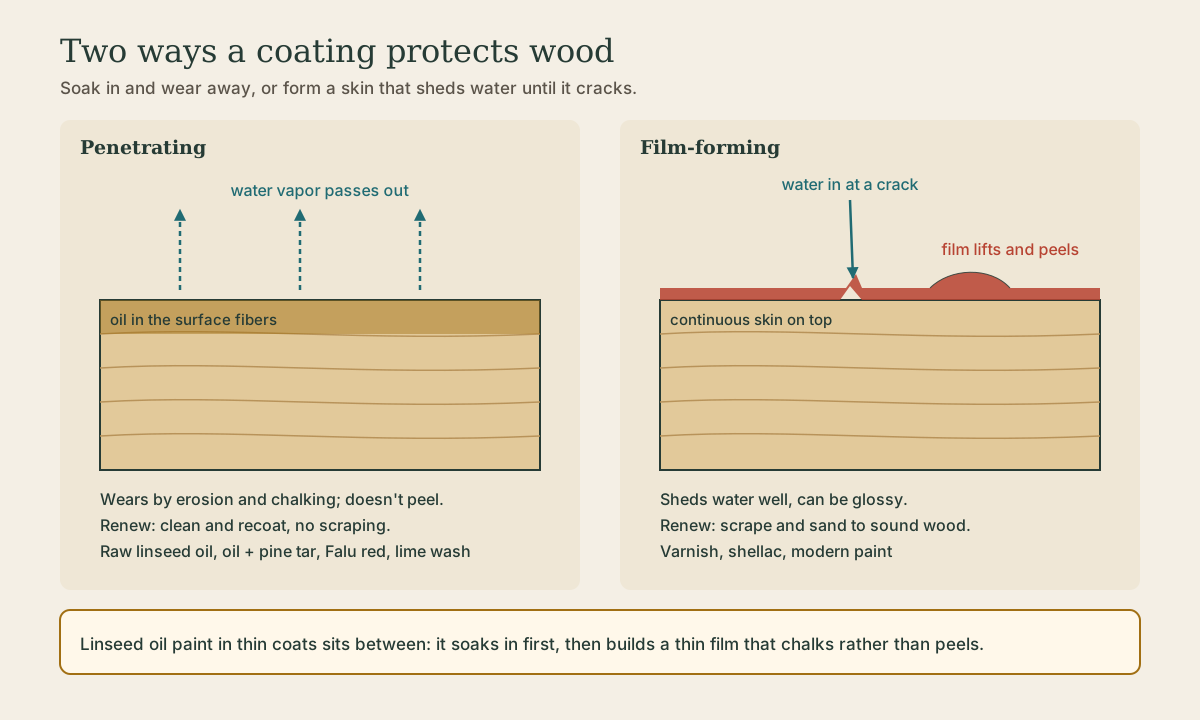
Penetrating finishes soak into the wood and leave little or no film on top: raw linseed oil, oil-and-pine-tar mixtures, thin oil stains, and in their own way the flour paints like Falu red and lime wash, which leave a thin, porous, chalky layer. They let water vapor pass, they don’t trap moisture, and they don’t peel. They wear away gradually, by erosion and chalking, and you renew them by cleaning and adding another coat, with no scraping. Rough-sawn wood holds more of them and they last longer on it; the Wood Handbook notes that coatings on saw-textured surfaces generally outlast those on smooth wood 1.
Film-forming finishes build a continuous skin: linseed oil paint applied in coats, varnish, shellac, and modern paints. A film sheds water well and can be glossy, but once it cracks, water gets under it and it peels. Renewing a failed film means scraping and sanding to sound wood, and once you sand one patch of a rough surface you have to sand all of it to match.
Linseed oil paint sits between the two: properly applied in thin coats, it soaks in at first and builds a thin, flexible film that tends to chalk and erode rather than peel, which is a big part of its reputation on Scandinavian houses.
Breathing
A recurring idea in traditional finishing is that a coating should breathe: let water vapor move through it, so wood, plaster, or masonry can dry out. Lime wash, flour paints, and oil paints all do this to varying degrees. A tight modern film over wet wood or damp masonry can trap moisture behind it, which leads to peeling, rot, or salt damage. That’s why heritage conservators match traditional coatings to traditional buildings.
Inside: what changed
The National Park Service’s guide to historic interiors sums up what American houses used before the mid-20th century 2:
- Oil paints: linseed oil, turpentine thinner, white lead as the hiding pigment, plus coloring pigments, used mainly on wood trim and metal.
- Whitewash: water, slaked lime, salt, and other additions, sometimes tinted with ochre, on plaster in utilitarian rooms and sometimes on beams.
- Distemper (calcimine): water, natural glues, and whiting, for decorative work on plaster.
- Casein (milk paint): slaked lime, pigment, and milk, often with oil added; also used outdoors.
This course covers the modern, lead-free versions of all of these, plus the Scandinavian coatings, soap, wax, and shellac.
What to take from this
Coatings fight UV, water, and mildew. Penetrating finishes soak in, breathe, and erode away slowly, so they’re renewed without scraping and suit rough or weathered wood. Film finishes shed water well but peel once they fail and need sound, freshly sanded wood under them. Test for sunburn with tape before painting old wood.
Practice
A film needs sound, smooth wood to grip; on sunburned or rough wood it peels. Penetrating finishes don’t peel; they erode and are simply renewed.
Lesson complete
Nice work.
Sources for this lesson
- 1Finishing Wood (Wood Handbook, Chapter 16). USDA Forest Service, Forest Products Laboratory, FPL-GTR-282. 2021. verifiedWeathering and UV damage to lignin, sunburned wood and the tape test, paint versus penetrating finishes, drying and nondrying oils, food-contact finishes, and the spontaneous-combustion warning for oily rags. Cited at: Factors Affecting Finish Performance; Sunburn; Textures.
- 2Preservation Brief 28: Painting Historic Interiors. National Park Service, Technical Preservation Services. verifiedHistoric paint types - linseed oil paint with driers, whitewash, distemper, casein (milk) paint - and how linseed oil paint keeps cross-linking for decades. Cited at: Types of Historic Paints.