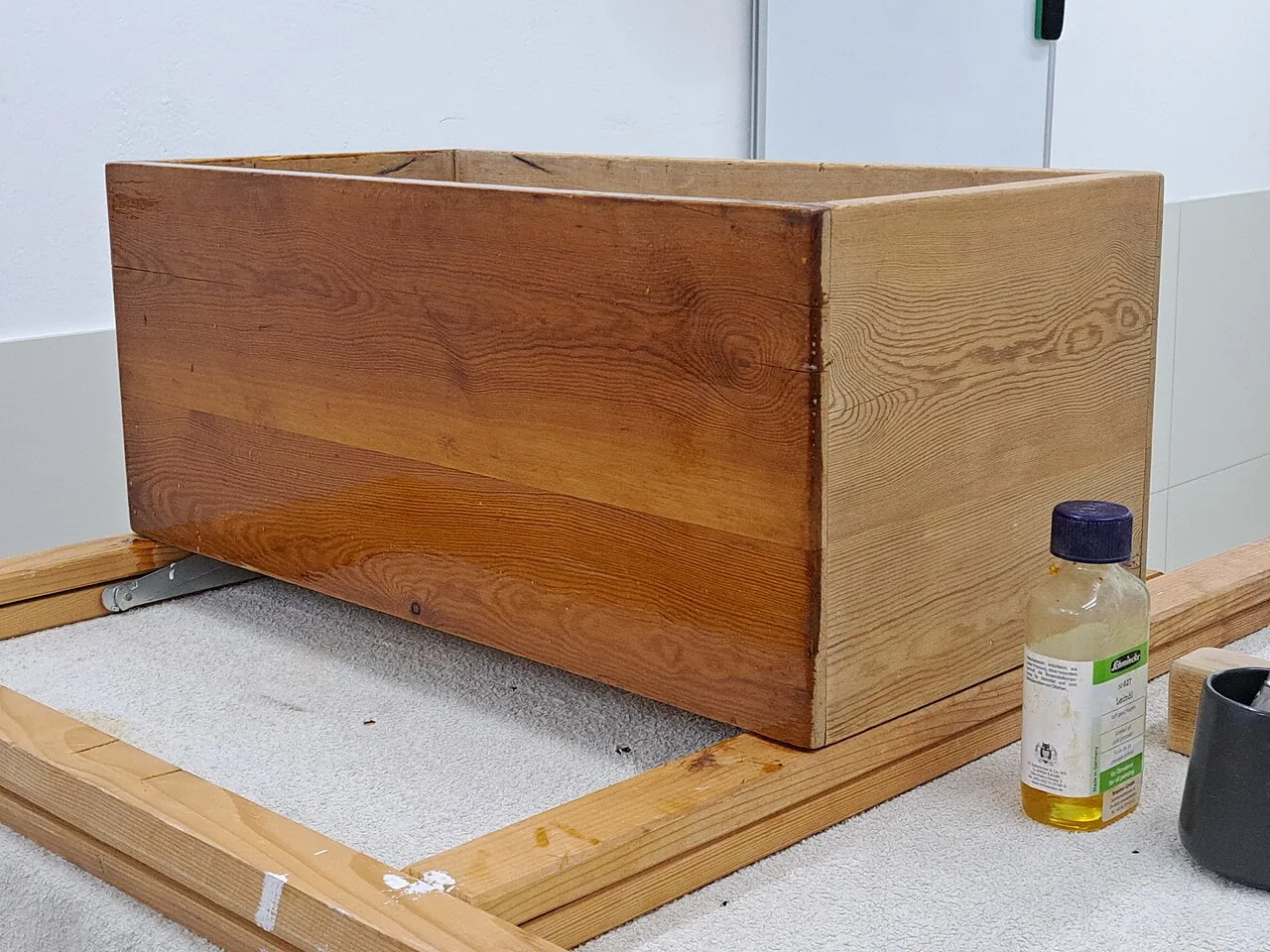
Oil and Wax Finishes
The simplest finishes: drying oils like linseed and tung that cure in the wood, oil-varnish blends that build a little protection, and wax as a soft final layer - easy to apply and renew, with limits you should know.
- 4 min
- 7 steps
- 3 questions
- Lesson 43 of 160
In this lesson
- Drying oils
- Applying oil
- Oil-varnish blends and wiping varnish
- Wax
- What oil does and doesn’t do
- Safety
- What to take from this
Picking up where you left off.
Drying oils
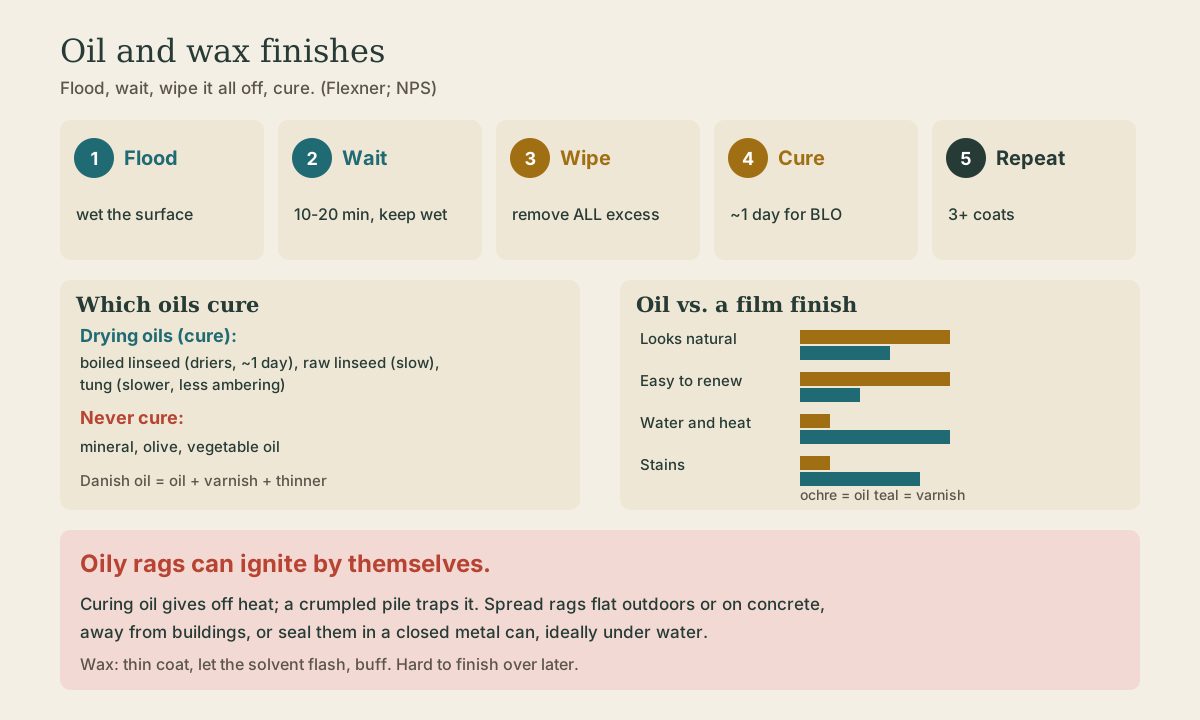
A drying oil cures by reacting with oxygen, turning from a liquid into a solid film inside and on the wood 1. The two used on furniture:

- Linseed oil (from flax): raw linseed cures very slowly; boiled linseed oil (BLO) contains metallic driers so it cures in about a day. Ambers over time. (The Traditional Paints and Finishes course covers linseed in depth.)
- Tung oil (from tung tree nuts): cures slower than BLO, slightly more water-resistant, less ambering. Many products labeled “tung oil finish” are actually oil-varnish blends; check the label.
Nondrying oils - mineral oil, olive oil, vegetable oil - never cure. Mineral oil is used on cutting boards because it’s inert, but it isn’t a finish; it just soaks in and wears off. Food oils can go rancid.
Quick check
Drying oils polymerize with oxygen. Nondrying oils like mineral oil or olive oil never cure.
Applying oil
- Prepare the surface (see Surface Prep).
- Flood the oil on with a rag or brush and let it soak for 10 to 20 minutes, keeping the surface wet.
- Wipe off all the excess thoroughly. Oil left on the surface turns gummy.
- Let it cure fully, typically a day for BLO, longer in cold weather.
- Repeat for 3 or more coats, rubbing lightly with fine abrasive pad between coats if needed.
Oil-varnish blends and wiping varnish
Oil-varnish blends (“Danish oil,” many “tung oil finishes”) mix oil, varnish, and thinner. They apply like oil but leave a little varnish in the wood, adding some protection. Wiping varnish is varnish thinned with mineral spirits; it builds a thin film rubbed on with a rag. Both are easy, forgiving next steps up from straight oil 1.
Wax
Paste wax (beeswax, carnauba, or blends in solvent) adds a soft sheen and a slick feel:
- Apply thinly with a cloth or fine pad, let the solvent flash off, and buff.
- Over oil or shellac, it adds feel and minor protection.
- On its own it’s very thin and wears quickly.
- Wax makes later refinishing harder; most other finishes won’t stick over it until it’s removed.
What oil does and doesn’t do
Strengths: looks natural, enhances grain, feels like wood, simple to apply, easy to renew - just wipe on another coat. Good for chairs, tool handles, and pieces you want to age with use.
Weaknesses: an oil finish is thin and in the wood. It resists water, heat, and stains poorly compared with a film finish like varnish 1. A wet glass will leave a ring on an oil-finished table. For tabletops, use varnish or at least an oil-varnish blend.
Outdoors, oil on its own weathers quickly; penetrating finishes need renewing every year or two, though they don’t peel like film finishes 2.
Quick check
Oil finishes look natural and repair easily; film finishes like varnish protect far better.
Safety
Oily rags can spontaneously combust. As drying oils cure they generate heat, and a crumpled pile traps it until the rags ignite - a National Park Service crew’s linseed rag did exactly that 3. Always:
- Spread used rags flat to dry outdoors or on concrete, away from buildings, or
- Store them in an approved closed metal can, ideally under water, until disposal 3.
Quick check
Curing oil generates heat; in a pile, it can ignite spontaneously. A National Park Service crew’s linseed rags did just that.
What to take from this
Drying oils (boiled linseed, tung) cure with oxygen; mineral and food oils don’t. Flood, wait, wipe off all excess, and let each coat cure. Oil-varnish blends and wiping varnish add some protection; wax adds sheen and feel but little durability. Oil looks natural and renews easily but resists water and heat poorly. Spread oily rags flat or seal them in a metal can - they can catch fire.
Lesson complete
Nice work.
Sources for this lesson
- 1Bob Flexner. Understanding Wood Finishing: How to Select and Apply the Right Finish. 3rd revised ed. Fox Chapel Publishing. 2021. verifiedThe standard reference on finish chemistry and practice - drying oils and driers, shellac cuts, waxes, and what each finish can and can't do.
- 2Finishing Wood (Wood Handbook, Chapter 16). USDA Forest Service, Forest Products Laboratory, FPL-GTR-282. 2021. verifiedWeathering and UV damage to lignin, sunburned wood and the tape test, paint versus penetrating finishes, drying and nondrying oils, food-contact finishes, and the spontaneous-combustion warning for oily rags.
- 3Fire Prevention 52: Spontaneous Combustion - Fact or Fiction?. National Park Service. verifiedAn NPS crew's linseed-oil rag ignited; spread rags in a single layer on concrete to dry, or use an approved container.