Shellac, Varnish, and Lacquer
Film finishes that build a protective coat: shellac from flakes in alcohol, oil-based and water-based varnish for durability, and lacquer for fast spraying. Mixing a 2-lb cut, brushing and padding, and choosing by use.
- 5 min
- 6 steps
- 3 questions
- Lesson 44 of 160
In this lesson
- Film finishes
- Shellac
- Varnish
- Lacquer
- Choosing
- What to take from this
Picking up where you left off.
Film finishes
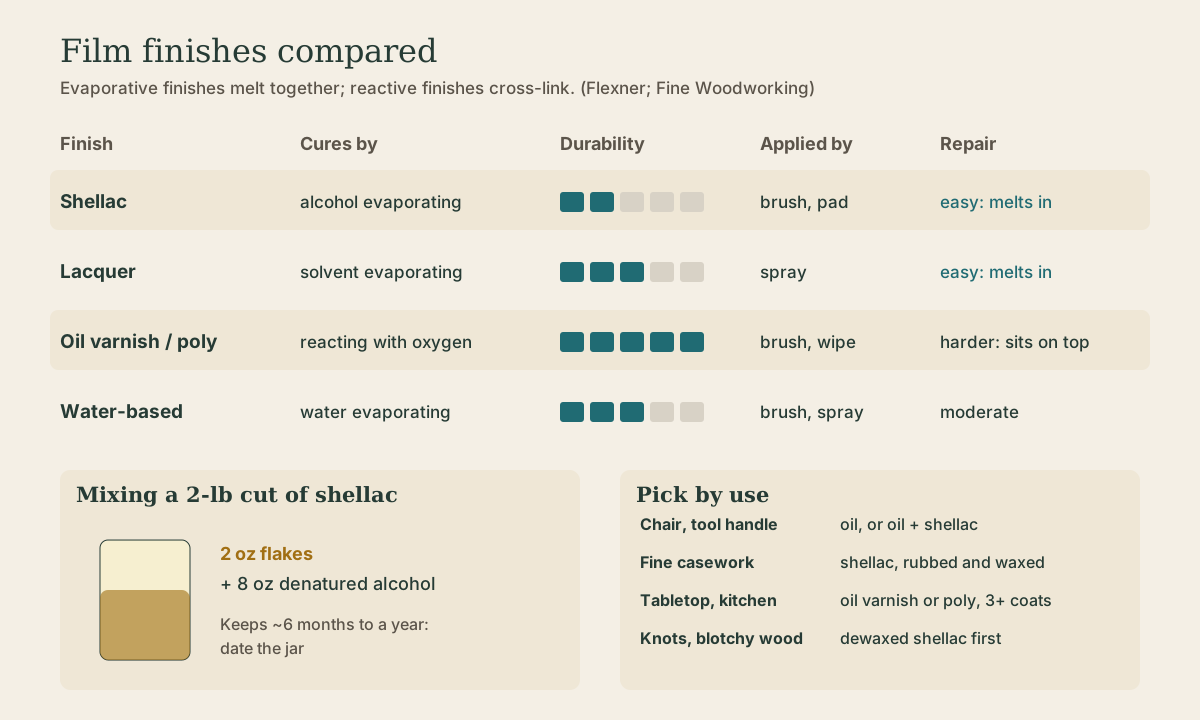
Film finishes build a coating on the surface that protects the wood from water, wear, and stains far better than oil alone 1. They differ in how they cure, how tough they are, and how they’re applied:

| Finish | Cures by | Durability | Application | Repair |
|---|---|---|---|---|
| Shellac | Solvent (alcohol) evaporating | Moderate; damaged by alcohol and heat | Brush, pad (“French polish”) | Easy - new coats melt into old |
| Lacquer | Solvent evaporating | Good | Spray | Easy - new coats melt in |
| Oil-based varnish (incl. polyurethane) | Reacting with oxygen | Best of the common finishes | Brush, wipe | Harder - new coats sit on old |
| Water-based finish | Water evaporating and resin coalescing | Good | Brush, spray | Moderate |
Shellac
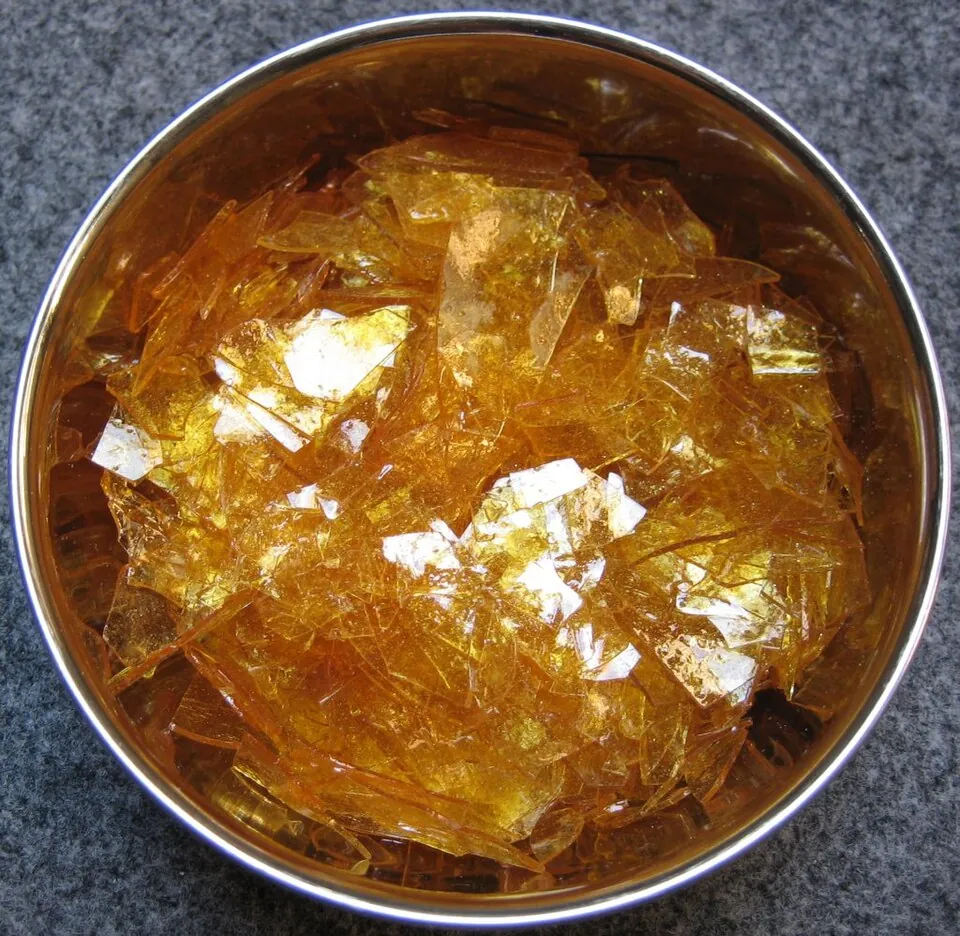
Shellac is a resin secreted by the lac insect, sold as flakes and dissolved in denatured alcohol. It’s been a furniture finish for centuries and is still one of the best for hand-finished work.
- Cut: a 2-lb cut is 2 lb of flakes per gallon of alcohol; for a half pint, 2 oz of flakes in 8 oz of alcohol 2. Thinner cuts (1 lb) for sealing and padding; a 2-lb cut for brushing.
- Freshness: mixed shellac keeps about 6 months to a year; old shellac won’t dry hard or makes topcoats wrinkle 2. Date your jars. Flakes keep for years cool and dry.
- Dewaxed shellac has its natural wax removed; it’s more water-resistant and bonds under and over almost any finish, making it the universal sealer for knots, blotch-prone woods, and contamination 2.
- Colors range from pale “blonde” to dark “garnet.”
Applying: brush with a good natural-bristle brush in long strokes, quickly, without going back over drying areas. Or pad it on with a cloth pad (a “rubber”), many thin coats, the basis of French polishing. It dries in minutes, so several coats a day are possible. Rub out the final coat with fine steel wool or abrasive pads and wax for a satin sheen.
Quick check
A 2-lb cut is 2 lb of flakes per gallon of alcohol, so 2 oz per 8 oz.
Quick check
Dewaxed shellac seals knots, old silicone contamination, and blotchy woods, and other finishes stick to it.
Varnish
Oil-based varnish (alkyd, phenolic, or polyurethane resins in oil) cures by oxidation into a tough, cross-linked film: the most protective common finish against water, heat, solvents, and wear 1. Use it on tabletops, desks, and anything that sees spills.
- Brush thin coats; varnish levels slowly and catches dust, so finish in a clean room.
- Let each coat cure (overnight or longer), sand lightly with 320 to 400 grit, and recoat.
- Three coats is a minimum for a tabletop.
- Wiping varnish (thinned with mineral spirits) is easier and dust-free, built up in many thin coats.
Water-based finishes are low-odor, nonyellowing, and dry fast, but they raise the grain (pre-raise it; see Surface Prep) and can look cold on dark woods without a shellac or dye under them.
Quick check
Varnish resists water, heat, and solvents far better than oil, wax, or shellac.
Lacquer
Nitrocellulose lacquer dries in minutes by solvent evaporation, and each coat melts into the last. It’s the classic factory and production finish, almost always sprayed. Spraying lacquer needs a proper spray booth or exhaust, explosion-proof ventilation, and a respirator: the solvents are flammable and harmful. In most home shops, shellac, wiping varnish, or water-based finishes are more practical.
Choosing
- Chair or tool handle: oil, or oil plus shellac.
- Fine casework, period work: shellac, rubbed out and waxed.
- Tabletop, kitchen, bath: oil-based varnish or polyurethane.
- Painted pieces: milk paint or linseed paint (see the Traditional Paints course), with shellac or oil over milk paint.
- Seal knots or blotchy wood first: dewaxed shellac.
Always test the full finish schedule on an offcut of the same wood, prepared the same way.
What to take from this
Film finishes protect far better than oil. Shellac (2 oz of flakes per 8 oz of alcohol for a 2-lb cut, fresh within months) brushes or pads on fast and repairs easily, and dewaxed shellac seals under anything. Oil-based varnish is the most protective, for tabletops; water-based finishes are low-odor but raise grain. Lacquer is fast but needs spray ventilation. Test on an offcut before the real piece.
Lesson complete
Nice work.
Sources for this lesson
- 1Bob Flexner. Understanding Wood Finishing: How to Select and Apply the Right Finish. 3rd revised ed. Fox Chapel Publishing. 2021. verifiedThe standard reference on finish chemistry and practice - drying oils and driers, shellac cuts, waxes, and what each finish can and can't do.
- 2Jeff Jewitt. How to Mix Shellac. Fine Woodworking. 2007. verifiedA 2-lb cut is 2 lb of flakes per gallon of alcohol (2 oz per 8 oz for a half pint); mixed shellac keeps about 6 months to a year; old shellac won't dry hard.