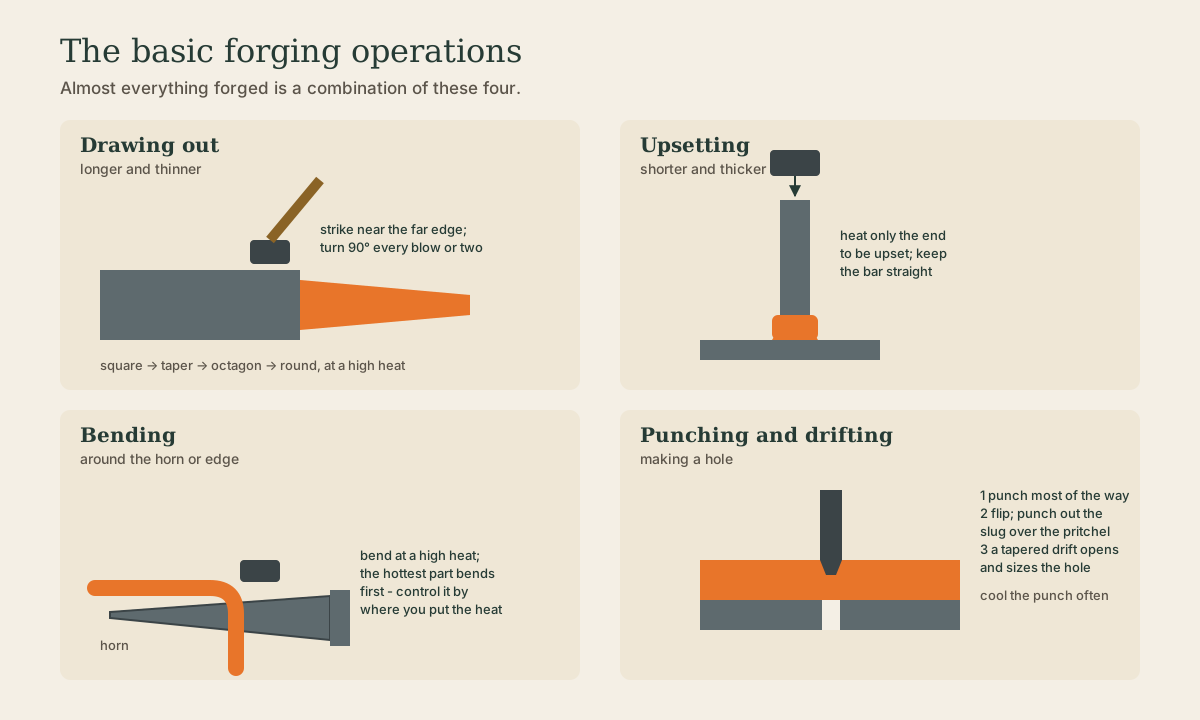
Punching and Drifting
Making holes in hot steel without losing metal or strength: hot punches and their care, punching from both sides, removing the slug over the pritchel hole or a bolster, opening and sizing holes with a tapered drift, slitting and drifting eyes, and punching for hammers and tools.
- 3 min
- 5 steps
- 3 questions
- Lesson 89 of 204
In this lesson
- Why punch
- Punching
- Drifting
- Slitting and drifting an eye
- What to take from this
Picking up where you left off.
Why punch
A drilled hole cuts metal away. A punched or drifted hole pushes metal aside, so the steel’s fibers flow around the hole and the bar stays strong - and you need no drill press. Hot punching makes hinge pintle holes, rivet holes, hammer and axe eyes, and decorative piercings.
Punching
Punches are short, tapered tools of tool steel with a flat, slightly smaller end than the hole you want.
- Heat the bar to a bright yellow at the hole.
- Set the punch, give a light blow, and check the mark is where you want it.
- Drive the punch about three-quarters of the way through.
- Cool the punch in water every few blows so it doesn’t soften and mushroom. A pinch of coal dust in the hole releases gas and keeps the punch from sticking.
- Flip the bar: the cooler, darker spot on the back marks where the punch was. Punch from that side over the pritchel hole (or a hole in a bolster plate) to push out a small slug 1.
The bar bulges around the hole; flatten it gently on the face, or plan for the bulge as part of the design.
Quick check
Finish from the back over the pritchel hole or a bolster to drop the slug.
Quick check
A hot punch upsets and mushrooms; coal dust releases gas that eases the punch out.
Drifting
A drift is a long, tapered pin of the hole’s final shape (round, square, oval). Driven through the punched hole at heat, it opens and sizes the hole and smooths its walls, without removing metal. Support the work over the pritchel hole or a bolster, drive through, flip, and drive back to even it. Cool the drift as you go.
Slitting and drifting an eye
For big holes, like a hammer or hatchet eye:
- Slit with a thin, chisel-shaped slitting punch - removing almost no metal.
- Drift the slit open with progressively larger drifts to the final eye shape.
- Re-forge the cheeks around the eye to even the walls.
This is how hand-forged hammers, axes, and tongs get their eyes, keeping the head strong around the handle.
Playback is optional. If the player is unavailable, open the video at its source.
Quick check
Slitting and drifting removes even less metal.
What to take from this
Punching and drifting push metal aside, keeping the bar strong. Punch at a bright heat three-quarters through, cooling the punch often and using coal dust to stop sticking, then flip and finish over the pritchel to drop the slug. Drift to open and size the hole. For large eyes, slit first and drift open in stages.
Lesson complete
Nice work.
Sources for this lesson
- 1John Lord Bacon. Forge-Practice: Elementary. John Wiley & Sons. 1908. verifiedPublic-domain trade-school text from the Lewis Institute; fire building with coking coal, welding heat and fluxes (sand, borax, sal ammoniac), upsetting, drawing out, bending, punching, and tool-steel hardening and tempering colors (430 F pale yellow to 570 F blue, temper gone near 650 F).