Nalbinding
The single-needle looped fabric that predates knitting: why it uses short lengths joined by felting, the Oslo stitch, working around the thumb, Hansen notation, Viking finds like the Coppergate sock, and making mittens and socks that won't unravel.
- 4 min
- 6 steps
- 3 questions
- Lesson 81 of 204
In this lesson
- What it is
- Materials
- Stitches
- History
- A first project
- What to take from this
Picking up where you left off.
What it is
Nalbinding (Norwegian nålebinding, “needle binding”) makes fabric from loops with a single needle. It predates both knitting and crochet 1. The difference: in nalbinding the whole working length of yarn is pulled through each loop 1. That means:
- you work with short lengths, usually under about 2 meters, joined end to end 1;
- the fabric is dense, warm, and elastic;
- it doesn’t unravel if cut or worn through.
Quick check
Knitting pulls loops of a continuous strand; nalbinding pulls the entire working length through.
Materials
- Wool that will felt: short lengths are joined by felting the moistened ends together, so the join disappears 1. Superwash wool won’t felt.
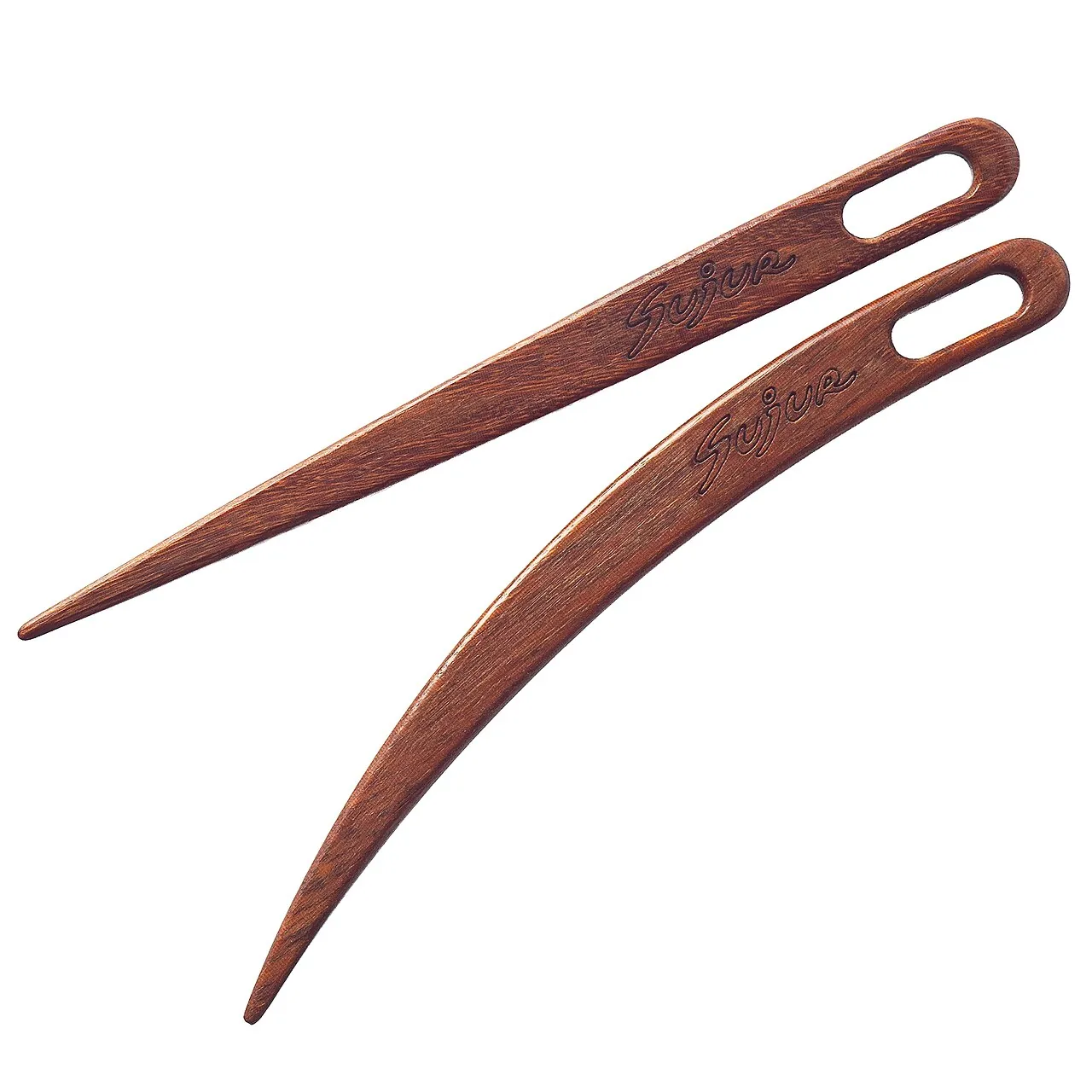
- A flat, blunt needle with a large eye, traditionally bone, wood, or antler 1, about 7-10 cm long.

Quick check
Splice wet ends by rubbing between your palms.
Stitches
Dozens of stitches exist, named for the archaeological finds they match: Oslo, Mammen, York, Dalby, and more 1. Most start with the Oslo stitch, a good all-purpose stitch.
Stitches are worked around the thumb, which holds the current loops and gauges their size - the “thumb method” 1. Each new loop goes through one or more loops held on the thumb and one or more in the previous row.
Hansen notation, developed in 1990, writes a stitch as the sequence of how the needle passes loops: U for under, O for over 1. The Oslo stitch is written UO/UOO - under one, over one, then under one, over two (connected to the previous round).
Playback is optional. If the player is unavailable, open the video at its source.
History
The oldest known nalbound fragment, from Nahal Hemar Cave, dates to about 6500 BCE 1. In Scandinavia it was the everyday way to make mittens, socks, and hats into the 20th century. The Coppergate sock, Viking-age wool from York, was worked from the toe in circular rounds 1. The craft nearly died out by the 1950s, but historians and craftspeople revived it 1.
Quick check
It was worked from the toe up in circular rounds.
A first project
- Cut about 2 meters of feltable wool and thread the needle.
- Make a starting chain of Oslo stitches long enough to go around your hand.
- Join into a ring and work around in a spiral.
- When the yarn runs short, felt in a new length: fray both ends, overlap, wet, and roll firmly between your palms.
- A mitten: work the hand tube, leave a gap for the thumb, decrease to close the top, then pick up stitches around the gap for the thumb.
What to take from this
Nalbinding loops fabric with a single needle, pulling the whole short length of yarn through every loop, so it’s dense, elastic, and unravel-proof. Use feltable wool, splice lengths by felting, work around the thumb starting with the Oslo stitch (UO/UOO in Hansen notation), and try a mitten worked in the round, like the Viking-age Coppergate sock.
Lesson complete
Nice work.
Sources for this lesson
- 1Nålebinding. Wikipedia. 2026. verifiedSingle-needle looped fabric predating knitting and crochet; short wool lengths joined by felting; Oslo, Mammen, York, and Dalby stitches; Hansen notation; the Viking-age Coppergate sock from York.