The Chair, the Handlebar, and Riding
Day three: mount blocks on the runners, bolt on the posts and front legs so the chair comes off, add the seat, braces, and front bar, shape a handlebar to your height, fit foot treads, and finish. Then how to ride: stance, kick, steer, where a kick sled works, and what to wear on bare ice.
- 4 min
- 7 steps
- 2 questions
- Lesson 153 of 204
In this lesson
- Blocks and bolts
- The chair
- The handlebar
- Treads and finish
- Riding
- Where to ride
- Try it
Picking up where you left off.
Blocks and bolts
North House’s sled collapses for transport 1. One way to do it, worked out here:
- Glue and screw a hardwood block, about 1 1/4 by 3 by 4 inches, to the top of each runner where each post and front leg stands: front legs 14 inches from the tip, posts 34 inches (see the side view in lesson 2).
- Stand each post and leg against its block and bore two holes through both for 1/4-inch carriage bolts.
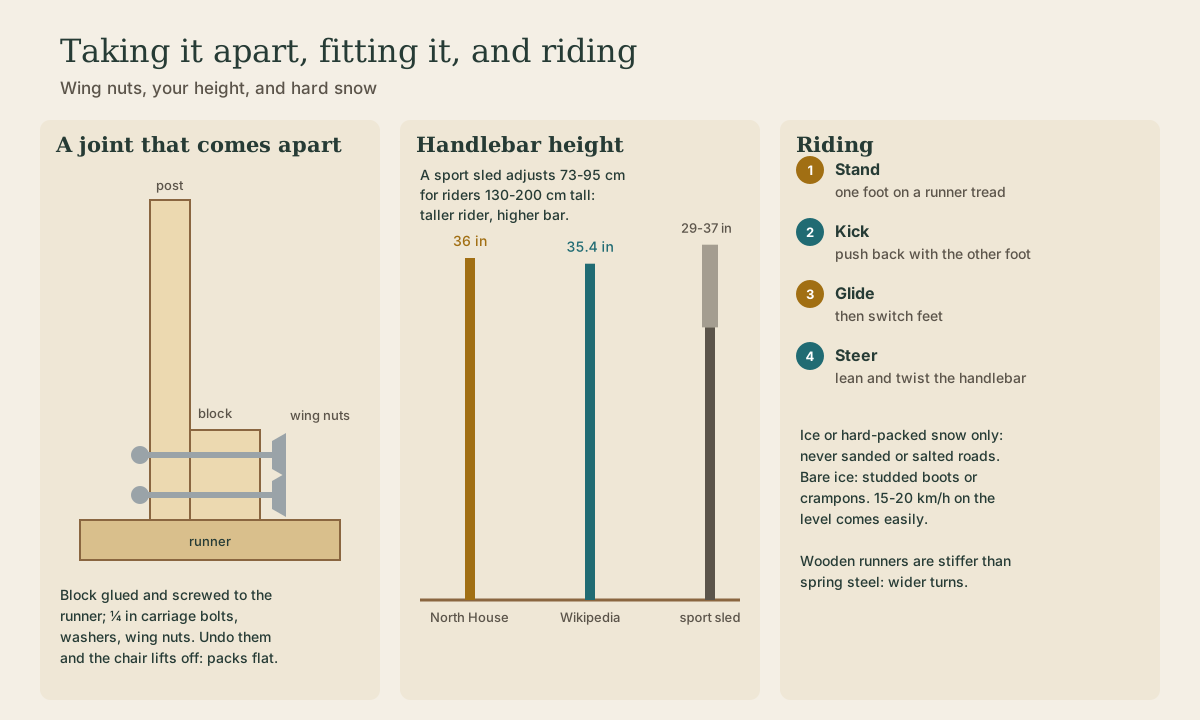
- Fit washers and wing nuts on the inside. Undo four wing nuts per side and the chair lifts off; the runners and chair travel flat.
The chair
- Posts: 1 1/4-inch-square birch, tall enough to put the handlebar at about 36 inches above the ground 1.
- Seat: two side rails from the front legs to the posts at about 15 inches high, with slats across. Old sleds had a bench-like seat in front of the posts 2.
- Braces: a diagonal from each post back down to its runner keeps the chair from racking when you push on the bar. The 1914 army sled in lesson 1 has braces like this 3.
- Front bar: a crosspiece bolted between the tops of the two curls; Nordic sleds join their runners at the front with a bar 4.
Keep the runners 16 inches apart outside to outside, the class sled’s width 1; a typical adult sled has its runners about 400 mm (16 in) apart 5.
The handlebar
The class shapes a customized handlebar 1. Rough it from 4/4 birch a few inches wider than the posts, then spokeshave and rasp the grips round to fit gloved hands. Height matters more than shape: about 900 mm, 35 inches, is typical 5, and a sport sled adjusts from 73 to 95 cm for riders 130 to 200 cm tall 6. Set yours from the kitchen-chair measurement in lesson 1 before you drill the posts.
Treads and finish
Behind the posts, glue or tack rubber or grip tape to the runner tops where your foot stands; Thonet’s 1904 sledge had foot plates there 2. Then take the sled apart, sand every piece, and finish it with spar varnish or an exterior oil. Keep finish off the runner bottoms if they’re tarred.
Riding
- Stand with one foot on a runner tread and both hands on the bar.
- Kick back with the other foot.
- Glide, and switch feet now and then.
- Steer by leaning and twisting the handlebar. On steel sleds the runners flex to make the turn 5. Early wooden runners were stiff 5, so expect wider turns with yours.
A passenger or a load rides on the seat 5.
Playback is optional. If the player is unavailable, open the video at its source.
Quick check
Spring-steel runners flex to make the turn; stiffer wooden ones turn wider.
Where to ride
- Ice or hard-packed snow only. A kick sled won’t run on sanded or salted roads 4. On the level, 15 to 20 km/h comes easily 4.
- Bare ice: kick with studded boots or crampons 6; Thonet’s riders strapped crampons to their shoes in 1904 2.
- Deep snow: sport sleds clip on wide plastic snow runners, which also glide better than steel in snow or below about -10°C 6 5.
- Frozen lakes make great kick-sledding, and a kick sled carries the gear for ice fishing 5. Check the ice first.
Quick check
For deep snow, sport sleds add wide plastic snow runners.
Try it
On the first ride, go to a packed, level path and kick ten times with each foot, counting how far each glide carries. Then raise or lower the handlebar an inch, or reshape the grips, and do it again. Small changes in bar height change how hard you can kick.
Lesson complete
Nice work.
Sources for this lesson
- 1Kick Sled Building: Push and Glide. North House Folk School. verifiedStudents craft a kick sled of birch, learning skills from laminating wood for the runners to shaping a customized handlebar for steering; hand and power tools. Up to two people per tuition; youth 8+ with an adult. Finished sled 72 in long, 16 in wide, 36 in high, and it collapses for transport.
- 2Thonet and winter sports. Thonet. verifiedThonet's bentwood maker also sold sledges, toboggans, skis, snowshoes, and kick sledges; its 1904 catalogue describes the kick sledge as two long, thin runners with a post and handlebar in the middle, a bench-like seat in front and foot plates on the runners behind; the rider straps crampons to the shoes, stands on one runner, and pushes off with long kicks.
- 3Sparkstötting m/1914 försök (AM.078409). Armémuseum, via DigitaltMuseum. verifiedA Swedish army trial-model kick sled of 1914 with wooden runners: length 220 cm, width 70 cm, height 104 cm. Given to the museum by Stockholm's equipment depot in 1936. CC BY.
- 4Sparkstötting. Wikipedia (Swedish). verifiedTwo runners, usually steel, joined at the front by a bar; a chair on top, traditionally wooden, with a handlebar at the top of the back; the runners continue behind the chair about twice as far. You stand on one runner and kick with the other foot. Only on ice or hard-packed snow, not sanded or salted roads; 15-20 km/h comes easily; used for ice fishing. Grew from the drög, a short load sled with uprights. Generally held to have been invented in upper Norrland in the later 1800s, though Stockholm reports go back to the late 1700s. Early sleds: long runners with an upright stake each, joined by a seat; runners iron-shod or tarred to glide in hard cold; wooden runners could split in sharp turns. Orsasparken, 1909, Erik Timander and Anders Bertas, had patented spring-steel runners with an inverted-T profile at the front that doesn't cut into loose snow.
- 5Kicksled. Wikipedia. verifiedA chair on flexible metal runners that extend backward about twice the chair's length; handlebar on the chair back. Typical adult sled: runners about 2 m long, 400 mm apart; handlebars about 900 mm high. Steer by twisting the handlebars, flexing the runners. Plastic snow runners for deeper snow; spiked shoes or crampons on bare ice; 15-20 km/h on the level. First definite record in a northern Swedish newspaper around 1870; those sleds had stiff wooden runners and were heavy; Orsasparken's flexible metal runners in 1909 became standard in Sweden, Finland, and Norway. Scientific American described 'the Sparkstotting' in 1894. Racing popular 1890-1910 and in the Nordic Games; revived in Finland around 1990, races up to 100 km averaging about 30 km/h.
- 6Kickspark MAX aluminium. Varuste.net. verifiedA Finnish sport kicksled: zinc-coated spring-steel runners 30 x 28 mm x 1500 mm (3 kg a pair); plastic snow runners 35 or 56 mm wide glide better than steel in snow or below about -10 C; ice runners for bare lake ice. Handlebar adjustable 73-95 cm; riders 130-200 cm tall; folds to 150 x 40 x 25 cm. On icy roads or lakes kick with studded boots or crampons. Racers reach 25-40 km/h.