Warping and Weaving a Plain Band
Day one morning: measure a short warp, thread the band heddle from the center out, tie one end to a post and the other to your belt, and weave a plain band, raising and lowering the heddle, passing and beating the weft, and keeping the width even.
- 2 min
- 5 steps
- 1 question
- Lesson 194 of 204
In this lesson
- Measure the warp
- Thread the heddle
- Tie on
- Weave
- Try it
Picking up where you left off.
Measure the warp
For a first plain band, measure about 25 ends of 8/2 cotton, each a little over a meter and a half: a meter of band plus about half a meter lost to tying on and the end you can’t weave (an estimate). Use two colors in stripes so you can see the structure. Norges Husflidslag’s recipe warps the center thread first and works outward 1.
Thread the heddle
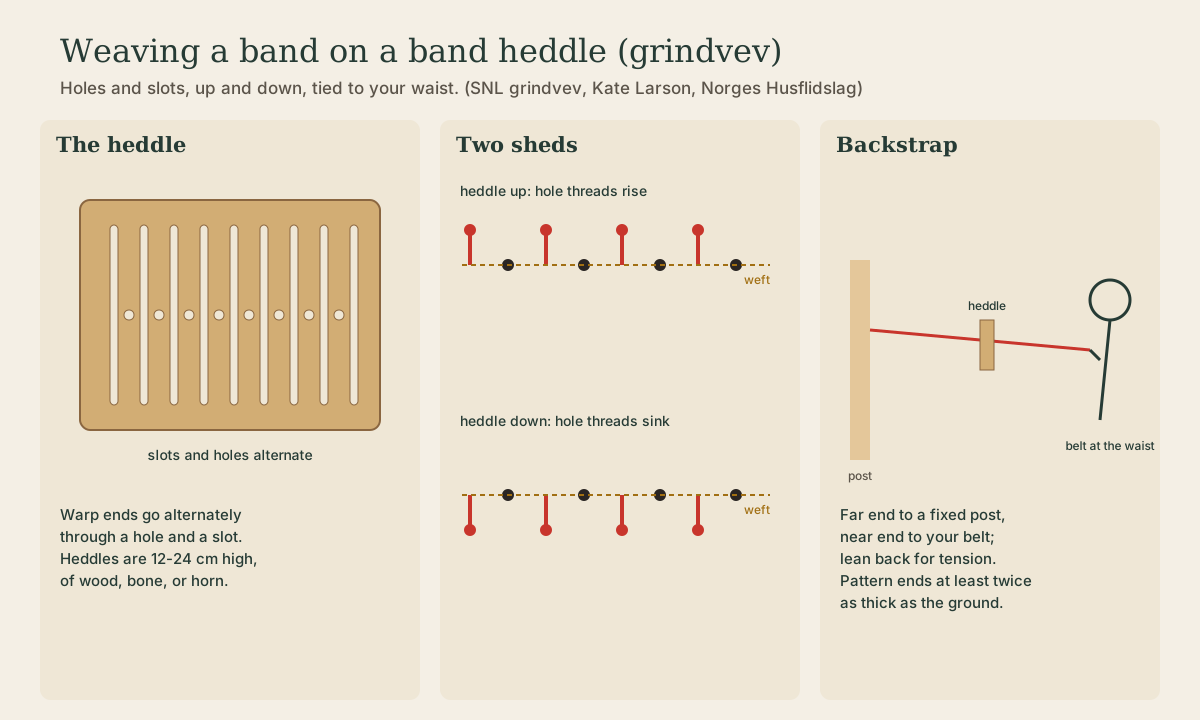
Thread alternately through holes and slots: alternate warp ends go through hole and slot 2. Keep the ends in order, center out. Tie them in a bundle at each end.
Tie on
“Tie the far end of the warp to something secure and the near end of the warp to your belt” 3. Lean back until the warp is firm; sit forward to slacken it.
Quick check
Your body is the back beam; lean to tighten, sit forward to slacken.
Weave
The shed is made by lifting or lowering the heddle 2:
- Raise the heddle: the hole threads rise above the slot threads. Pass the weft through.
- Beat it toward you with the edge of the shuttle.
- Lower the heddle: the hole threads sink. Pass the weft back and beat.
- Draw the weft just snug each time, leaving the edge threads touching but not pulled in.
Measure the band’s width every few inches and keep it the same; most of the skill in band weaving is an even edge. When the woven part reaches you, untie it from your belt, roll or lock it, and tie on again.
Playback is optional. If the player is unavailable, open the video at its source.
Try it
Weave 10 inches of plain band and measure its width at every inch. Note where it narrowed; that’s where you pulled the weft too hard. Aim for a width that varies by no more than a millimeter.
Lesson complete
Nice work.
Sources for this lesson
- 1Randi Hole. Plukkbånd på grindvev. Norges Husflidslag. 2023. verifiedA pick-up band of 37 ends with 9 pattern ends: edges of rust wool and green linen 16/2, ground of yellow linen 16/2, pattern of charcoal 2-ply wool embroidery yarn with a rose center thread, weft of green linen; warp the center thread first. Band pillows of Nord-Østerdalen; bands used as swaddling bands, stocking bands, belts, suspenders.
- 2Eivind Falk. Grindvev. Store norske leksikon. 2025. verifiedAlso båndgrind or hoppeskei: a plate with slots and holes; alternate warp threads go through hole and slot, and the number sets the band's width; of bone, horn, or wood. Used for bunad bands and most Sámi bands; a traditional courting gift: keeping it meant accepting the suitor. Oldest surviving examples Italian; in the Nordic countries probably from the Middle Ages.
- 3Kate Larson. Backstrap Rigid Heddle Basics. Spin Off. 2023. verified'The pattern threads… need to be at least twice as large as the background threads'; 'tie the far end of the warp to something secure and the near end of the warp to your belt.'