Mixing Milk Paint from Scratch
Two from-scratch routes - curds plus slaked lime, or skim milk with lime and whiting - and how to mix commercial powder so it goes on smooth.
- 4 min
- 6 steps
- 3 questions
- Lesson 31 of 204
In this lesson
- Safety first
- Route 1: Curds and lime
- Route 2: Skim milk, lime, and whiting
- Pigments: lime-safe only
- Commercial powder
- Keeping it
Picking up where you left off.
Safety first
Lime is caustic. Wear gloves and safety glasses when handling lime or mixing lime paint, and keep water on hand to rinse splashes; if lime gets in an eye, rinse it for a long time and get medical help 1. Use hydrated lime (builder’s lime, calcium hydroxide) or lime putty, never quicklime, which reacts violently with water. Wear a dust mask when handling powdered lime, chalk, or pigment.
Route 1: Curds and lime
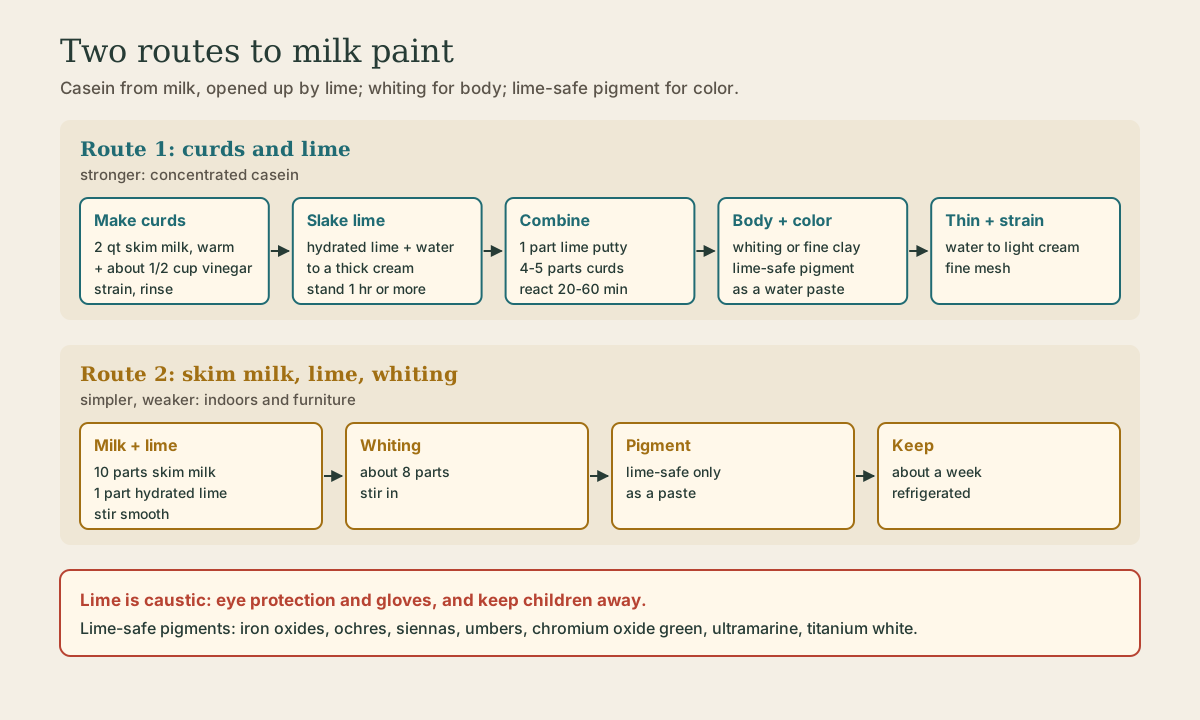
This makes the strongest homemade milk paint, because it uses concentrated casein.
- Make curds. Warm about 2 quarts of skim milk (fat interferes with binding) and stir in about 1/2 cup of white vinegar. The milk separates into curds and whey. Let it stand, then pour through cheesecloth and rinse the curds with clean water to remove the acid. (Unsalted, low-fat quark or farmer’s cheese from the store works too.)
- Slake the lime. Stir hydrated lime into water to a thick cream, and let it stand an hour or more. Lime putty can be used directly.
- Combine. Mix roughly one part lime putty to four or five parts curds by volume and stir hard. The curds will dissolve into a smooth, glue-like liquid as the lime opens the casein. Let it stand for the casein to react: about 20 to 60 minutes 2.
- Add filler and color. Stir in whiting (chalk) or fine clay for body and opacity, then lime-safe pigment mixed to a paste with a little water.
- Thin and strain. Add water to the consistency of light cream and strain through fine mesh.
Quick check
The alkalinity of lime bleaches or shifts many organic dyes and pigments. Iron oxides and other earth pigments are stable in it.
Quick check
Lime has to open the casein; leftover vinegar works against it.
Route 2: Skim milk, lime, and whiting
A simpler, weaker version uses skim milk directly as the casein source: skim milk, a small amount of hydrated lime, and whiting, roughly ten parts milk, one part lime, and eight parts whiting, plus pigment. Stir the lime into the milk until smooth, add the whiting, then the pigment. It’s easier but less durable, best for interior work and furniture.
Pigments: lime-safe only
Lime is strongly alkaline, and it bleaches or changes many organic colors. Use lime-safe pigments: iron oxides (reds, yellows, browns, black), ochres, siennas, umbers, chromium oxide green, ultramarine, titanium white. These are the same earth colors historic painters used in whitewash and lime paints 3. Mix pigment to a paste with water before stirring it into the paint, or you’ll get streaks.
Commercial powder
Powdered milk paint is the practical option for most projects:
- Mix powder and warm water in roughly equal volumes, or per the maker’s ratio, adding water gradually and stirring or blending hard.
- Let it stand 15 to 30 minutes and stir again; the casein needs time to react and lumps to soften.
- Strain it through a paint strainer or nylon stocking. Lumps are the number-one complaint.
- Mix only what you’ll use in a day or two, and stir often while painting because pigments and chalk settle.
- Thin for a translucent wash; mix thicker for opacity.
Keeping it
Homemade milk paint spoils. It lasts about a week refrigerated 2, less at room temperature, and smells sour when it’s going. Make small batches.
What to take from this
Wear gloves and eye protection; use hydrated lime or putty, never quicklime. For the strongest homemade paint, make rinsed skim-milk curds, dissolve them with lime putty, wait for the reaction, then add whiting and lime-safe earth pigment and strain. Skim milk with lime and whiting is simpler but weaker. With commercial powder, mix with warm water, rest, stir, and strain. Make small batches: it spoils within days.
Practice
Undissolved casein and lime make lumps. Mixing thoroughly, letting it stand, and straining gives a smooth paint.
Lesson complete
Nice work.
Sources for this lesson
- 1Limewash (Maintenance Series 7.3). Heritage Council of New South Wales. 2021. verifiedMaking limewash from putty or hydrated lime (about 15 to 20 percent lime, thin cream), dampening the surface, thin brushed-out coats, additives, the lime cycle, and safety. Cited at: Health and Safety.
- 2Milk Paint (Encyclopedia of Sustainable Building Materials). The Endeavour Centre. verifiedCasein plus lime or borax forms calcium caseinate; 20 to 60 minutes to react; about a week's pot life refrigerated; oil or wax topcoats; lime is caustic.
- 3Preservation Brief 28: Painting Historic Interiors. National Park Service, Technical Preservation Services. verifiedHistoric paint types - linseed oil paint with driers, whitewash, distemper, casein (milk) paint - and how linseed oil paint keeps cross-linking for decades. Cited at: Types of Historic Paints.