Graphing a Design and the Double Interlock
Graph a rölakan design on squared paper, lay in the weft by hand in bundles of blended colors, and lock every color boundary with the double interlock, the Skåne way, which builds a chain of loops on the back so the rug is woven wrong side up. Single versus double interlock, keeping boundaries straight, and stepping diagonals.
- 3 min
- 4 steps
- 2 questions
- Lesson 146 of 204
In this lesson
- Graph the design
- Single or double
- Working the double interlock
- Try it
Picking up where you left off.
Graph the design
Rölakan designs are geometric, built from vertical, horizontal, and stepped boundaries. Parkdal’s rugs keep to a few strong shapes, like Novotny’s “Little Dots,” which scattered small dots of color through a repeating diamond 1.
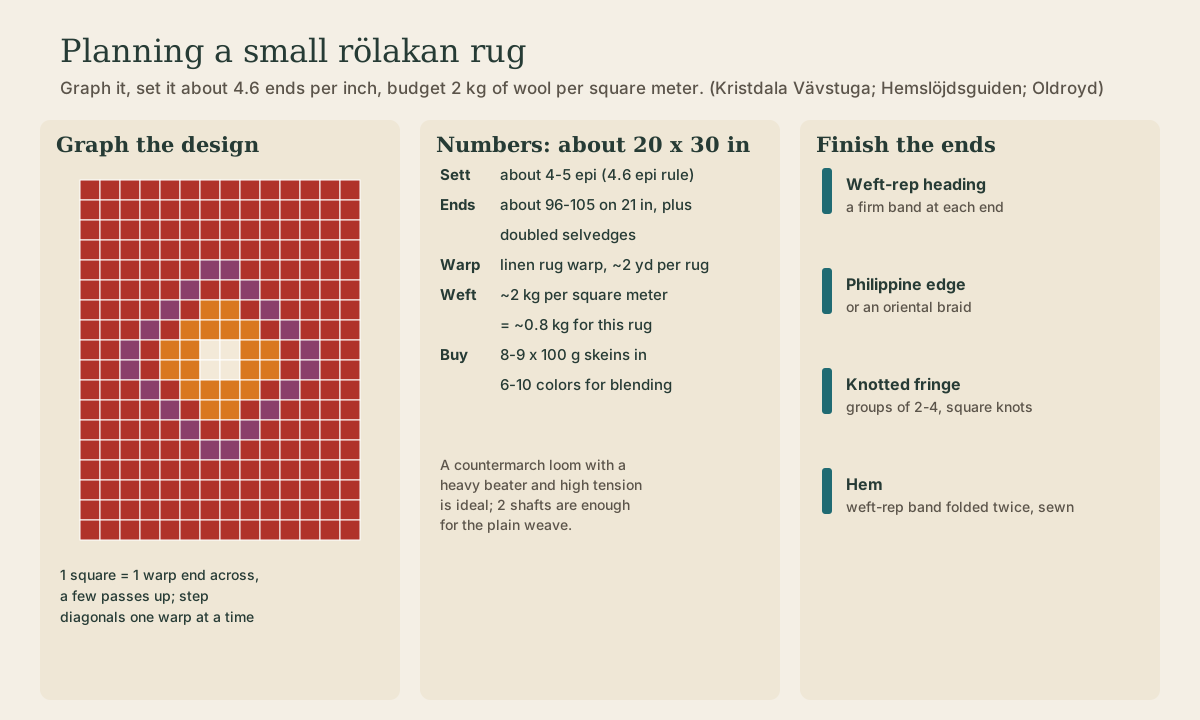
Graph the design on squared paper:
- One square across equals one warp end (or one pair).
- One square up equals a few passes of weft; weave a sample to learn how many passes per inch your yarn packs to.
- Keep vertical boundaries in the same gap between two warps.
- Step diagonals one warp per pass, or one warp every two passes, for a steeper or gentler slope.
Single or double
Where two colors meet, the wefts must be joined, or the rug splits into slits. There are two ways 2 3:
- Single interlock links the two wefts on every other meeting, when they move one way only. It’s reversible, and it’s the usual Norwegian practice.
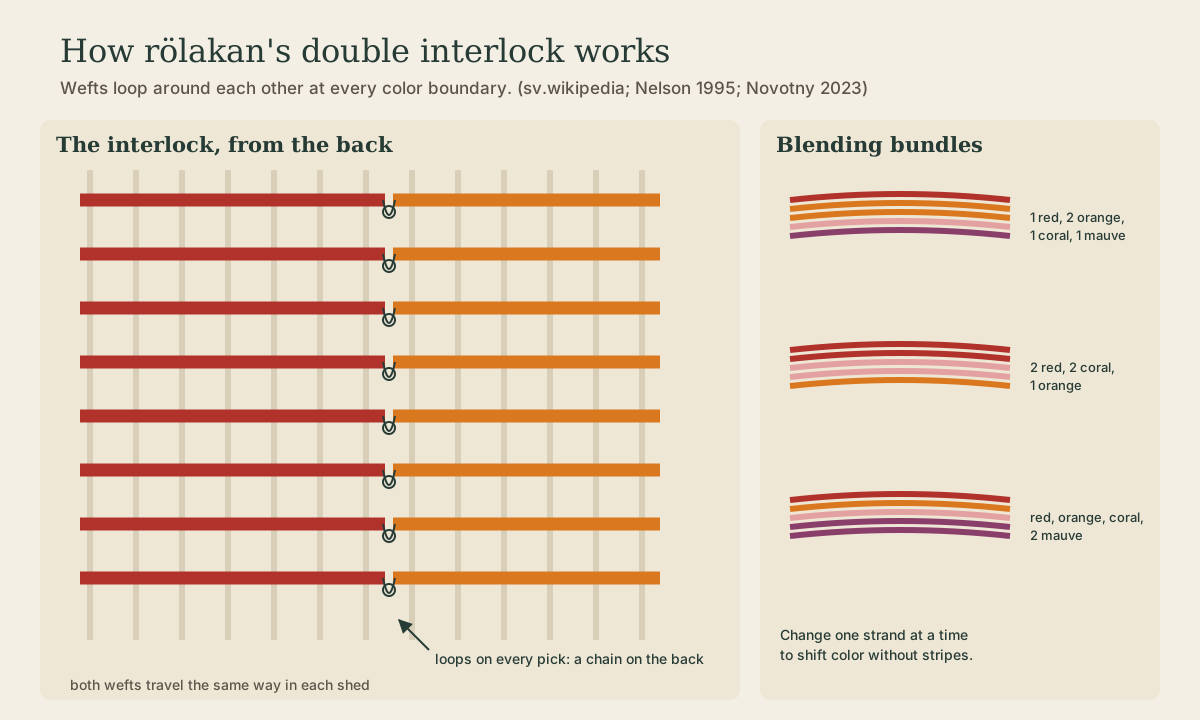
- Double interlock links them at every meeting, in both directions. It’s heavier and has a clear wrong side. This is Swedish rölakan.
Quick check
Skåne rölakan uses the double interlock.
Working the double interlock
- Weave with the wrong side facing you: the interlock loops build a raised chain on the back, and that side faces the weaver.
- In each shed, lay every color bundle in the same direction.
- When a bundle arrives at a color boundary, bring it up in the gap between the two warps where its neighbor enters.
- Pass it around the neighboring bundle, then lay it back into its own area on the next pick.
- Every pick, at every boundary, makes one interlock.
Laying in. Parkdal lays in the pattern “entirely by hand, not with a shuttle” 1: draw each bundle through its section of the open shed, leave it in a gentle arc so it doesn’t pull the edges in, and beat firmly.
Blending. Each pick is a bundle of five strands. Parkdal changes the mix within an area (one red, two orange, one coral, one mauve, then two red, two coral, one orange) so color shifts without stripes 1. Change one strand at a time, and stagger where you start and end strands so the joins don’t line up.
Quick check
Turn the rug over when it’s off the loom to see the front.
Try it
Weave a 4-inch sample with a single vertical boundary in double interlock. Turn it over every inch to look at the front: the boundary should be a clean line, and the back should show a neat chain.
Lesson complete
Nice work.
Sources for this lesson
- 1Christine Novotny. Rölakan Rug Weaving in Sweden. Norwegian Textile Letter. 2023. verifiedOctober 20, 2023. Ulla Parkdal (born 1939) weaves in the Stockholm archipelago. The pattern is laid in entirely by hand, not with a shuttle; weft-faced plain weave on a linen warp, with wool rug yarn (mattgarn) held together in bundles of five strands of varying colors, e.g., one red, two orange, one coral, one mauve; changing the ratio in each area gives shifting color instead of stripes.
- 2Röllakan. Svenska Wikipedia. verifiedA simpler variant of tapestry (gobelin) in tabby; single interlock links at every other meeting, double interlock at every meeting. Oldest dated Swedish piece 1710; mainly Skåne, also Blekinge, Småland, Halland, Bohuslän. From Old Swedish ryglakan, Middle Low German ruggelaken, 'back cloth'.
- 3Lila Nelson. Ruteaklaer. Norwegian Textile Letter. 1995. verifiedSingle interlock links when wefts move in one direction only and is reversible; double interlock links in both directions, as in Swedish rölakan, and is heavier with a wrong side.
Further reading
- Lathund: inslagsåtgång för mattor. Kristdala Vävstuga (blog). 2013. verifiedRule-of-thumb table for rug weft: rölakan set at 18 ends per 10 cm (about 4.6 epi) uses about 2.0 kg of weft per square meter. No rule replaces a sample.