Wool from Fleece to Yarn
Taking a raw fleece to spun yarn by hand: choosing and skirting a fleece, scouring out lanolin without felting it, teasing and carding, rolags and roving, spinning on a drop spindle and a wheel, plying, and setting the twist.
- 4 min
- 6 steps
- 3 questions
- Lesson 82 of 204
In this lesson
- Choosing and skirting
- Scouring
- Teasing and carding
- Spinning
- Plying and setting twist
- What to take from this
Picking up where you left off.
Choosing and skirting
A sheep is usually shorn in spring, the fleece coming off in one piece 1. Fleeces vary by breed: fine wools (Merino, Rambouillet) are soft and short; medium wools (Corriedale, Shetland, Romney) are the easiest to spin; long wools (Lincoln, Leicester) are lustrous and strong. Wool with staple over about 3 inches suits smooth worsted yarns; shorter wool suits fluffy woolen yarns 1.
Look for a clean, sound staple - tug a lock at both ends; it shouldn’t snap in the middle - and little vegetable matter.
Skirting: spread the fleece cut side down on a table or tarp and pull off the dung tags, belly wool, and heavily matted or burry edges. Shake out second cuts (short bits from the shearer going over a spot twice).
Quick check
Tags and heavily soiled bits aren’t worth washing.
Scouring
Raw fleece carries grease (lanolin), dirt, and plant matter - from 30 to 70 percent of its weight 1. Industrial scouring runs fleece through soapy washes up to about 140 °F with cold rinses 1.
By hand:
- Fill a tub with water as hot as your tap gives (about 140 °F) and a generous squirt of dish soap or wool scour.
- Lay the fleece, in mesh bags, gently into the water and let it soak 20-30 minutes. Don’t stir, squeeze, or swish - heat plus agitation makes felt.
- Lift it out, refill with water of the same temperature, and repeat; then rinse at the same temperature until clear. Sudden temperature changes also felt wool.
- Spin out excess water in a washing machine on spin only (no agitation), or roll in towels.
- Dry flat out of direct sun.
Quick check
Let fleece soak in hot water and lift it out gently; don’t stir or wring it.
Teasing and carding
- Teasing: pull the locks open by hand so trapped dirt falls out.
- Carding: brush the fibers between two hand cards (or run them through a drum carder) to align them into an airy web 1. Roll the web off the cards into a rolag for woolen spinning, or draw it into a long strand of roving.
- Combing long wool with wool combs removes short fibers and makes top for smooth worsted yarn.
Spinning
Spinning adds twist to drafted fibers so they hold together.

Drop spindle:
- Tie a leader yarn to the spindle shaft and loop it over the hook.
- Spin the spindle clockwise, and let the twist run up into a few fibers overlapped with the leader.
- Draft: pull fibers out of the rolag with one hand while the other pinches back the twist, then release the pinch to let twist run into the drafted section.
- When the spindle nears the floor, wind the new yarn onto the shaft and repeat.
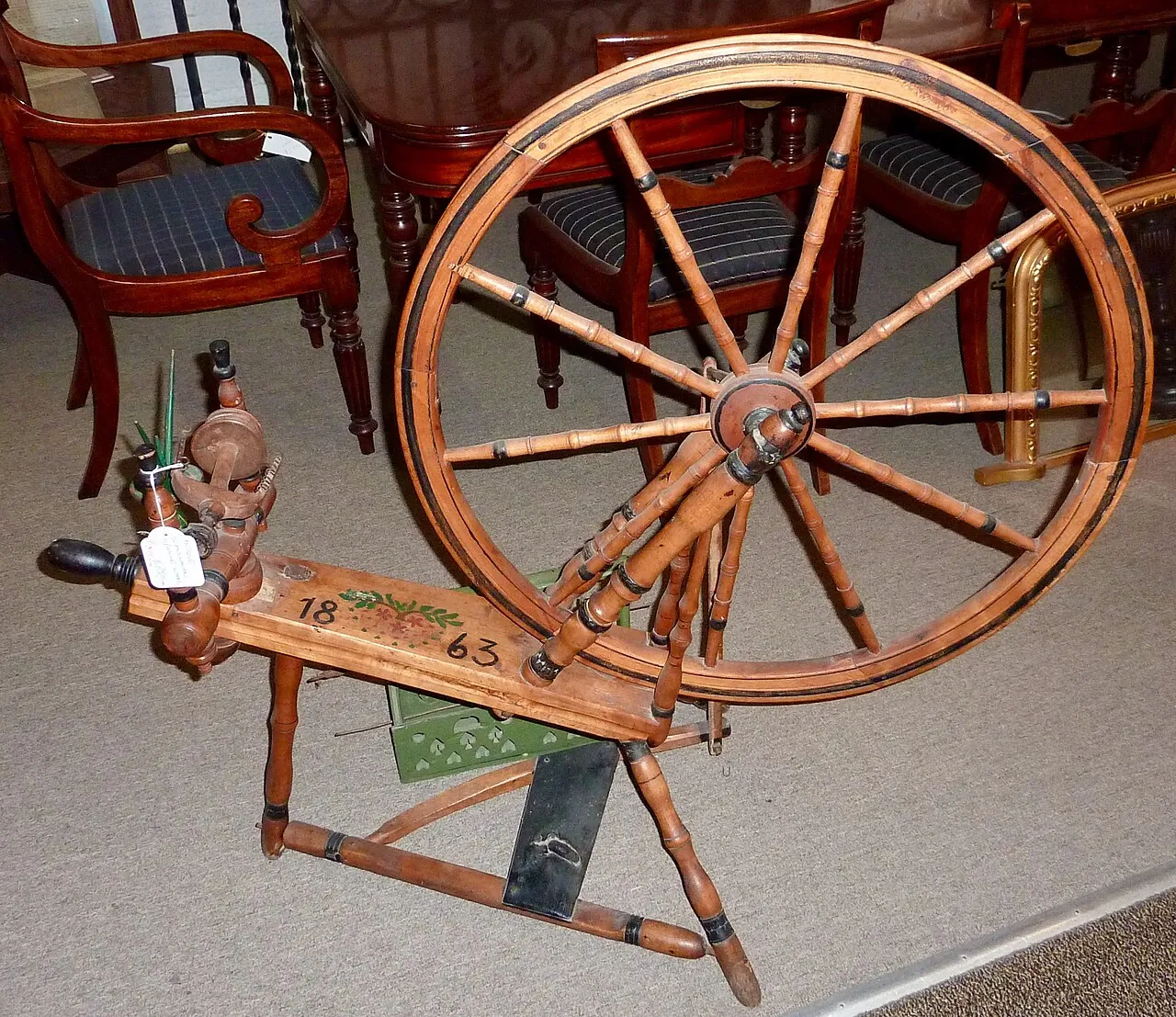
A spinning wheel does the same thing continuously, the treadle turning a flyer that twists and winds at once.
Playback is optional. If the player is unavailable, open the video at its source.
Plying and setting twist
A single is unbalanced and wants to kink. Ply two singles together by spinning them in the opposite direction (counterclockwise for singles spun clockwise) until they lie relaxed.
Set the twist: wind the yarn into a skein, soak it in warm water, snap it a few times, and hang it to dry with a light weight. It’s ready to weave, knit, or nalbind - nalbinding is happiest with wool that felts, so it can be spliced 2.
Quick check
Hanging with a light weight evens out the twist as it dries.
What to take from this
Pick a sound medium-wool fleece and skirt off the dirty edges. Scour by soaking in about 140 °F soapy water without agitation, keeping every bath the same temperature. Tease, then card into rolags or comb into top. Spin by drafting fibers while twist runs in, ply two singles in the opposite direction, and set the twist with a soak and a weighted hang.
Lesson complete
Nice work.
Sources for this lesson
- 1Processing Wool Fact Sheet. Alberta Wool. verifiedShearing and grading by staple length and fiber diameter; scouring removes grease, dirt, and vegetable matter that make up 30-70 percent of raw fleece weight, with wash water up to 140 F; carding aligns fibers.
- 2Nålebinding. Wikipedia. 2026. verifiedSingle-needle looped fabric predating knitting and crochet; short wool lengths joined by felting; Oslo, Mammen, York, and Dalby stitches; Hansen notation; the Viking-age Coppergate sock from York.