Scandinavian Band Weaving
Bands woven on a Nordic band heddle (bandgrind) with the warp tensioned by the body: how the heddle works, pattern threads and pick-up, Norwegian and Sámi traditions, reading pattern charts, and where these bands appear in bunad and household textiles.
- 4 min
- 5 steps
- 3 questions
- Lesson 72 of 204
In this lesson
- The band heddle
- Pick-up patterns
- Bands in use
- Getting started
- What to take from this
Picking up where you left off.
The band heddle
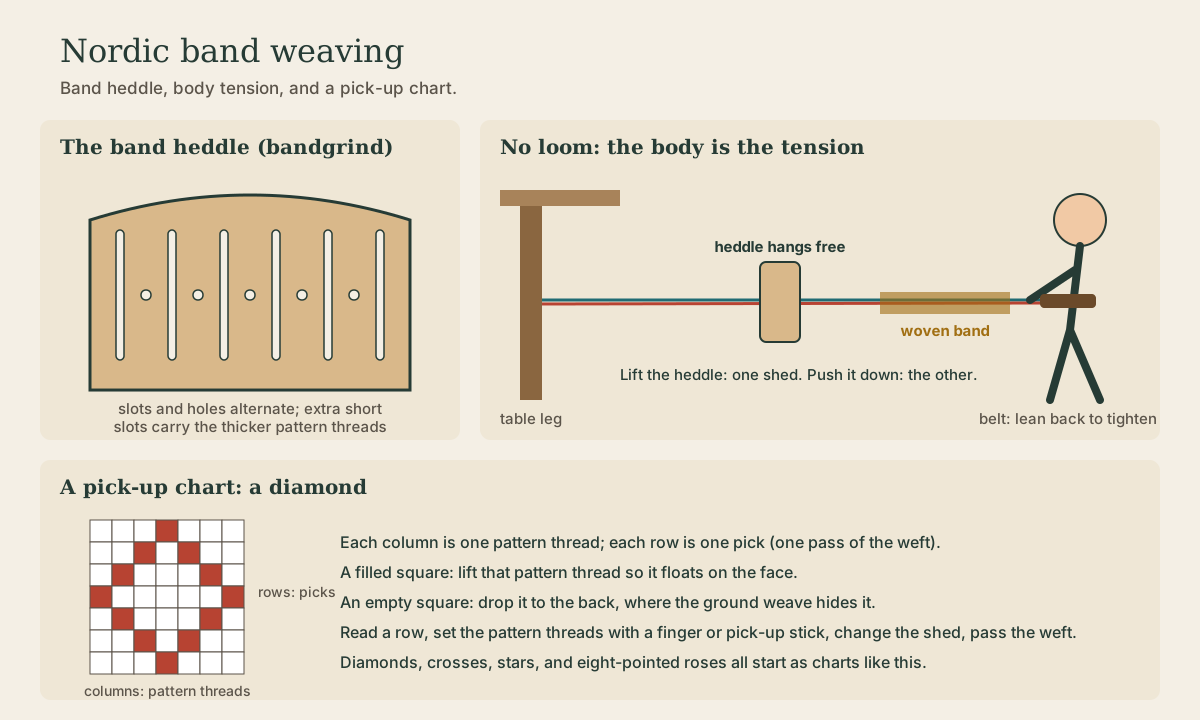
The Nordic band heddle (Norwegian båndgrind, Swedish bandgrind) is a small rigid heddle, often carved from one board, with slots and holes. Lifting or lowering it opens the two sheds, exactly as on a rigid heddle loom 1. Many have extra short slots for pattern threads.
There’s often no loom at all: one end of the warp is tied to a fixed point - a table leg, a door handle, or a peg - and the other to the weaver’s belt. The weaver’s body tensions the warp: lean back to tighten, forward to ease. The heddle hangs free in the warp. It’s portable enough to carry anywhere, and bands woven this way are warp-faced, like inkle bands 2.
Quick check
Leaning back tightens the warp; leaning forward eases it.
Quick check
Same principle as a rigid heddle, scaled down for bands.
Pick-up patterns
Norwegian and Swedish pattern bands use pick-up: a few thicker, contrasting pattern threads run through the center of the band. On each pick the weaver lifts some pattern threads and drops others with a finger or pick-up stick, so they float on the face in motifs - diamonds, crosses, stars, eight-pointed roses, X’s - while the ground weave holds them in place 2.
Patterns are recorded on charts: a grid where each column is a pattern thread and each row a pick, with a square filled where the thread floats on top. Many charts come from bands in museum collections.
Sámi bands use their own heddles and pattern conventions, with bright color sequences and geometric motifs; they trim gákti (traditional dress), belts, and shoe bands, and pattern and color can signal region and family.
Playback is optional. If the player is unavailable, open the video at its source.
Quick check
Charts show where each pattern thread floats up.
Bands in use
- Trim on Norwegian bunad and Swedish folk costume, aprons, and bonnets.
- Belts, garters, and shoe bands (skoband) for wrapping leggings.
- Ties on swaddling bands, bags, and household textiles.
- Today: straps, bookmarks, and trim.
The Vesterheim Norwegian-American Museum and Folk Art School in Decorah, Iowa, and the American Swedish Institute in Minneapolis teach band weaving in the Upper Midwest.
Getting started
- Use a smooth, strong cotton (8/4 or 16/2) or wool for the ground and a thicker yarn for pattern threads.
- Wind a warp a few yards long, thread the heddle, and tie off.
- Weave a plain band first to learn to keep the width even.
- Add pattern threads and work a simple chart - a repeating diamond.
What to take from this
The Nordic band heddle is a small rigid heddle that makes two sheds; with the warp tied to a fixed point and the weaver’s belt, the body supplies tension. Pick-up bands float thicker pattern threads in motifs charted thread by thread and pick by pick. These bands trim bunad and Sámi gákti and make belts and shoe bands; Vesterheim teaches the craft in Decorah.
Lesson complete
Nice work.
Sources for this lesson
- 1Weaving. Wikipedia. 2026. verifiedWarp and weft, shed, heddles, shafts, reed and beater; plain, twill, and satin weaves; warp-weighted, backstrap, and floor looms; sett, ends and picks per inch.
- 2Inkle weaving. Wikipedia. 2026. verifiedContinuous warp on a framework of dowels; alternate ends held in heddles or left open to make two sheds; warp-faced bands and pick-up patterns; "inkle" once meant a linen tape.