Lime Wash
Lime wash is slaked lime thinned to milk and brushed on a damp surface in thin coats; it turns back into limestone on the wall, breathes better than any other coating, and suits masonry, plaster, barns, and cellars.
- 5 min
- 7 steps
- 3 questions
- Lesson 35 of 204
In this lesson
- Lime: rock to wash and back to rock
- Where it belongs
- Safety
- Making it
- Applying it
- Living with it
- What to take from this
Picking up where you left off.
Lime: rock to wash and back to rock
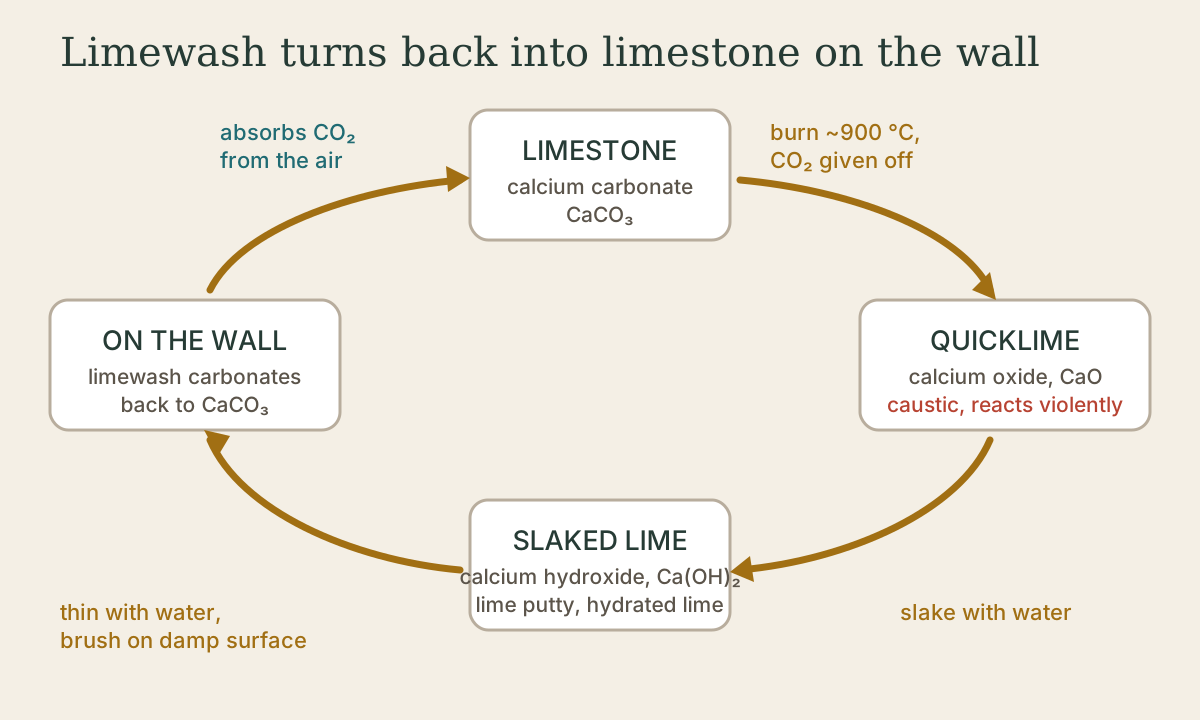
Lime wash (whitewash, limewash) is about as old and simple as coatings get: slaked lime and water, sometimes tinted. Its chemistry is a loop 1:
- Limestone (calcium carbonate) is burned in a kiln, driving off carbon dioxide and leaving quicklime (calcium oxide).
- Quicklime is slaked with water to make calcium hydroxide, sold as lime putty (wet, aged) or hydrated lime (dry powder, “builder’s lime”).
- Thinned and brushed on, the lime slowly absorbs carbon dioxide from the air and turns back into calcium carbonate: a thin layer of stone on the wall.
That’s why lime wash is durable, why it can’t be rushed, and why it breathes better than any other common coating: a porous mineral layer that lets moisture and salts pass through instead of trapping them 1.
Where it belongs
- Masonry, brick, stone, and lime plaster, inside and out, especially old walls that need to breathe. Old walls should never be sealed with water repellents or tight coatings that trap moisture.
- Barns, stables, cellars, and outbuildings, traditionally whitewashed inside for light and cleanliness; lime is mildly antimicrobial.
- Rough wood: fences, interior beams, barn walls. The National Park Service notes whitewash on interior plaster in utilitarian spaces and at times on interior beams 2.
It is not for smooth trim, furniture, or anything handled a lot.
Safety
Lime is caustic. Wear waterproof gloves, eye protection, and covered skin; keep an eyewash or clean water on hand, and if lime gets in an eye, rinse continuously for 20 minutes and get medical help. Quicklime is far more dangerous, reacting violently with water and capable of blinding; use putty or hydrated lime instead 1.
Making it
From the Heritage Council of New South Wales’s guidance 1:
- From lime putty (best): put a few trowelfuls of putty in a bucket, cover with about 3 inches of water, work it to a smooth paste, then add water until it’s like thin cream, generally about 15 to 20 percent lime. Mix by eye; limes differ. Sieve it into a clean bucket to remove grit.
- From hydrated lime: add the powder to water gradually, beating it well. Letting it soak overnight or longer improves it, since bagged lime benefits from time to fully slake.
- Color: mix earth pigment with a little hot water first, then stir in. Start with small test amounts; limewash looks darker wet than dry, and batches are hard to match. Often pigment goes only in the final coats.
- Additives: a small amount (an egg-cupful per bucket) of raw linseed oil, or traditional additions like tallow or salt, change water resistance, adhesion, and workability, but also reduce breathability. Use them sparingly and preferably only in the final coats.
Applying it
- Clean the surface of loose material and salts.
- Dampen it with a mist of water. This matters: if the wall sucks the water out too fast, carbonation is disrupted and you get a weak, cracking, powdery finish. Old limewash and lime plaster need more dampening.
- Use a large, soft limewash brush. Keep stirring with a scooping motion so the lime stays suspended.
- Apply thinly and liberally, working into the surface in many directions, and keep a wet edge.
- It goes on semi-transparent and dries opaque white. Resist the urge to brush on a thick, visible layer, which crazes and cracks 1.
- Build several thin coats, letting each dry slowly, and mist between coats in warm or windy weather. Don’t apply in frost, hot sun, or rain; it needs mild, damp-ish conditions to cure.
A good, carefully sieved limewash in several thin coats develops a strong finish that won’t rub off on clothes.
Quick check
Limewash hardens by slowly absorbing carbon dioxide. If the wall sucks the water out too fast, carbonation is disrupted and the finish powders and cracks.
Quick check
Mist between coats too in warm or windy weather.
Living with it
Limewash weathers gently, chalking and thinning over years outdoors, especially on rain-exposed faces. Renew it by brushing off loose material, dampening, and applying another thin coat. It goes only over lime, masonry, or earlier limewash; it won’t bond over modern paint. And note that many commercial products sold as “limewash” are actually acrylic paints with a limewash look, without its breathability 1.
What to take from this
Limewash is slaked lime thinned with water to thin cream, about 15 to 20 percent lime, sieved and optionally tinted with earth pigment. Brush it in several thin coats onto a dampened surface in mild weather; it goes on translucent and dries opaque as it absorbs carbon dioxide and turns back into limestone. Use it on masonry, plaster, barns, and rough wood, renew by recoating, and protect eyes and skin from the lime.
Practice
Limewash goes on semi-transparent and dries opaque. Trying to brush on a thick visible layer causes crazing and cracking.
Lesson complete
Nice work.
Sources for this lesson
- 1Limewash (Maintenance Series 7.3). Heritage Council of New South Wales. 2021. verifiedMaking limewash from putty or hydrated lime (about 15 to 20 percent lime, thin cream), dampening the surface, thin brushed-out coats, additives, the lime cycle, and safety. Cited at: The Lime Cycle; Why Use Limewash?; Health and Safety; Making Limewash; Applying Limewash; Traditional Versus Modern Commercial Limewash.
- 2Preservation Brief 28: Painting Historic Interiors. National Park Service, Technical Preservation Services. verifiedHistoric paint types - linseed oil paint with driers, whitewash, distemper, casein (milk) paint - and how linseed oil paint keeps cross-linking for decades. Cited at: Types of Historic Paints.