Breaking, Hackling, and Spinning
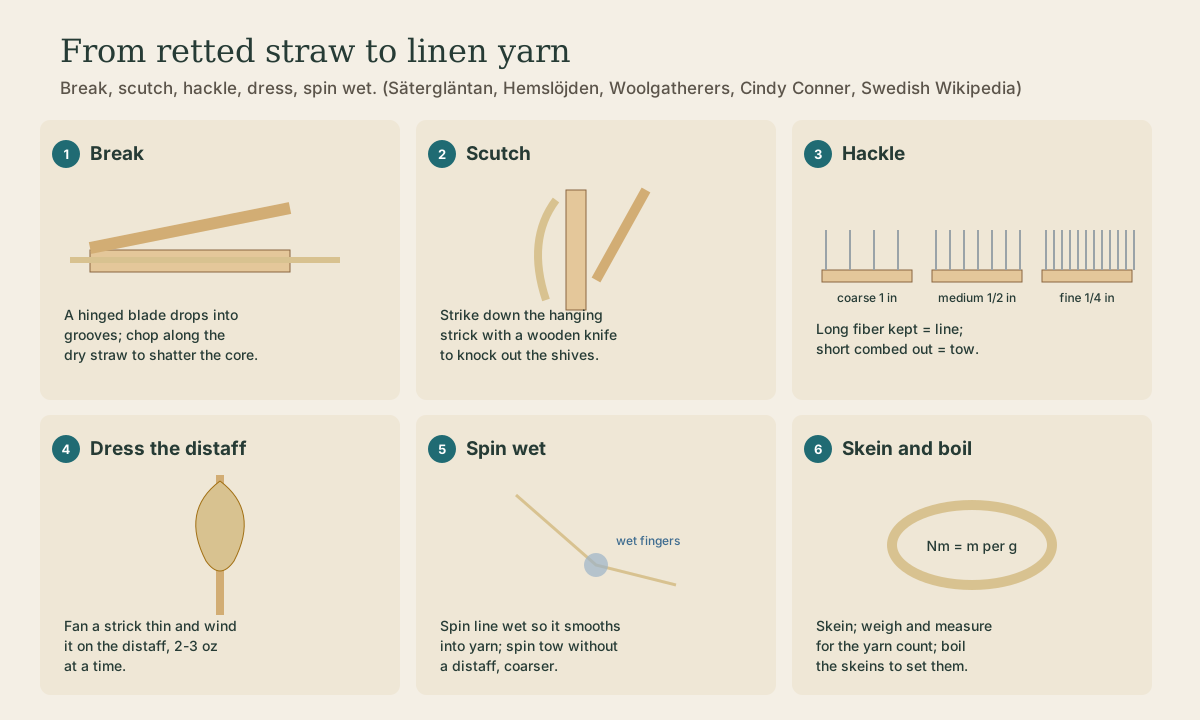
The five class days: break the dry retted straw, scutch out the shives, hackle through coarse, medium, and fine combs into line and tow, dress the distaff, spin line wet and tow dry, ply, skein, work out the yarn count, and boil the skeins.
- 3 min
- 8 steps
- 2 questions
- Lesson 180 of 204
In this lesson
- Break
- Scutch
- Hackle
- Dress the distaff
- Spin
- Skein, count, and boil
- Try it
Picking up where you left off.
The plan
-
Day 1
Breaking and scutching
- History, the plant, and old tools
- Break dry retted straw on the brake
- Scutch out the shives
-
Day 2
Hackling and the distaff
- Hackle coarse, medium, fine; sort line and tow
- Dress the distaff; spindle-spin line wet
-
Day 3
Wheel spinning
- Spin line from the distaff on the wheel
- Spin tow without a distaff
-
Day 4
Plying and yarn counts
- Ply two singles; skein
- Weigh and measure for the yarn count; judge the quality
- Boil the skeins
-
Day 5
Care of linen
- Washing and caring for linen; review the yarns
Break
The straw must be very dry 2; dry it in the sun on the day. Lay a handful across the brake, which Leslie Schroeder compares to “a large dull, wooden paper cutter” 3, and chop down along its length, moving the handful through the brake, until the woody core is shattered into short pieces all along.
Scutch
Hang the broken handful over the edge of the scutching board and strike down along it with the wooden scutching knife, turning it, until the broken woody bits, the shives, fall out and the fiber is clean 4.
Hackle
Draw the fiber through the hackles, combs of nails, from coarse to fine. Conner’s spacing is about 1 inch for coarse, 1/2 inch for medium, and 1/4 inch for fine 5:
- Hold one end, flick the other into the coarse hackle, and draw it through, starting near the tip and working toward your hand.
- Turn the handful and hackle the other end.
- Repeat on the medium and fine hackles.
The long fiber left in your hand is line (60 to 90 cm); the short, tangled fiber left on the hackles is tow (20 to 25 cm) 6. Conner’s tow came off in grades, coarse, medium, and fine 5. Twist each finished handful of line loosely into a strick and keep it.
Playback is optional. If the player is unavailable, open the video at its source.
Quick check
Line makes fine, strong yarn; tow makes coarser yarn.
Dress the distaff
Spread a strick of line in a thin, even fan on a table and wind it loosely around the distaff. Put no more than 2 to 3 ounces on at once 4.
Spin
- Line: draw a few fibers down from the distaff and spin with a bowl of water at hand, wetting your fingers; spun with water, line flax “smooths into a yarn” 4. Spin it on wheel or spindle 1.
- Tow: spin without a distaff, from a handful, into a coarser yarn.
- Ply: spin two singles together for a two-ply yarn 1.
Playback is optional. If the player is unavailable, open the video at its source.
Quick check
Spinners wet their fingers from a small bowl as they draft.
Skein, count, and boil
Wind the yarn into skeins. The yarn count in the metric system is meters per gram (Nm): measure a skein’s length, weigh it, and divide. Sätergläntan’s class works out counts and judges yarn quality 1. Boil the skeins in water to set the twist and soften the linen, then dry them under light tension.
Try it
Spin 20 meters from your own line and 20 from purchased strick flax, then work out the count of each. The difference shows how fine your hackling got the fiber.
Lesson complete
Nice work.
Sources for this lesson
- 1Lin - beredning, spånad och materiallära 2026. Sätergläntan Institutet för slöjd och hantverk. verifiedMarie Ekstedt Bjersing, July 20-24, 2026, 8:40-16:00, ending with lunch day 5; 7,600 SEK with meals, materials up to 1,200 SEK. Spin linen on spindle and wheel; spin tow and line of different qualities; try breaking, scutching, and hackling; one- and two-ply yarn; calculate yarn count and judge quality; history, study-collection textiles and tools; care of linen. Bring an apron, a working wheel (loaners available), and a 1 m band about 1 cm wide.
- 2Linberedning. Swedish Wikipedia. verifiedAfter Kewenter, Lin & linne (1999): water retting 4-5 days at 32 C, about two weeks at 10 C; land-retted flax turns silver-gray to blackish, and its mold spores are a health risk, so process outdoors. Ret test: dry a few stalks and break them to see how easily the fiber releases; a snap test on knotted fiber. The straw must be very dry before breaking.
- 3Maureen McCollum. The flax-to-linen dream weaves its way into Wisconsin. Wisconsin Life (PBS Wisconsin / WPR). 2025. verifiedLeslie Schroeder trialed 53 USDA germplasm flax varieties on southern Wisconsin farms and kept 16, selected for germination, height, and lodging resistance; seed heads rippled through a wood-and-nail comb; the brake is 'like a large dull, wooden paper cutter'; then scutching and hackling.
- 4Flax Tools. The Woolgatherers. verifiedPaper plans for flax tools: full set $45; brake $15; scutching board and knife $7.50; ripple $7.50; coarse, medium, and fine hackles $15; also strick flax at $2.25 an ounce. Their strick page: put no more than 2-3 oz on the distaff at once; spun with water it smooths into a yarn.
- 5Cindy Conner. Flax to Linen: Hackling. Mother Earth News. 2017. verified'From an 80 sq. ft. bed, I started with 5.6 pounds of retted flax, which yielded 6 ounces of line fiber… and 19 ounces of tow,' plus 6 oz seed. Hackle tine spacing about 1 in coarse, 1/2 in medium, 1/4 in fine; with only one hackle, make it medium.
- 6Ingun Grimstad Klepp. Lin. Store norske leksikon. verifiedPlant 60-120 cm tall, season 90-100 days; in Norway sown in May and harvested August-September, pulled up by the roots, bundled, and dried; seed capsules stripped with a comb; retted on grass or in ponds; line 60-90 cm, tow 20-25 cm; linen fiber 20-25% stronger wet.