The Dye Bath and Testing for Fastness
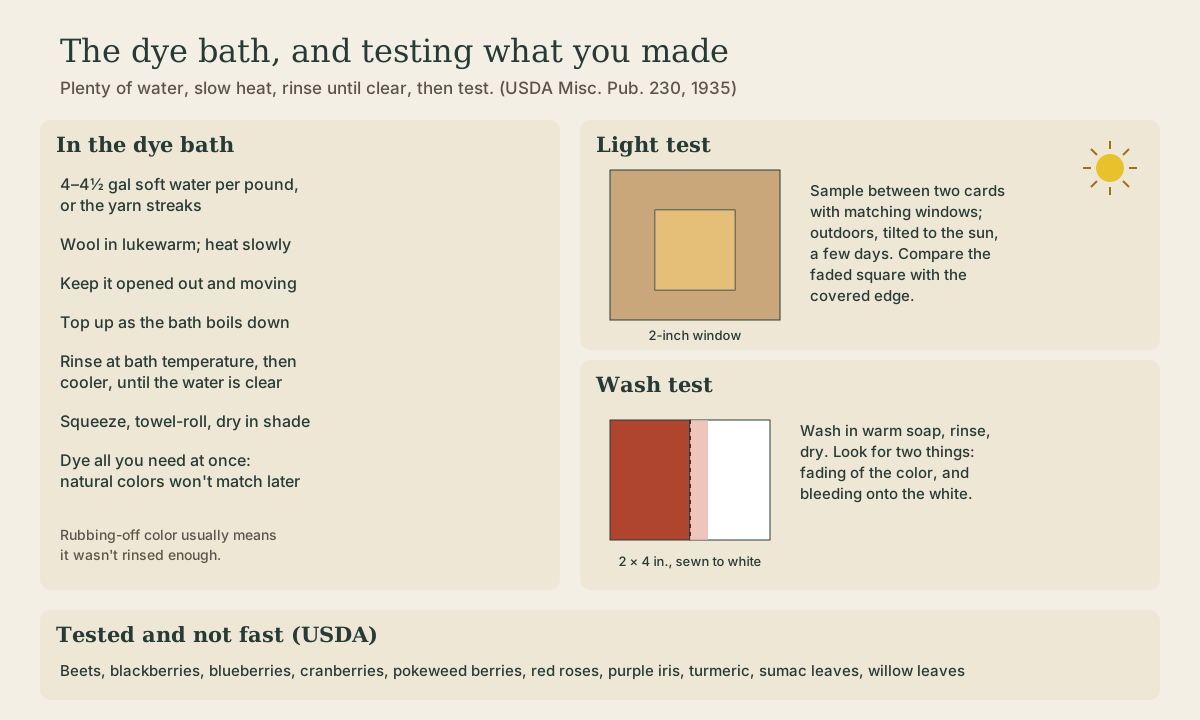
The rules that apply to every plant-dye recipe: plenty of soft water, wool in lukewarm and heated slowly, the yarn kept moving, rinsed until the water runs clear, and dried in the shade. Then the USDA's two home tests for whether a color will last: a cardboard window in the sun and a sample sewn to white cloth and washed. Plus the berries and flowers that famously don't hold.
- 5 min
- 6 steps
- 3 questions
- Lesson 107 of 204
In this lesson
- Rules for every dye bath
- Dye it all at once
- Test the color
- Colors that don’t last
- Try it
Picking up where you left off.
Each dye in the next module has its own recipe, but they all share one procedure. The USDA spelled it out once, and it’s worth learning before your first pot.
Rules for every dye bath
The bulletin’s general rules, all based on 1 pound of wool weighed dry before mordanting 1:
- Prepare the dye. Weigh or measure the plant material, extract it as the recipe says, usually by soaking and boiling, and strain it into the dye bath, so twigs and bits don’t tangle in the yarn 2.
- Use plenty of water, at least 4 to 4½ gallons of soft water per pound. Crowded yarn comes out streaked or spotted 1.
- Wool goes in lukewarm. Rinse the mordanted yarn, squeeze it lightly, and put it in a bath that’s just lukewarm; cotton can go in warmer. Then heat gradually and simmer or boil as directed 1. Avoid sudden temperature changes throughout, and stir gently 2.
- Keep it moving. Keep the yarn opened out and turning so all of it heats evenly 1.
- Keep the level up. As the bath boils down, lift the yarn out and add boiling water, so the amount of liquid stays the same 1.
- Rinse until clear. Rinse first in water the temperature of the dye bath, then cooler, and keep going until the rinse water is clear. Color that rubs off later, called crocking, usually means too little rinsing 1.
- Dry gently. Squeeze out the water; don’t twist or wring, which leaves streaks. Roll the yarn in a towel, shake it out, and hang it in the shade 1.
Remember that wet wool looks darker than it will dry 2. For a lighter or darker shade, use less or more dye material 1.
Quick check
The yarn needs room to open out and move in the bath.
Quick check
Keep rinsing in plenty of water until the rinse water is clear.
Test the color
No dye is fast under every condition. A color may stand up to light and not to washing, or hold on wool and not on cotton 1. How fast it needs to be depends on the use: a bark brown that darkens in the light might be fine in a hooked rug and a problem in curtains 1. The USDA rated its colors with laboratory equipment, but described two tests you can do at home 1.
Light test. Cut matching 2-inch square windows in two pieces of heavy cardboard. Fasten a piece of the dyed yarn or cloth to one, cover it with the other so the windows line up, and set it outdoors in direct sun, tilted toward the sun. After a few days, compare the exposed square with the covered part. The USDA rated a color good if there was no noticeable change, fair if the change was noticeable but not objectionable, and poor if it was objectionable 1.
Wash test. Sew a 2-by-4-inch piece of the dyed material to a piece of undyed material the same size. Wash it in warm soapy water, rinse it several times, dry it, and compare it with an unwashed piece. This shows both fading and bleeding, color running onto the white 1.
Quick check
A few days outdoors, tilted toward the sun, shows whether the color fades.
Colors that don’t last
Some plants famous for staining fingers don’t make lasting dyes. The USDA left these out because the colors weren’t fast on wool or cotton: annatto seeds, Japanese barberry root, beets, crab-apple peelings, blackberries, blueberries, cranberries, pokeweed berries, purple iris, mosses, peach leaves, red roses, sumac leaves, turmeric, and willow leaves 1. Earth Guild says the same: complete fading is unusual with mordanted wool, but it happens with berries and sometimes flowers 3.
Try it
When you dye your first skein in the next lessons, cut two short lengths of it. Put one in a cardboard light-test frame in a south window or outdoors, and wash the other sewn to a scrap of white cotton. Label both and check them after a week.
Lesson complete
Nice work.
Sources for this lesson
- 1Margaret S. Furry, Bess M. Viemont. Home Dyeing with Natural Dyes (Miscellaneous Publication No. 230). U.S. Department of Agriculture, Bureau of Home Economics. 1935. verifiedTests of about 65 natural dye materials on cotton and wool; only colors fast to light and washing were given recipes. Wool dyes most easily; cotton only by complicated processes. Home light test: dyed cloth between two cards with matching 2-inch windows, outdoors tilted toward the sun a few days. Home wash test: 2 by 4 inch dyed piece sewn to undyed cloth. Equipment: scales, enamel or copper kettles (iron darkens, tin makes colors harsh), measures, cheesecloth, smooth sticks, thermometer, rubber gloves, line in the shade, soft water. Weigh dry first. Wool scour: 3/4 oz neutral soap per pound in 5 gal at 95 F, 30 min, again with 1/4 the soap, rinse 3 or 4 times at the same temperature; never wring; sudden temperature changes shrink wool. Mordants: alum, chrome (potassium dichromate), copperas, tannin. Wool alum mordant: 4 oz potash alum and 1 oz cream of tartar per pound in 4 to 4 1/2 gal, heat gradually, boil gently 1 hour, cool overnight. Cotton: alum with washing soda, or alum-tannin-alum. Dye baths: at least 4 to 4 1/2 gal per pound or streaks; wool in lukewarm, heat gradually, keep moving; rinse until clear (crocking from poor rinsing); dry in shade; dye all of a color at once because natural colors can't be matched. Not fast: annatto, barberry root, beets, crab-apple peel, blackberry, blueberry, cranberry, pokeweed, purple iris, mosses, peach leaves, red roses, sumac leaves, turmeric, willow leaves. Bark colors combined with tannin often darken in light. Butternut hulls (alum) fast brown, iron darkens to black. Cochineal from an insect of Mexico and Central America; alum, 1 oz per pound, American beauty red; not for cotton. Goldenrod flowers picked coming into bloom: with alum, greenish yellow not fast to light; with indigo dark greens; with madder terra cotta. Indigo needs no mordant; vat dye reduced and dissolved in alkali; greenish yellow in the vat, blue in air; fermentation blue-pot (8 oz indigo, 4 oz bran, 4 oz madder, 1 1/2 lb washing soda, 4 gal, 85 F, 5 to 10 days) and hydrosulphite vat. Madder: Egyptians, Moors, Netherlands; replaced by synthetic alizarin; 8 oz per pound with alum, lacquer red, very fast; dark red at 140-160 F without boiling. Onion skins 10 oz dry, alum: burnt orange, fair. Black walnut hulls on unmordanted wool: dark brown, good; long boiling makes wool harsh. Lichens used by peasant dyers of Sweden, Scotland, and Ireland. Top-dyeing: clear colors make clear colors; goldenrod plus indigo green; indigo plus walnut black or gray; goldenrod plus madder terra cotta.
- 2Natural Dyeing. Earth Guild (Asheville, North Carolina). 2000. verifiedWash wool at least twice in warm soapy water; tie skeins loosely in several places. Three methods: mordant first, mordant and dye together, or dye then mordant; recommends pre-mordanting with alum. Madder 8 oz per pound of wool; madder should not be heated beyond a simmer, because boiling releases brown dyes. About four gallons of water per pound of fiber. Enter wet wool into a tepid bath, heat slowly, avoid abrupt temperature changes, stir gently; colors are darker wet than dry.
- 3The Mordant Riff. Earth Guild (Asheville, North Carolina). 1998. verifiedSubstantive dyes (lichens, walnut hulls) need no mordant; adjective dyes do: the mordant enters deeply into the fiber and the dye combines with it. Wool is easiest. Non-reactive pot, unchipped enamel or stainless; brass, copper, or iron pots mordant on their own. Soak wool several hours; never put dry fiber in a mordant or dye pot. Simmer an hour, do not boil; heat and agitation cause felting; cool overnight. Mordanted wool can be stored wet or dry. Never use the same pots for cooking and dyeing; don't breathe fumes. Alum with cream of tartar: 3 oz alum and 1 oz cream of tartar per pound, 4 for heavy wool; too much makes wool sticky. Iron saddens; tin blooms but is caustic and makes wool brittle; blue vitriol is poisonous. Test colorfastness; fading happens with berries and some flowers.