Hinges and Latches
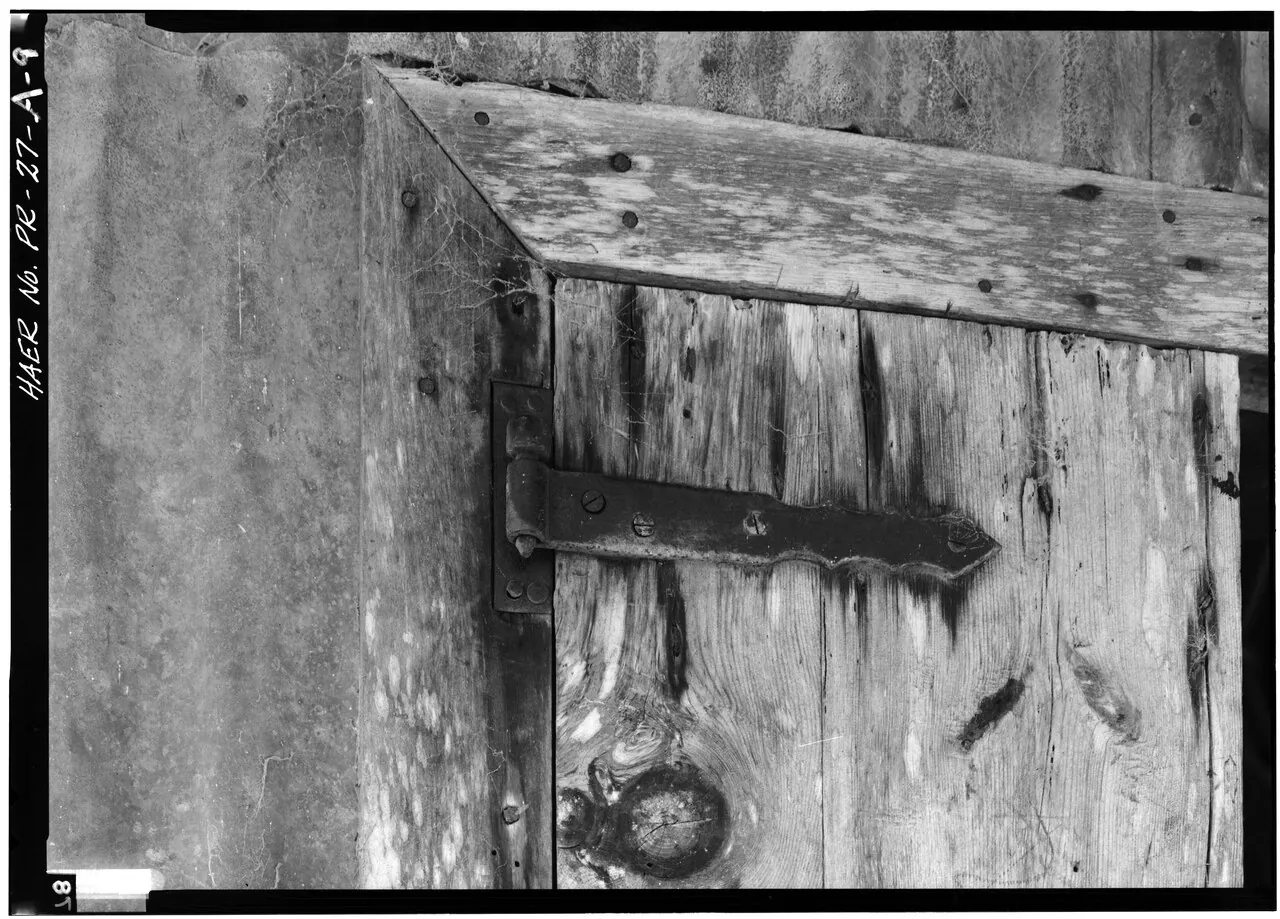
Hardware for doors, chests, and gates: strap hinges with rolled eyes and drive pintles, decorative ends, punched and countersunk nail holes, a thumb latch, and a simple slide bolt - sized, forged, and fitted to the woodwork.
- 3 min
- 5 steps
- 3 questions
- Lesson 96 of 204
In this lesson
- Strap hinges
- A thumb latch
- A slide bolt
- Finishing hardware
- What to take from this
Picking up where you left off.
Strap hinges
A strap hinge is a long flat strap with an eye at one end that turns on a pintle fixed in the door frame. It’s the classic hinge for barn, shed, sauna, and gate doors and for chests.
Stock: flat bar sized to the door - 1/8 × 1 inch for a chest or cabinet, 3/16 × 1.25 inch for a shed door. The pintle is round bar sized to the eye (often 3/8 or 1/2 inch).
- Decorative end: forge the far end of the strap first - a spade, leaf, round, or fishtail - by fullering, drawing, and spreading (see Drawing Out).
- Nail holes: punch holes at a yellow heat along the strap (see Punching and Drifting), then countersink them from the face side with a tapered punch so heads sit flush.
- Eye: heat the other end and start a curl over the anvil edge, then scroll it closed around a mandrel the size of the pintle 1. For heavy doors, roll the eye back along the strap and forge-weld it for strength.
- Pintle: forge a pin and a spiked or flattened shank at a right angle; a drive pintle is driven into a timber post, a plate pintle screws on.
- Fit: the eye should turn freely on the pintle; flatten the strap and check it’s straight.
Playback is optional. If the player is unavailable, open the video at its source.
Quick check
Start the curl over the anvil edge, then close it around a rod; some smiths weld the eye closed for strength.
Quick check
Drive pintles have a spiked shank; plate pintles mount with screws.
Quick check
Punch, then use a countersink punch or drift at heat on the face side.
A thumb latch
The traditional door latch (Suffolk or Norfolk latch) has four parts:
- Handle and plate on the outside, with a thumb lever passing through a slot in the door.
- Bar (latch bar) on the inside, pivoting on a staple or pin.
- Keeper on the frame that the bar drops into.
- Staple to guide the bar.
Pressing the thumb lever lifts the bar out of the keeper. Each part uses drawing out, punching, bending, and riveting; fit them to the door’s thickness.
A slide bolt
A round bar sliding in two staples (U-shaped straps with flattened, punched feet), with a knob or bent handle, and a keeper on the frame. A small, satisfying project with hinge-like skills.
Finishing hardware
Wire-brush hot; for outdoor hardware, use paint, linseed oil, or a mix of linseed oil and turpentine over warm steel, renewed now and then. Hot-dip galvanizing (done professionally) protects best outdoors - but never forge galvanized stock (see Heat Colors).
What to take from this
A strap hinge is flat bar with a forged decorative end, punched and countersunk nail holes, and an eye scrolled around a pintle-sized mandrel (welded shut for heavy doors), turning on a drive or plate pintle. A thumb latch combines handle, thumb lever, bar, staple, and keeper; a slide bolt is a rod in two staples. Finish outdoor hardware with paint or oil.
Lesson complete
Nice work.
Sources for this lesson
- 1John Lord Bacon. Forge-Practice: Elementary. John Wiley & Sons. 1908. verifiedPublic-domain trade-school text from the Lewis Institute; fire building with coking coal, welding heat and fluxes (sand, borax, sal ammoniac), upsetting, drawing out, bending, punching, and tool-steel hardening and tempering colors (430 F pale yellow to 570 F blue, temper gone near 650 F).