Saddle Stitching
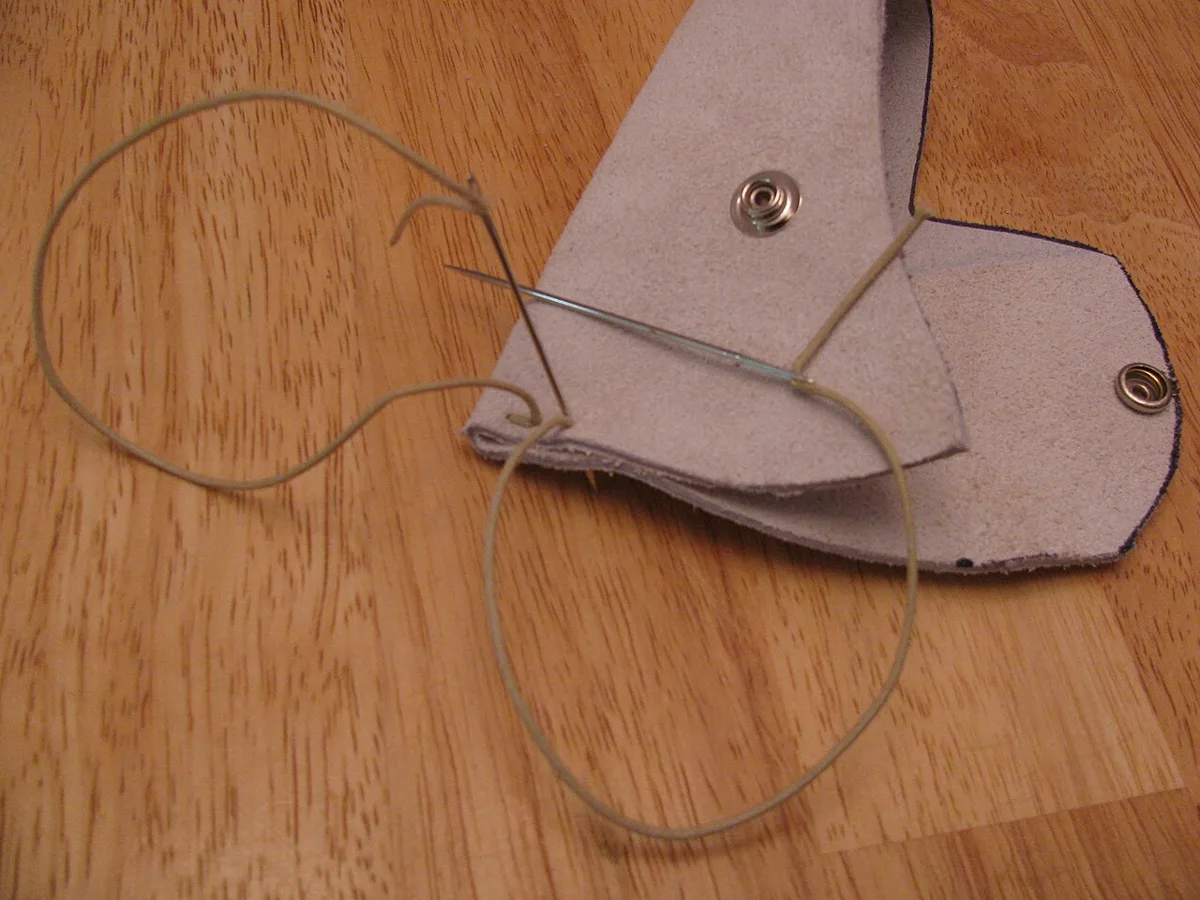
The saddle stitch is the leatherworker's signature: one thread with a needle on each end, passed through every hole from both sides. It's slow, but if a stitch is cut the seam still holds, which a machine stitch can't promise. Marking the line, punching the holes, threading up, sewing with an awl and two needles, locking the end with backstitches, and setting the stitches flat.
- 4 min
- 8 steps
- 2 questions
- Lesson 100 of 204
In this lesson
- Why two needles
- Mark the line and the holes
- Thread up
- Sew
- Lock the end
- Set it
- Try it
Picking up where you left off.
Look closely at a good leather sheath or saddle and you’ll see a row of slanted stitches as neat on the back as the front. That’s the saddle stitch, sewn by hand with two needles. It’s the one skill that most separates handmade leather goods from factory ones.
Why two needles
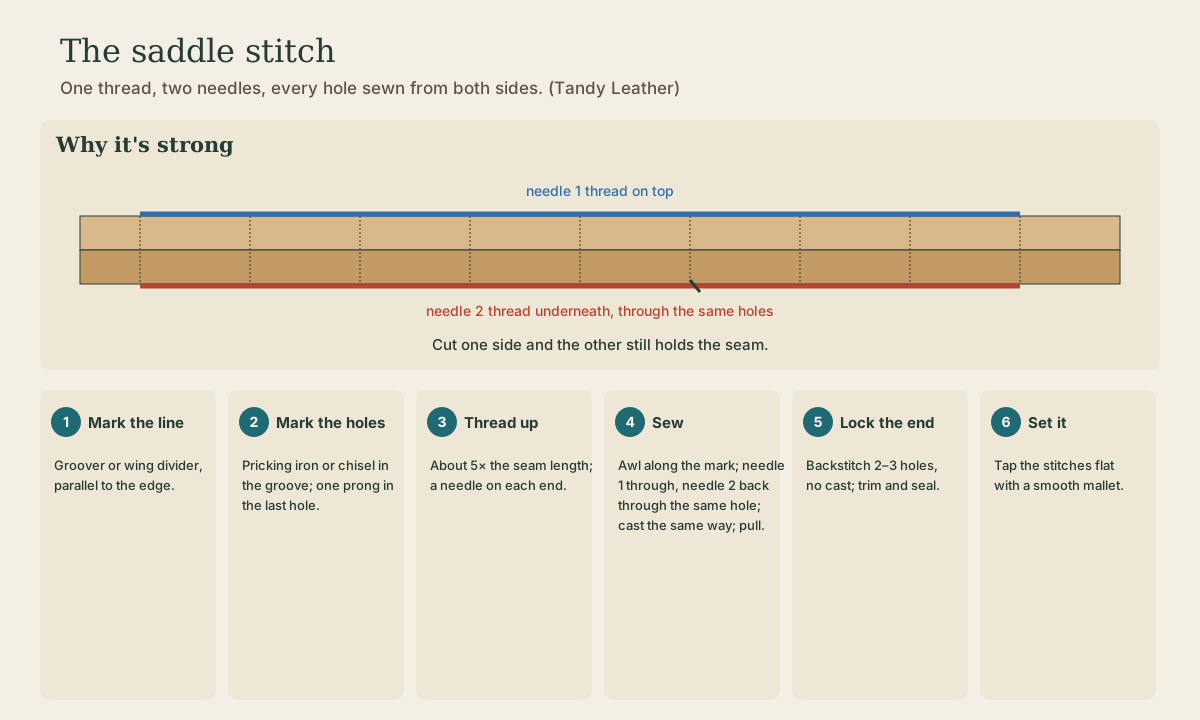
A sewing machine makes a lock stitch: one thread on top, one below, interlocked at each hole. Break it in one place and the seam can gradually unravel along its whole length. In a saddle stitch, each hole is sewn by both needles, from both sides, so if a thread is cut on one side, the other side keeps the seam together 1. It’s slower, but stronger, and many people find the rhythm of it calming once they’ve learned it 1.
Quick check
A broken machine stitch can separate along the whole line.
Mark the line and the holes
- Mark the stitch line. Cut a shallow channel parallel to the edge with a stitching groover, so the finished stitches sit flush and resist wear, or mark the line with a wing divider 1.
- Mark the holes. Set the prongs of a pricking iron (or stitching chisel) in the groove and strike it with the mallet. A pricking iron marks the holes and cuts the surface; it isn’t meant to go all the way through. To keep the spacing even around the whole seam, set one prong in the last hole you made before each strike 1.
Match the tools to the job: finer thread and closer spacing for small, delicate items like wallets; heavier thread and wider spacing for belts and bags under stress 2.
Thread up
Cut thread about five times as long as the seam (more for thick work), and put a needle on each end. With linen or hemp thread, loop it back through itself a few times so it won’t slip off the needle; woven poly thread usually needs one loop 1.
Quick check
Thicker leather takes more; it’s better to have extra than to run out.
Sew
Clamp the work in a stitching pony, a wooden clamp that holds the leather upright and frees both hands, and start at the far end of the line 1:
- Push the awl through the first mark, keeping the blade aligned with the slant of the mark, pass one needle through, and center the thread so both ends are equal.
- Awl the next hole. Push the first needle through from one side, then the second needle through the same hole from the other side.
- Before pulling the second needle through, loop the first thread over it the same way every time. This cast locks the stitch and gives the even, slanted look on both faces.
- Pull both threads snug, and repeat down the line.

Lock the end
At the end of the line, sew back over the last two or three holes, without casting, placing the new stitches under the existing ones. Trim poly thread about an eighth of an inch long and melt it with a lighter (carefully); on linen or hemp, tap in a drop of glue 1.
Set it
Finally, tap the stitches with a smooth-faced hammer or maul. It presses them into the leather, brings out the zigzag pattern, and reduces wear on the thread 1.
Playback is optional. If the player is unavailable, open the video at its source.
Try it
Fold a scrap of 4–5 oz leather in half and saddle stitch 4 inches along the open edge. Then look at both sides. If the slant wanders, you’re casting differently on some stitches; if gaps are uneven, set a prong in the last hole every time you strike the iron.
Lesson complete
Nice work.
Sources for this lesson
- 1Tandy Skills: Saddle Stitching. Tandy Leather. verifiedSaddle (hand, two-needle) stitching is slower but stronger than machine stitching: if one side's thread is cut the stitch keeps its integrity, while a broken machine stitch can separate along its length. Tools: two needles, lightly waxed thread, stitching groover, pricking iron, awl, stitching pony. Groove a channel (or mark with a wing divider); set the pricking iron in the groove and strike to mark and cut the surface, aligning one prong in the last mark for even spacing; thread about five times the seam length, a needle on each end; clamp in the pony; awl through each mark following its angle; pass one needle, then the other through the same hole, casting (looping) the thread the same way each time for a consistent slant; backstitch two or three holes without casting; trim and melt poly thread or glue linen; tap stitches flat with a smooth hammer.
- 2A Guide to Choosing Thread Weight and Chisel Size for Hand Sewing Leather. Tandy Leather. verifiedLighter thread for light leathers and small items like wallets; heavier thread for cowhide, belts, and bags under stress. Match chisel spacing to thread thickness: wider spacing for thicker thread; fewer prongs for tight curves; holes should fit the thread without distorting the leather.