Winding, the Pricking, and the Stitches
Days one and two: prick a pattern, pin it on the pillow, wind bobbins in pairs and hang them from the starting pins, then learn the two moves, cross and twist, and the stitches built from them: half stitch, cloth stitch, and cloth stitch and twist, with a cloth-stitch sample and Torchon ground.
- 3 min
- 6 steps
- 2 questions
- Lesson 176 of 204
In this lesson
- Prick the pattern
- Wind the bobbins
- Cross and twist
- The stitches
- A cloth-stitch sample
- Try it
Picking up where you left off.
Prick the pattern
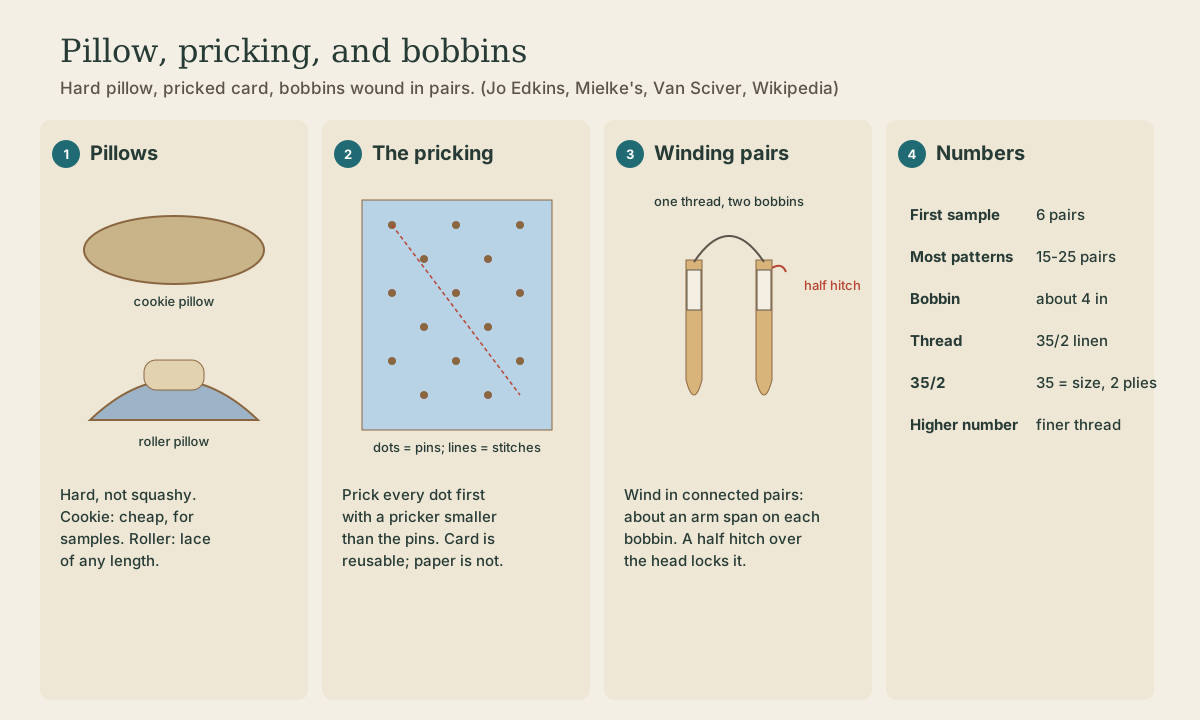
Prick every dot of the pattern before you start, with a pricker slightly smaller than your pins. Printer paper works once; pricking card can be reused 1. Cover a paper pattern with clear contact paper so the threads slide.
Pin the pricking to the pillow with a pin pushed right in at each corner, so they won’t catch threads. Then put in the starting pins at the top; in Jo Edkins’ patterns a small number by each tells how many pairs hang from it. Working pins go in far enough to hold, but not to their heads 1.
Wind the bobbins
Wind in connected pairs: one length of thread with a bobbin at each end. Measure about an arm span per bobbin (arm to chest for a small sample), wind each bobbin toward its head, and lock the thread with a half hitch over the head so it unwinds only when you loosen it 1. Hang each pair over its starting pin.
Cross and twist
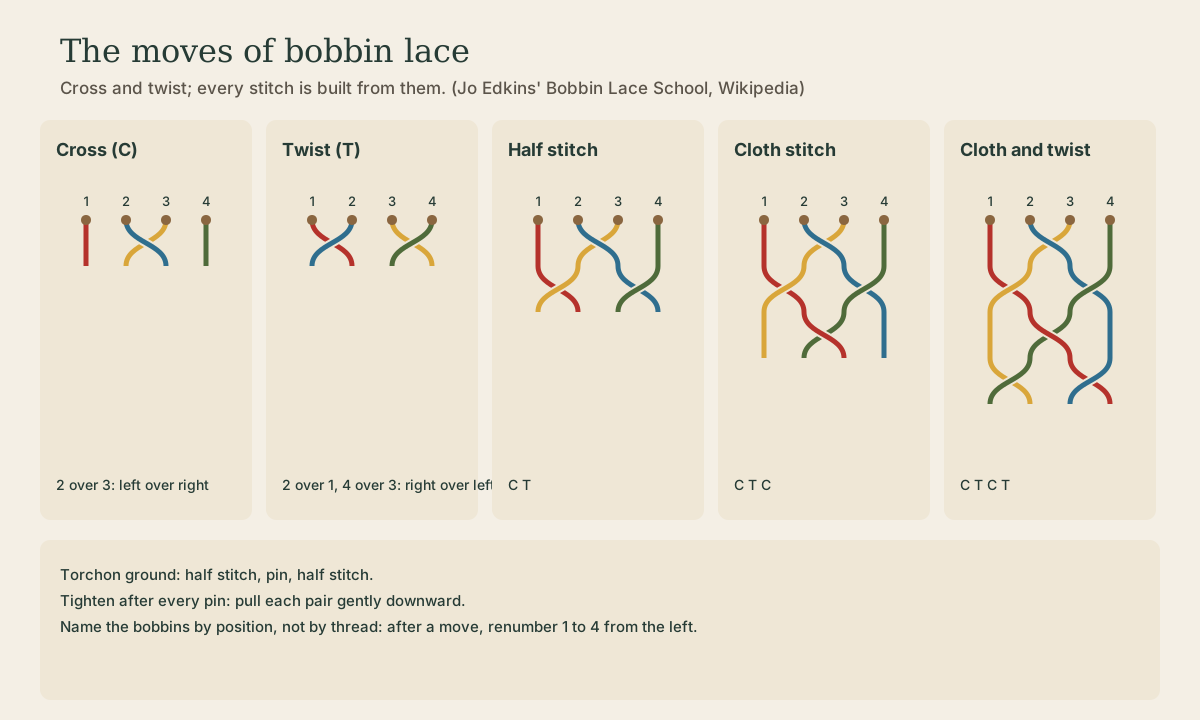
Every stitch is built from two moves, crossing and twisting 2. Work with four bobbins, two pairs, numbered 1 to 4 from the left by position 1:
- Cross (C): the middle two bobbins, left over right: 2 over 3.
- Twist (T): in each pair, right over left: 2 over 1 and 4 over 3.
Pick the bobbins up and lay them down; don’t lift the threads. Renumber by position after every move.
A plait of two pairs, cross and twist over and over, is the first exercise in Edkins’ beginner sequence 1. Make one 2 inches long to get the moves into your hands.
Quick check
A twist is the other move: in each pair, right over left.
The stitches
Jo Edkins defines them 1:
- Half stitch: cross, twist (CT).
- Cloth stitch: cross, twist, cross (CTC). One pair travels across through the others, weaving like cloth.
- Cloth stitch and twist: CTCT. “Whole stitch” can mean either of the last two, so check what a pattern intends.
- Torchon ground: half stitch, pin, half stitch.
Tighten after every pin: pull each pair gently down so the stitch settles against the pin 1.
Quick check
It carries one thread straight across through the others, like weaving.
A cloth-stitch sample
Edkins’ beginner sequence goes on from the plait to a cloth-stitch sample with 6 pairs, then Torchon ground with 6 pairs 1. Hang 6 pairs side by side. Take the leftmost pair as the worker and cloth-stitch it through each pair in turn to the right edge, put in a pin, then work back to the left. A square of even cloth stitch, with the worker’s path visible as a zigzag of pins at the edges, is the first real lace. North House’s class builds its ornament from these basic stitches 3.
Playback is optional. If the player is unavailable, open the video at its source.
Try it
Work the 6-pair cloth-stitch sample until it’s an inch long, then compare the two edges. If one edge pulls in, you’re tightening harder on that side; aim for edges as straight as the pricking.
Lesson complete
Nice work.
Sources for this lesson
- 1Jo Edkins. Bobbin Lace School. Jo Edkins. verifiedPillows are hard; a round domed cookie pillow is cheap and good to start; a roller pillow allows lace of any length. Bobbins about 4 in; simplest patterns 6 pairs, most 15-25; start with 10-12 pairs. Pins with small heads. Prick every dot first. Wind in connected pairs, about an arm span per bobbin, locked with a half hitch. Cross: middle two bobbins, left over right; twist: both pairs, right over left; cloth stitch CTC; half stitch CT; Torchon ground half stitch, pin, half stitch. Tighten after each pin; finish with knots while pins are in.
- 2Knyppling. Swedish Wikipedia. verifiedKnown in Sweden since the early 1700s; a cottage trade around Vadstena; Ottilia Adelborg founded a lace school in Gagnef in 1903. Basic moves are crossing and twisting. Dalarna lace is worked freehand without a pricking, pins only at the edges; its stitches begin with a twist and end with a cross. The older pillow is a padded rotating wooden cylinder set into a domed cushion or box, with the pricking on card around the cylinder.
- 3Bobbin Lace Making. North House Folk School. verifiedTwo days with Kelly Marshall, who 'learned bobbin lace making, or knyppling, while studying in Sweden where the lace is often made for folk costumes'; the Scandinavian Torchon technique and basic stitches make a window ornament or holiday decoration. Bring small sharp scissors, a #14 crochet hook, paper and pencil; 2019 tuition $170, materials $6.