The Norwegian Sash Window and What to Buy
North House's nine-day class builds a four-pane Norwegian sash and its casing entirely by hand, taught by the NTNU joiner who reconstructed how Trondheim's 18th-century windows were made. What these windows are, the wood to look for in the US when malmfuru isn't available, a working size for a four-pane sash, glass, putty, paint, and hardware sources, and a nine-day plan.
- 4 min
- 6 steps
- 2 questions
- Lesson 118 of 204
In this lesson
- Norwegian windows
- Wood
- A working size
- Glass, putty, paint
- Try it
Picking up where you left off.
What you need
| Have it | Material | Spec | Qty | Where to get it |
|---|---|---|---|---|
| Sash stockNorwegian windows used malmfuru, resin-rich heartwood pine. | Clear, slow-grown pine heartwood or vertical-grain Douglas fir, about 1 3/8 in (35 mm) thick | About 12 board feet, including bars and spares | Specialty lumber dealer; pick the tightest rings and most resin | |
| Casing boards | Rough-sawn pine or fir, about 1 1/4-1 1/2 in thick, 5-6 in wide | Four boards, each a little longer than the window side | Local sawmill or lumberyard | |
| Peg stock | Straight-grained hardwood or pine heartwood, split, to make 8 mm (5/16 in) square pegs | A few short billets | Offcuts | |
| Restoration glassOr plain window glass from a hardware store, cut to size. | Mouth-blown cylinder glass, ‘Light’ (19th-century look) or ‘Full’ | Four panes cut to your rebate size | Bendheim | |
| Linseed oil putty | Raw linseed oil and chalk | About 400 g for four small panes | Allbäck US store | |
| Linseed oil paint | Pure linseed paint; dark brown or green are traditional outside | 1/2 liter | Solvent-Free Paint (Earth+Flax), Rochester, NY | |
| Glazing sprigs | Small headless glazier’s points | About 16 | Hardware or glazing supplier | |
| Hinges optional | Small strap-and-pin (pintle) hinges, the Norwegian stabelhengsel pattern | 1 pair, plus a hook or turn button to close | A blacksmith or period hardware supplier |
Tools
Checkmarks are saved on this device.
The plan
-
Day 1
The rod and the stock
- Draw a full-size rod of the sash
- Choose grain orientation; square and gauge the pre-milled stock
- Lay out all joints from the light size
-
Day 2
Joints
- Saw and chop the four open mortise-and-tenon corners
- Lay out and cut the bar joints
-
Day 3
Rebates and mouldings
- Plough the glass rebates
- Mould rails, stiles, and bars on a sticking board
- Mitre the profiles at every joint
-
Day 4
Assemble the sash
- Dry-fit and correct
- Assemble and peg from the inside
- Flush the faces; bevel the closing edge
-
Day 5
Day off
- North House breaks the nine days here
-
Day 6
Casing stock
- Scrub and joint the rough boards flat, straight, and square
- Thickness by hand
-
Day 7
Casing rebate
- Cut to length
- Make the sash rebate (plough, or an applied stop)
-
Day 8
Dovetails
- Dovetail the head and sill into the jambs
-
Day 9
Mould, assemble, fit
- Mould the casing edge
- Assemble; fit the sash to 1-2 mm clearance
- Hang it; plan glazing at home
This module reconstructs North House Folk School’s nine-day Traditional Building: Norwegian Sash Windows. In the first four days students make the sash “from pre-milled stock, connecting rails and stiles with a crossed vertical and horizontal bar using open mortises and tenons locked with suitable pegs”; in the next four they make the casing from rough-sawn boards, planed by hand, with “a couple of strategies for making the sash rabbet” and dovetailed corners, and every part is moulded with traditional sash profiles. Each student goes home with a four-pane window; glazing is done at home 1.
The instructor, Thor-Aage Kaminka Heiberg, heads NTNU’s traditional building crafts program and, with Roald Renmælmo, published a detailed study of how the 18th-century windows of Stiftsgården in Trondheim were made 2. That study supplies most of the technical detail in this module. North House’s own lesson plan isn’t published.
_04.jpg)
Norwegian windows
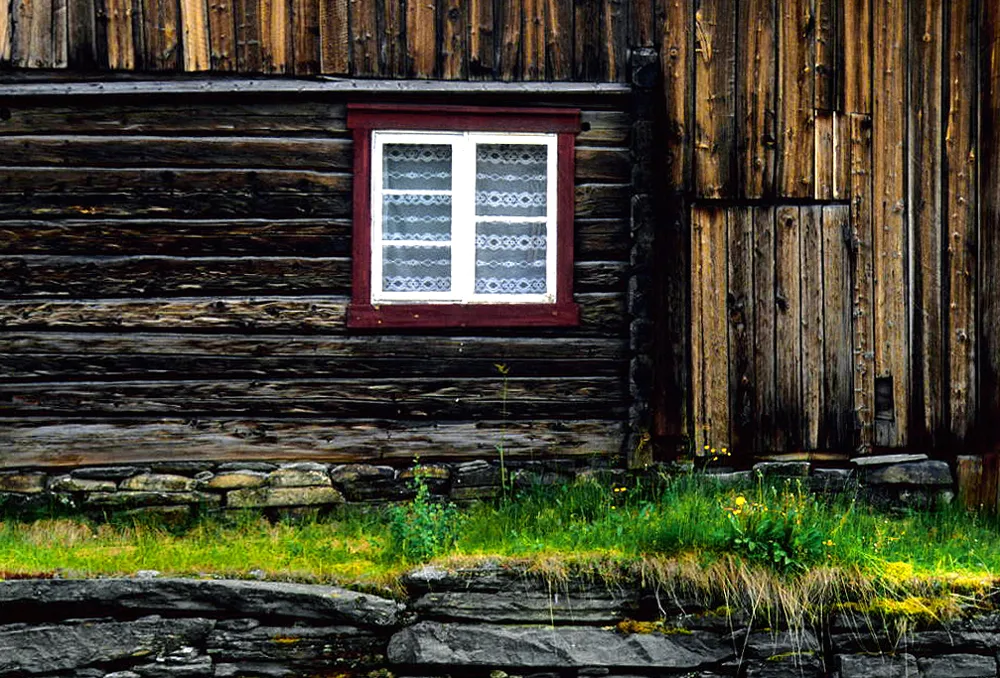
Windows with wooden bars appear in Norway in the early 1700s 3. The glass sits in a putty rebate on the outside, with no wooden beads, and the bars are true through-bars with rebates on both sides 3. The Stiftsgården sashes, built 1774 to 1778, are 48 by 25 1/2 inches with six lights; their stiles and rails are 2 1/16 to 2 1/4 inches wide and remarkably consistent at 34.6 to 34.8 mm thick 2. A four-pane sash is a smaller version of the same thing.

Wood
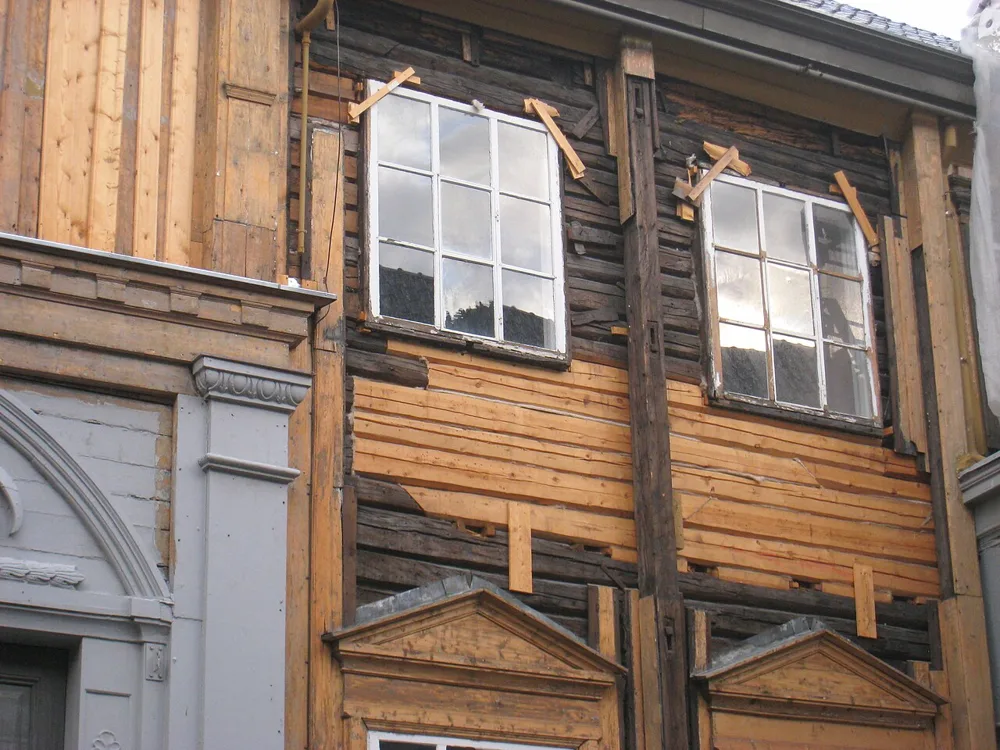
Old Norwegian windows were made of sorted, slow-grown pine heartwood 3, resin-rich wood called malmfuru; Riksantikvaren specifies the same for repairs 4. In the US, the closest commercial match is clear, vertical-grain Douglas fir, which is what a heritage-window standard calls for along with through mortises and one-piece members 5; salvaged old-growth heart pine is better still. Choose boards by counting rings and looking for resin, not by grade stamp.
Quick check
In the US, look for clear vertical-grain Douglas fir or the tightest-ringed heart pine.
A working size
North House doesn’t publish its window’s dimensions. A reasonable four-pane sash for a first build, using the Stiftsgården proportions:
- Members 1 3/8 inches thick (about 35 mm).
- Stiles and rails 2 1/8 inches wide.
- Bars 1 inch wide 2.
- Overall about 20 by 26 inches, which gives four lights of about 7 3/8 by 10 3/8 inches.
Lay out everything from the light size, the inside of each pane opening; each bar mortise runs from that line to the top of the profile 2. The glass is cut to the light size plus the rebate depth on each side, less a small clearance.
Quick check
Every joint is laid out from the light lines.
Glass, putty, paint
Glass. Bendheim’s mouth-blown Restoration Glass comes in “Light” (19th-century look) and “Full” (17th to 18th century), cut to size 6. Restoration glass or ordinary window glass both work.
Putty and paint. Linseed oil putty and linseed oil paint are the traditional pair. Allbäck’s putty is raw linseed oil and chalk, sold in the US 7; Solvent-Free Paint in Rochester, New York, carries Allbäck, Ottosson, and Viking linseed paints and putties 8. Ellev Steinsli, a Trondheim window joiner, recommends slow-grown pine, linseed putty, and cylinder or restoration glass together 9.
Playback is optional. If the player is unavailable, open the video at its source.
Try it
Draw the rod: a full-size drawing of the sash on a board or paper, showing the outer edges, the light lines, the rebate line, and the moulding line for each member. Every joint in the next lessons is marked from it.
Lesson complete
Nice work.
Sources for this lesson
- 1Traditional Building: Norwegian Sash Windows. North House Folk School. verifiedNine days with a day off (May 4-12, 2027), instructor Thor-Aage Kaminka Heiberg (master joiner, head of NTNU's Norwegian traditional building crafts program); tuition $875, materials $180. Build a traditional Norwegian sash window in its casing with hand-tool joinery: first four days the sash from pre-milled stock, rails and stiles with a crossed vertical and horizontal bar, open mortises and tenons locked with pegs; next four days the casing from rough-sawn boards, planed straight and flat by hand, cut to size, a couple of strategies for the sash rabbet, dovetailed corners; all parts moulded with traditional sash profiles using planes the instructor provides. Students bring home a four-pane window; glazing is done at home. All tools provided; optional scrub, smoothing, jointer and block planes, saws, chisels, mallet, mortise gauge, plow and rabbet planes.
- 2Thor-Aage Kaminka Heiberg, Roald Renmælmo. Rediscovering the 18th Century Wooden Casement Window Manufacturing Process at Trondheim Stiftsgården. Studia Vernacula 17, 170-199. 2025. verifiedStiftsgården sashes (1774-78): 48 x 25 1/2 in, six lights; stiles and rails 2 1/16-2 1/4 in wide, 34.6-34.8 mm thick; stile edges beveled about 8-10 degrees to open freely; corners open mortise and tenon, each locked with two 8 x 8 mm square pegs driven from the interior. Horizontal bars tenoned into the stiles; the vertical bar in separate pieces between rails and bar; bars 25.5 mm (1 in) wide x 31.75 mm (5/4 in) high. Casing rebate 5/8 in (1/2 in usual); casing head dovetailed to the jambs. Probably Scots pine; pith side facing out and toward the sash center. Norway normally mitres the moulding at rail and bar joints rather than coping. Trondheim profile from the edge: fillet, ovolo, fillet, cove; on bars the quarter-rounds meet as a bead. Glass rebate on museum planes about 9 x 6 mm. Two workflows tested: joint first and mould after (judged the more natural joiner's sequence), or mould first with side plane and mitre chisel. Take dimensions from the inside light size; a sticking board holds bars for moulding. About one sash per day at a calm pace, two with practice.
- 3A. Korsaksel, M. Stige. Informasjonsark: Vinduer. Byantikvaren i Oslo. 2014. verifiedWooden-bar windows appear in Norway in the early 1700s; pre-war windows used sorted, slow-grown pine heartwood; glass set in a putty rebate without wooden beads; bars are true through-bars; repaint every 5 years on south walls, 8-10 elsewhere; linseed oil paint outside.
- 4Vedlikehold av vinduer. Riksantikvaren (Norwegian Directorate for Cultural Heritage). verifiedPrime bare wood in the putty rebate with thinned linseed oil paint; bed the glass in putty, pressing until the bed putty is about 1 mm, fix with glazing sprigs, putty the outside, and once the putty has dried somewhat paint it with linseed oil paint, running a couple of millimeters onto the glass. Don't paint the hinge-side edge or the sash binds. Repair wood should be slow-grown, resinous pine (malmfuru). Hardware: corner irons and hinges, greased with petroleum jelly.
- 5Design Criteria for Wood Window Production. Vancouver Heritage Foundation. 2021. verifiedHeritage-quality wood windows: solid kiln-dried or seasoned Douglas fir or equivalent; through mortise-and-tenon joints; one-piece sash members without splices or finger joints; primed before glazing; true divided lights.
- 6Restoration Glass. Bendheim. verifiedMouth-blown cylinder glass made by Glashütte Lamberts in Germany; 'Full' matches 17th-18th-century glass, 'Light' 19th-early 20th; cut to size up to about 23 x 35 in; no minimum order, each piece charged as at least 1 sq ft.
- 7Allbäck Linseed Oil Putty. Allbäck US store. verifiedRaw purified linseed oil and chalk; knead before use; shellac the rebates first and clean glass with pumice; can be painted right away with linseed paint; 400 g $32.49 (2026).
- 8Linseed Oil Putty and Paint. Solvent-Free Paint (Earth+Flax), Rochester, NY. verifiedUS dealer for Allbäck, Ottosson, and Viking linseed paints (Allbäck about $55 per liter) and linseed putties (DANA, Illbruck), plus putty knives, pumice, and chalk.
- 9Ellev Steinsli. Godt handverk. Trondheim kommune, Byantikvaren. verifiedOld windows have 1-2 mm clearance between sash and casing; new ones 10-18 mm. Recommends slow-grown resinous pine (or slow-grown spruce), linseed putty, and cylinder or restoration glass.