The Kjenge Ale Bowl
Norway's horse-headed ale bowls: how a kjenge was carved from one block of birch with the grain running between the heads and a thick spine for strength, its painting and role at weddings, and carving a small one.
- 4 min
- 4 steps
- 3 questions
- Lesson 22 of 204
In this lesson
- The form
- Carving a small kjenge
- Try it
- What to take from this
Picking up where you left off.
The form
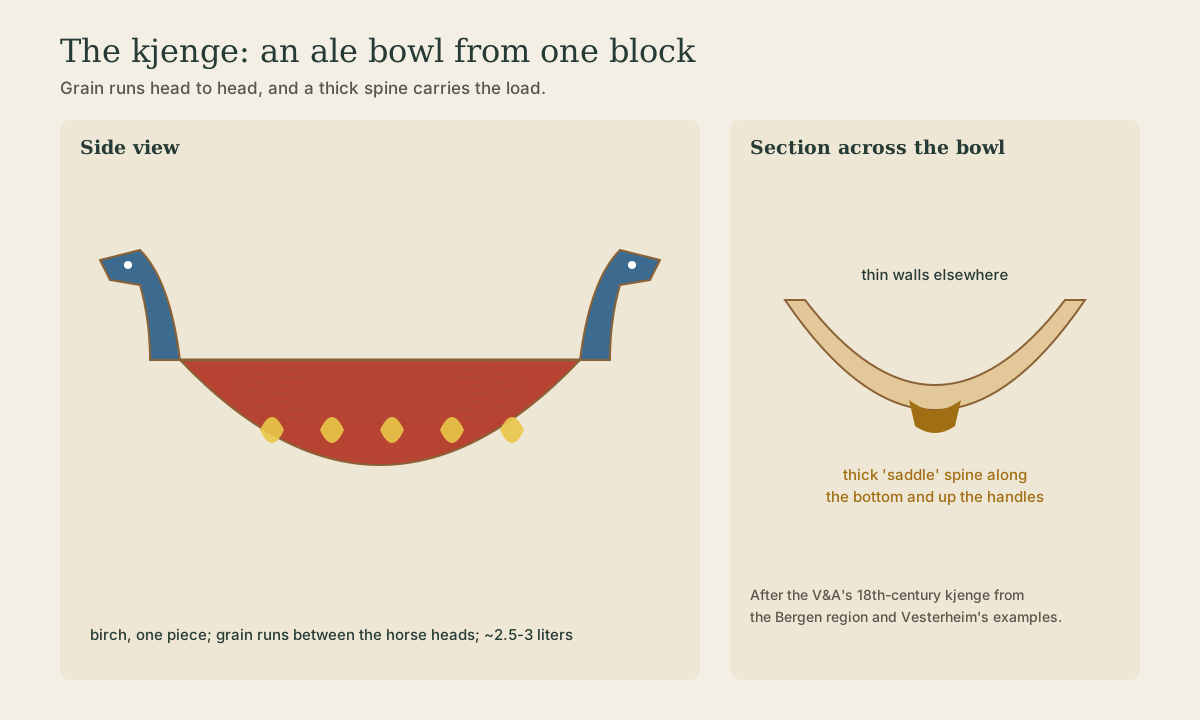
A kjenge is a Norwegian ceremonial ale bowl with a horse head rising at each end as a handle. The V&A’s example, made around 1760-80 probably on Osterøya near Bergen, is typical 1:
- One block of birch, with the two horse-head handles carved from the same piece.
- Grain running transversely between the horse heads, so long grain runs up through each handle.
- A saddle-shaped spine of thicker wood inside the handles and across the bottom, adding strength when the bowl is full; the rest of the wall can be thin.
- Size: about 45 cm across the handles, holding 2.5-3 liters.
- Decoration: blue-painted heads with incised carving, punch marks, and wheel-like circles, and a red bowl with scrolling foliage in yellow and green: rosemaling, which became established in rural Norway around 1750 1.
The horses were associated with protection and fertility, which suited the bowl’s use at weddings 1. These vessels made their impression mainly through shape rather than surface decoration 1.
Playback is optional. If the player is unavailable, open the video at its source.
Quick check
That puts long grain through the handles, which carry the weight of a full bowl.
Quick check
The rest of the wall can be thin.
Quick check
According to the V&A’s catalog entry for its 18th-century kjenge.
Carving a small kjenge
Work green birch (or basswood for practice) and follow the bowl-carving method in Carving Bowls with Adze and Hook Knife in Green Woodworking, with three changes:
- Lay out across the log: split a half-log and draw the bowl so the heads are at either end of the length and the grain runs head to head. Leave the heads as tall blocks.
- Hollow with an adze or gouges and a hook knife, leaving the spine: keep the bottom and the base of each handle thicker, and thin the side walls to about 3/8 in.
- Carve the heads as flat-plane horses: saw the profile of each head and neck, then knife the planes (see Flat-Plane Figure Carving and The Dala Horse). Keep the necks thick at the base where they join the bowl.
Drying: dry it slowly in a paper bag or shavings for a few weeks; even wall thickness helps it dry without cracking (see Turning Blanks and Green Bowls in Wood Drying).
Finish: food-safe oil inside if it will hold drink; paint the outside and the heads with linseed oil or milk paint in the rosemaling colors (see Traditional Paints).
Try it
Carve a two-handled kjenge about 10 in. long from a green birch half-log, with flat-plane horse heads, a thick spine, and thin walls. Paint the outside red and the heads blue once dry.
What to take from this
A kjenge is a Norwegian ale bowl carved from one block of birch, grain running from one horse head to the other, with a thick saddle-shaped spine for strength and thin walls elsewhere, often painted with rosemaling and used at weddings, where the horses meant protection and fertility. Carve one green, lay the grain head to head, leave the spine, and dry it slowly.
Lesson complete
Nice work.
Sources for this lesson
- 1Ale bowl (kjenge), Norway, about 1760-80. Victoria and Albert Museum. verifiedOne block of birch with two horse-head handles; grain runs between the heads; a saddle-shaped spine of thicker wood inside the handles and across the bottom; 2.5-3 liters; painted with rosemaling; horses associated with protection and fertility at weddings.