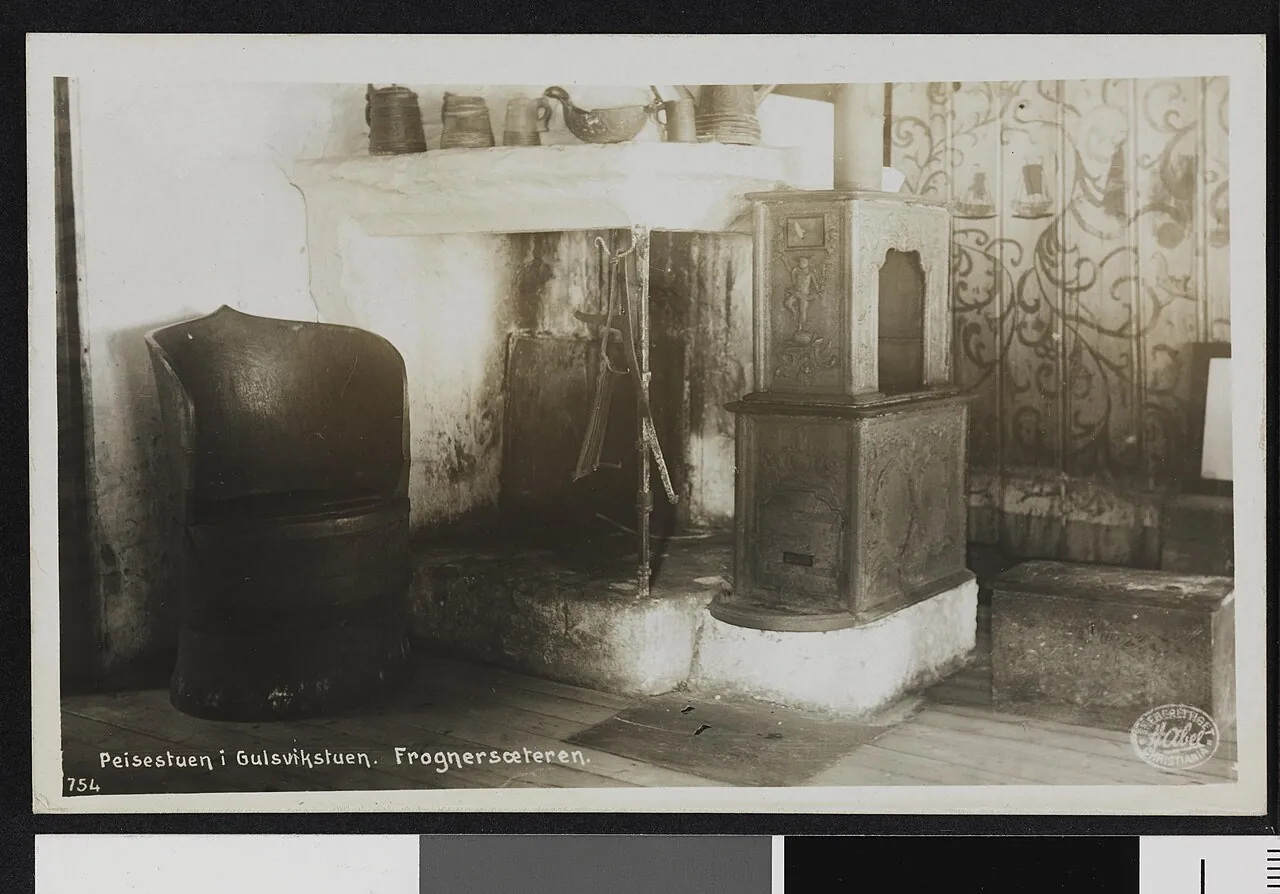
The Kubbestol
The Norwegian chair carved from one log: hollowing a green kubbe, shaping the back, curing it for months before fitting the seat, why hollowing reduces cracking, decoration, and the Wisconsin-made kubbestols of Norwegian immigrants.
- 4 min
- 6 steps
- 3 questions
- Lesson 24 of 204
In this lesson
- How it’s made
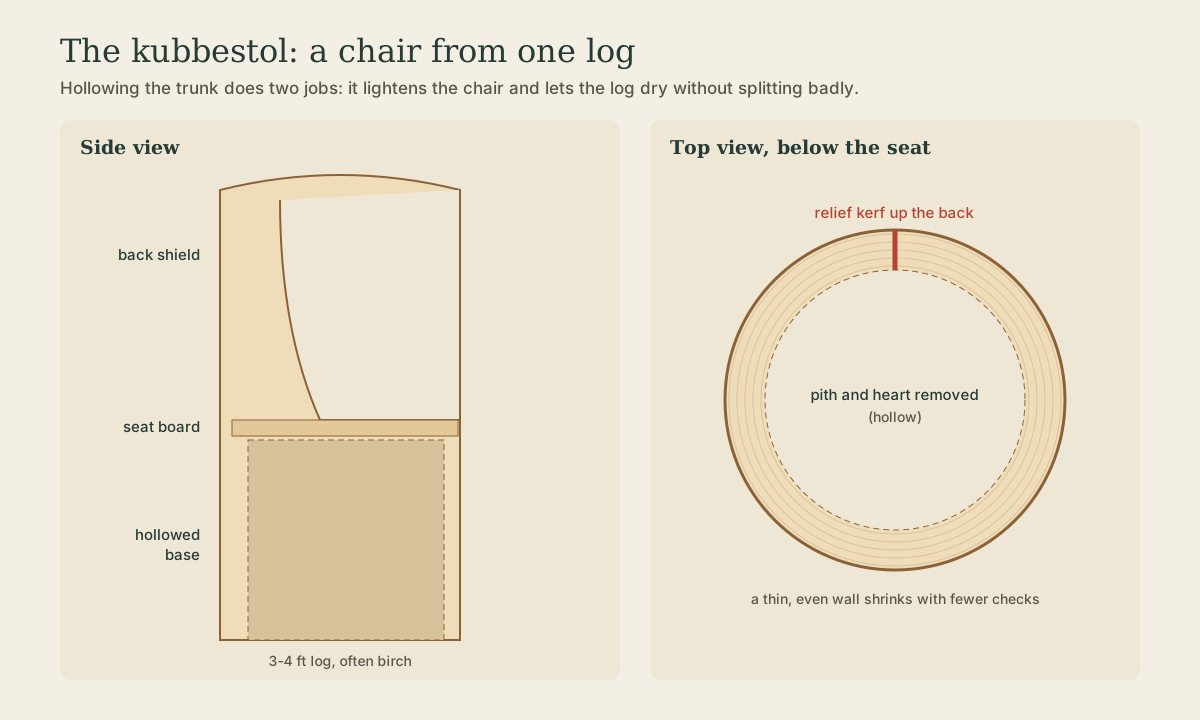
- Why hollow it
- Making one
- Kubbestols in Wisconsin
- Try it
- What to take from this
Picking up where you left off.
How it’s made
A kubbestol is a Norwegian chair carved from a single section of green log, a kubbe 1:

- The log section is hollowed and carved to shape the back.
- The log cures for several months.
- A seat board is cut and fitted into the hollow at the height where the back begins 1.
The full circumference of the log is almost always kept below the seat, so the trunk itself is the base instead of legs 1. In a Norwegian house it was the chair of the head of the household 1. Many were decorated with carving, paint, or both.
Quick check
Fitting it after the log has shrunk keeps the seat from loosening or splitting the log.
Why hollow it
A solid log with its pith in place checks badly as it dries, because the outside shrinks more around the circumference than the inside can follow (see Why Boards Warp and Crack in Wood Drying). Hollowing out the heart leaves a wall of fairly even thickness that can shrink as a ring with far less cracking, and it makes a chair you can actually lift. Some modern makers also cut a single relief kerf up the back, giving the shrinking ring one planned place to open instead of random cracks; it’s a log-furniture technique, not necessarily traditional.
Quick check
A solid log with its pith checks badly as it dries.
Making one
- Log: a straight, sound section of birch, basswood, aspen, or pine, 3-4 ft long and 16-24 in. in diameter, with no rot in the heart.
- Layout: mark seat height (about 17 in.) and the back’s outline: a shield that wraps partway around the sitter.
- Remove the front above the seat with a chainsaw or saw and wedges.
- Hollow the base from the top down to a wall of about 1-1/2 to 2 in., with chainsaw plunge cuts, an auger, gouges, and an adze. Leave a ledge or cut a groove at seat height.
- Cure in a shed out of sun and wind for several months, or longer 1. Seal the end grain.
- Fit the seat: scribe a board to the now-dried opening and fit it on the ledge or in the groove.
- Decorate: carve acanthus or chip patterns on the back, paint it, or both.
Playback is optional. If the player is unavailable, open the video at its source.
Kubbestols in Wisconsin
Kubbestols were too heavy and bulky to bring across the Atlantic, so few came with emigrants. The Wisconsin examples studied by Ann Smart Martin’s group, including full-size chairs and a child-sized one from the mid-1800s, were almost certainly made in Wisconsin by recently settled Norwegian immigrants, some decorated decades later 1. They’re a piece of Old World craft rebuilt from New World logs.
Quick check
Mid-1800s examples survive in Wisconsin collections.
Try it
Start small: a child-size kubbestol from a 2-ft basswood log 12 in. across. Hollow it to a 1-in. wall, carve the back, let it dry for a summer in the shed, then fit a seat and paint it.
What to take from this
A kubbestol is carved from one green log: the base keeps the full circumference, the back is a carved shield, and the seat board is fitted only after the hollowed log has cured for months. Hollowing to an even wall reduces cracking and weight. Norwegian immigrants made them in Wisconsin from local logs, since they were too bulky to bring along.
Lesson complete
Nice work.
Sources for this lesson
- 1Ann Smart Martin. Chairs (Kubbestols). Creators, Collectors, and Communities (LibreTexts). verifiedA kubbestol is carved from a green log section (kubbe), hollowed and shaped, cured for months, then fitted with a seat; the full circumference is usually kept as the base; reserved for the head of the household; Wisconsin examples from the mid-1800s were made by recent immigrants.