Broomcorn: Growing, Cutting, and Curing
Broomcorn is a sorghum bred for its seed head of long, straight straws. What standard and dwarf broomcorn look like, why it must be cut in bloom and cured fast under cover to stay green, how fieldhands 'tabled' the tall stalks for cutting, and how the Shakers turned brooms into one of their great industries.
- 5 min
- 5 steps
- 3 questions
- Lesson 116 of 204
In this lesson
- The plant
- Harvest
- Curing
- The Shakers and brooms
- Try it
Picking up where you left off.
A good broom starts in a field. The straws of a corn broom aren’t corn at all; they’re the seed head of broomcorn, a kind of sorghum.
The plant
The sorghums come in three groups: kafir corn, grown for forage and grain; sweet sorghum, grown for syrup; and broomcorn, whose seed head, the brush, is made into brooms. Broomcorn differs from the others in carrying its seed on long, straight branches. Sorghums have been grown in Italy for eighteen hundred years or more, and broomcorn is thought to have been selected there from sweet sorghums with long-branched heads; the first record of brooms made from it is Italian 1.
There are two types 1:
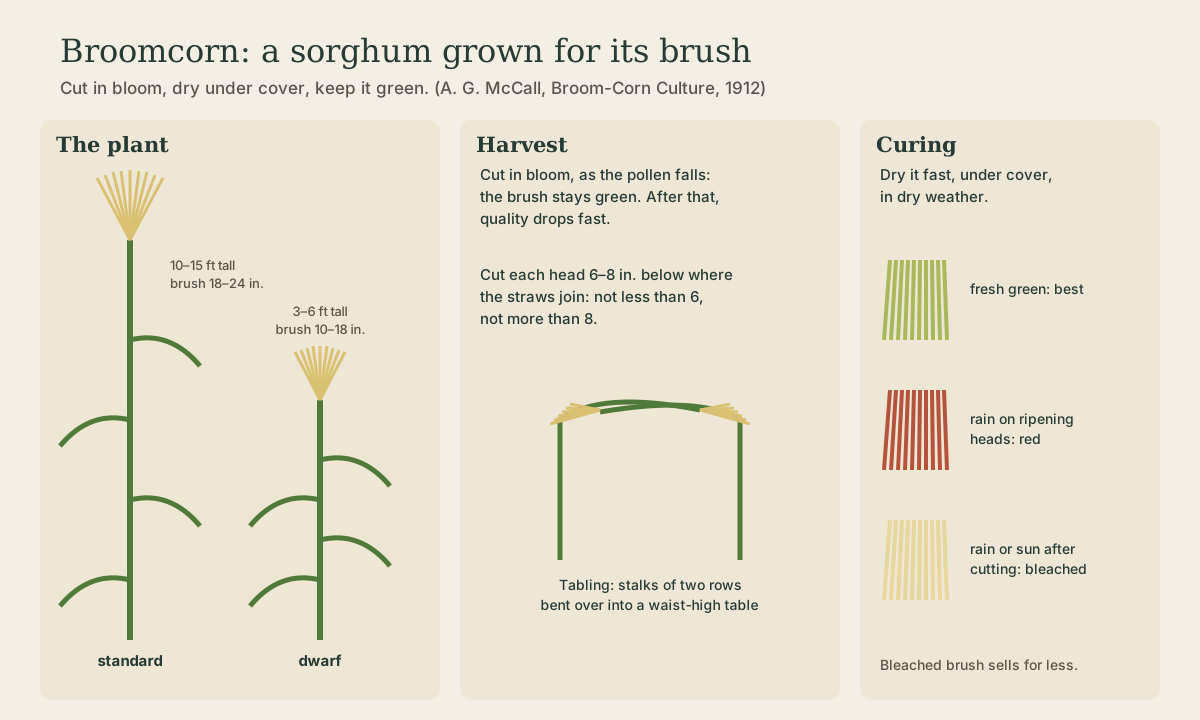
- Standard broomcorn grows 10 to 15 feet tall, with brush 18 to 24 inches long that grows out beyond the top leaf.
- Dwarf broomcorn grows 3 to 6 feet tall, with brush 10 to 18 inches long, partly enclosed in the top leaf sheath.
Broomcorn is a warm-climate plant. It wants moisture early for fast growth and, above all, dry weather at harvest, so the brush dries quickly and keeps its fresh green color. In 1912 the rich prairie soils of the Midwest grew standard broomcorn, and the dry soils of Kansas and Oklahoma the dwarf 1.
Harvest
For brush of high quality and good green color, cut the plants while in bloom, as the pollen is falling. Brush cut then sets practically no seed, so grow a separate patch to ripen for next year’s seed. After bloom, quality deteriorates rapidly 1.
Standard broomcorn is too tall to cut standing, so it was tabled. A worker walking backward between two rows bent a few stalks from one row and then the other into a self-supporting, waist-high table, and the cutters followed with small sharp knives. Cut each head 6 to 8 inches below where the straws join the stalk: not less than 6, and not more than 8, or the brush is worth less. Experienced cutters wore a leather stall on the forefinger and severed the stalk with thumb pressure on the back of the blade 1. Dwarf heads were simply pulled from the sheath 1.
Quick check
Brush cut then stays green; quality drops quickly after bloom.
Curing
Rain is the enemy. Rain on ripening plants turns some heads red. Rain on cut brush makes it lose its green and turn yellow and bleached 1. So the cut brush was hauled in quickly, the seed scraped off, and the brush cured in curing sheds; brush cured out of doors comes out bleached and “will not command the full market price” 1.
Quick check
Rain on ripening heads also turns them red.
The Shakers and brooms
The Shaker broom industry began at Watervliet, New York, in 1798, and became one of the community’s most important sources of income. A popular story credits the Shakers with inventing the flat broom. They didn’t, but they did create a flat broom press that made flat brooms much easier to make. By the 1840s the Shakers at Pleasant Hill, Kentucky, had planted nearly 60 acres of broomcorn and made thousands of brooms a year, selling them at $2 to $3 a dozen; one brother reportedly made 25,000 broom handles in 1859 alone 2.
By 1912, nearly every broom was made in a factory, with hand machines turning out seven or eight dozen a day and power machines far more. But farm families had once grown, cured, and made their own brooms at home 1. That’s the next lesson.
Quick check
Their broom industry began at Watervliet, New York, in 1798.
Try it
Order broomcorn seed in spring and plant a short row in full sun after the soil warms. In the corn belt it blooms after the wheat and oat harvest and before field corn is ready 1. Then cut a few heads with 6 to 8 inches of stem, and hang them to dry in a dark, airy shed or garage. Compare one head left outside in the sun.
Lesson complete
Nice work.
Sources for this lesson
- 1Arthur Gillett McCall. Broom-Corn Culture. Orange Judd Company, New York. 1912. verifiedBroom-corn is a sorghum whose seed is borne on long straight branches, the brush; sorghums cultivated in Italy for 1,800 years, and broom-corn thought to have originated there by selection; first record of brooms from an Italian source. Dwarf: 3-6 ft, brush 10-18 in., partly enclosed in the boot. Standard: 10-15 ft, brush 18-24 in. Needs dry weather at harvest; rain on ripening heads turns them red; rain after cutting bleaches them yellow; cured outdoors gives bleached poor brush. Harvest while in bloom as the anthers fall for good green color; quality deteriorates rapidly after bloom. Tabling: one man bends stalks of two rows into a self-supporting table; cut heads 6 to 8 inches below the attachment of the straws, not less than 6 or more than 8. Formerly brooms were made at home by the farmer and family. Hand directions from the American Agriculturist: soak stalk ends an hour or two; largest stalks outside; foot cord hung from the ceiling wound two or three times and rolled; wind twine 1 1/2 to 2 inches and hide the end under the coil with a loop; for a flat broom press between two narrow boards hinged with leather or in a vise; sew with a 6 to 8 inch needle three or four inches below the winding, stitches passing around a tied twine; two sewings generally enough; sharpen the handle and drive it into the center, fasten with two small nails, clip ends. Alternative: tack twine to the handle and wind stalks on in three tiers. Factory hand machines: seven or eight dozen brooms a day.
- 2Billy Rankin. Swept Away. Shaker Village of Pleasant Hill (Kentucky). 2020. verifiedThe Shaker broom industry began at Watervliet, New York, in 1798 and became one of the most important economic lifelines. The Shakers did not invent the flat broom, but they created a flat broom press that greatly facilitated the process. By the 1840s Pleasant Hill had planted nearly 60 acres of broomcorn and produced thousands of brooms a year; Brother Francis Monfort reportedly made 25,000 broom handles in 1859; brooms sold for $2 to $3 per dozen.