A Timbered Bench
The best first project - an outdoor bench of rough white pine timbers joined like a small frame, with through-tenons, pegs, and braces - teaches layout, mortising, tenoning, and drawboring at a scale you can lift.
- 4 min
- 5 steps
- 3 questions
- Lesson 55 of 204
In this lesson
- Why a bench
- A simple design
- The sequence
- Built to live outdoors
- What to take from this
Picking up where you left off.
Why a bench
Before cutting a building, cut something with the same joints at a smaller scale. North House’s Outdoor Timbered Benches course does exactly this: over three and a half days, students build a sturdy 4.5-foot outdoor bench from rough-cut, sustainably harvested white pine timbers, using joinery common to timber framing and professional timber-framing equipment. The school has built benches in this style for its campus and for downtown Grand Marais 1.
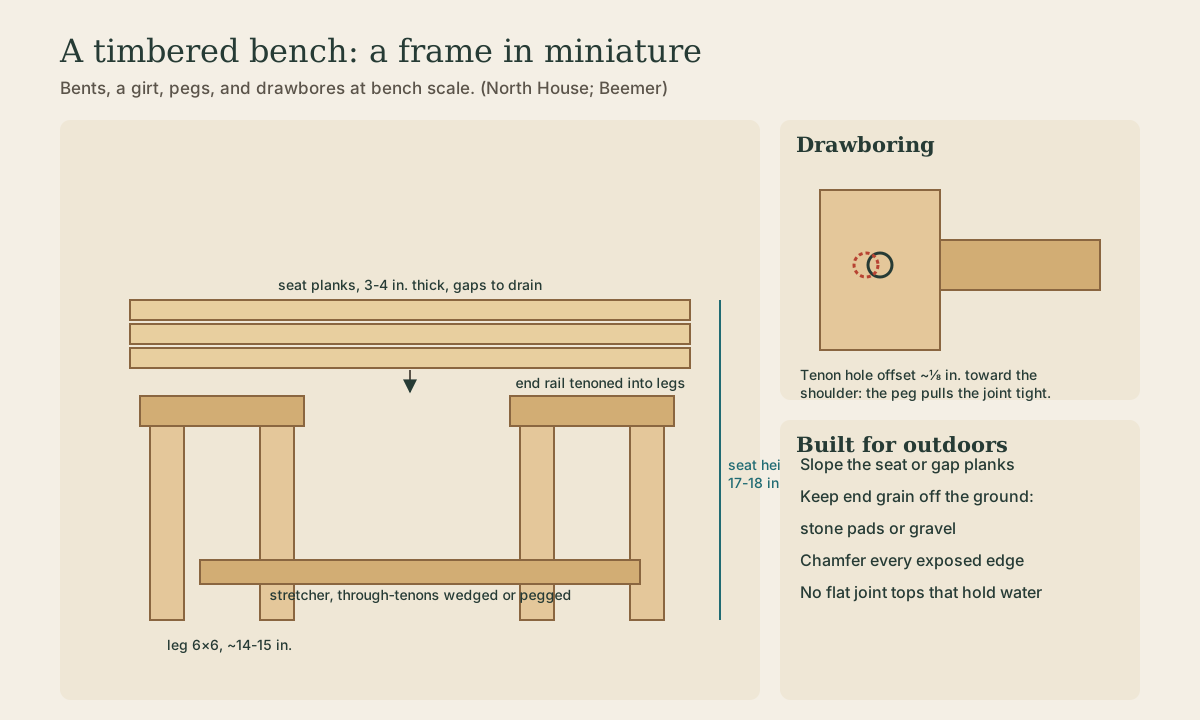
A bench has the anatomy of a frame: two end assemblies like bents (legs joined by rails), long stretchers like girts, maybe braces, all joined with mortise and tenon and pegs. You’ll practice reference faces, layout from them, boring and paring mortises, sawing and paring tenons, drawboring, and assembly, but each piece weighs tens of pounds, not hundreds.
Quick check
A bench has posts, rails, braces, mortises, tenons, and pegs, like a frame, but each piece weighs tens of pounds instead of hundreds.
A simple design
One straightforward layout for a backless outdoor bench about 4 1/2 feet long:
- Legs: four 6×6 (or 4×6) posts, about 14 to 15 inches tall.
- End rails (cross-ties): two 4×6 or 6×6 timbers joining each pair of legs at the top, tenoned into the legs, forming two end frames.
- Stretcher: one 4×6 running the length between the end frames near the bottom, with through-tenons wedged or pegged through the end rails or legs; it keeps the bench from racking lengthwise.
- Seat: a thick slab or two or three 3- to 4-inch-thick planks resting on the end rails, attached with pegs or lag screws in elongated holes.
- Optional braces between legs and stretcher.
Dimensions are a starting point; adjust for your timbers and the seat height you like, typically 17 to 18 inches overall.
The sequence
- Mill and select timbers; choose and mark reference faces on every piece.
- Lay out all mortises on the legs from the reference faces, and all tenons on rails and stretcher from theirs.
- Cut the mortises: bore, chop, pare.
- Cut the tenons: saw shoulders, cut cheeks, pare to fit.
- Dry fit each end frame; mark and bore peg holes, offsetting the tenon holes about 1/8 inch toward the shoulder for drawboring 2.
- Assemble end frames with pegs, then join them with the stretcher, then fit the seat.
- Chamfer all exposed edges; it sheds water, resists splintering, and looks finished.
Quick check
Also slope the seat or gap the planks and keep end grain off the ground.
Built to live outdoors
Outdoor wood rots where water sits. Design and finish for it:
- Slope the seat slightly or leave gaps between planks so water drains.
- Keep end grain off the ground; set legs on stone pads or gravel, or seal leg bottoms well.
- Avoid flat-topped joints that hold water; chamfer and slope tenon ends.
- Finish with a penetrating coating: linseed oil with pine tar and turpentine, or a pigmented oil, renewed every year or two, rather than a film that will peel.
- White pine isn’t naturally decay-resistant; expect to maintain it, or use white oak, tamarack, or cedar for longer life.
What to take from this
A timbered bench, such as North House’s 4.5-foot white pine bench, uses frame joinery at a manageable scale: legs and rails like bents, a stretcher like a girt, pegged and drawbored mortise and tenons. Lay out from reference faces, dry-fit, drawbore, chamfer edges, and design and finish it to shed water.
Practice
Water trapped on flat surfaces and in end grain and joints is what rots outdoor wood. Shed water away from joints and keep end grain off the ground.
Lesson complete
Nice work.
Sources for this lesson
- 1Outdoor Timbered Benches. North House Folk School. verifiedA 4.5-foot outdoor bench built over three and a half days from rough white pine timbers with timber-frame joinery; similar benches stand on campus and in downtown Grand Marais.
- 2Master Carpenter Video: How to Drill and Assemble a Timber-Frame Joint. Fine Homebuilding. 2012. verifiedDrawbored joints with the tenon hole offset about 1/8 inch so the peg pulls the shoulder tight and keeps it tight as timbers shrink.
Further reading
- Will Beemer. Learn to Timber Frame: Craftsmanship, Simplicity, Timeless Beauty. Storey Publishing. 2016. verifiedHeartwood School's step-by-step guide from timber sourcing to a finished 12×16 frame, including layout, joinery, and raising.