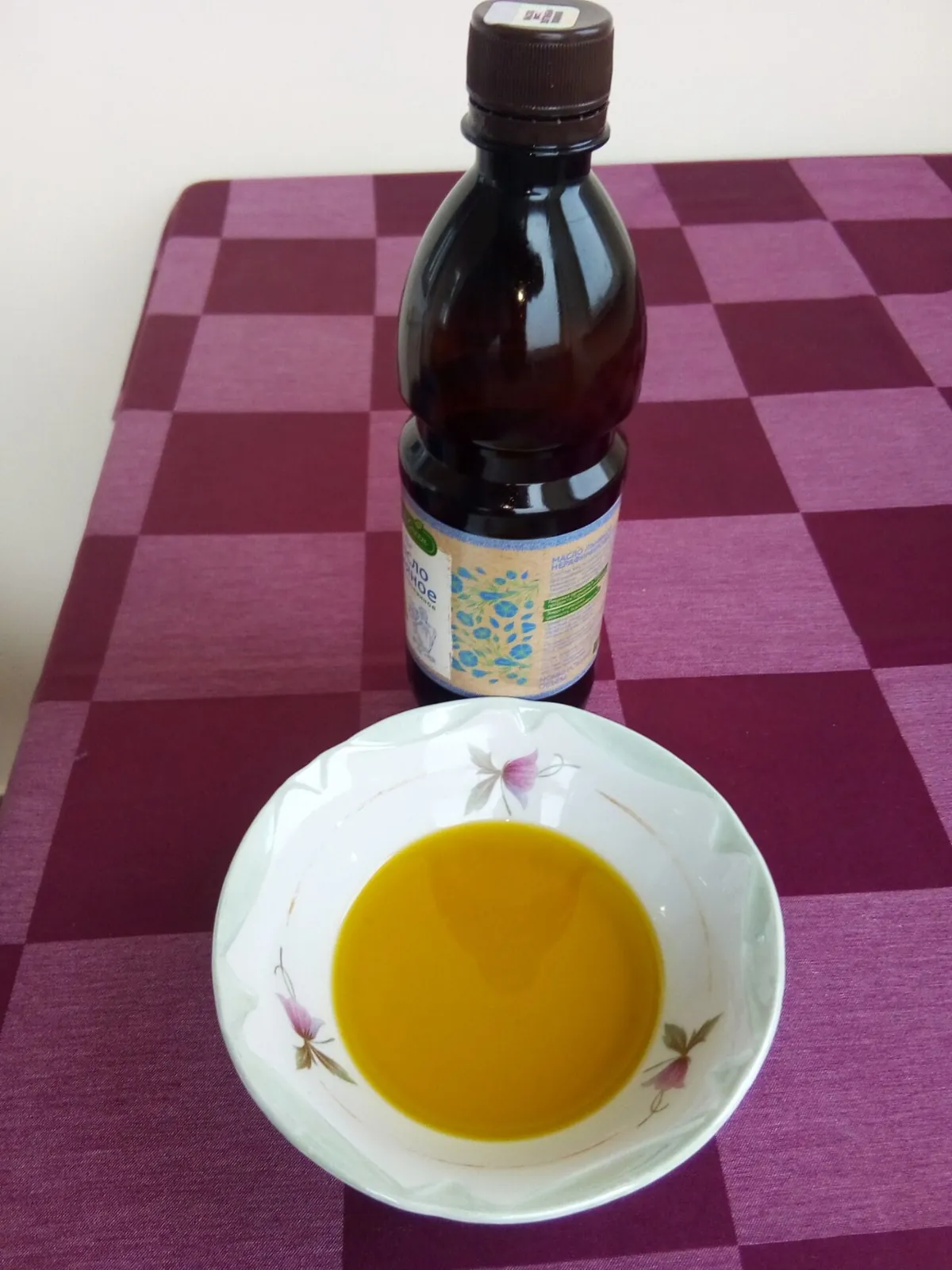
Raw, Boiled, and Polymerized Linseed Oil
Linseed oil cures by reacting with oxygen; raw oil does it slowly, "boiled" oil has metal driers added, and stand oil has been pre-thickened by heat. Choosing between them is choosing cure time, color, and penetration.
- 5 min
- 7 steps
- 3 questions
- Lesson 26 of 204
In this lesson
- What a drying oil is
- Raw linseed oil
- Boiled linseed oil
- Polymerized and stand oil
- Choosing
- Food, toys, and the term “food safe”
- What to take from this
Picking up where you left off.
What a drying oil is
Most vegetable oils stay liquid forever. A few, the drying oils, harden into a solid film when exposed to air. Linseed oil, pressed from flax seed, is the most important; tung and walnut oil are others. They harden because their molecules carry many reactive spots that combine with oxygen from the air and then link to each other, building a solid network 1.
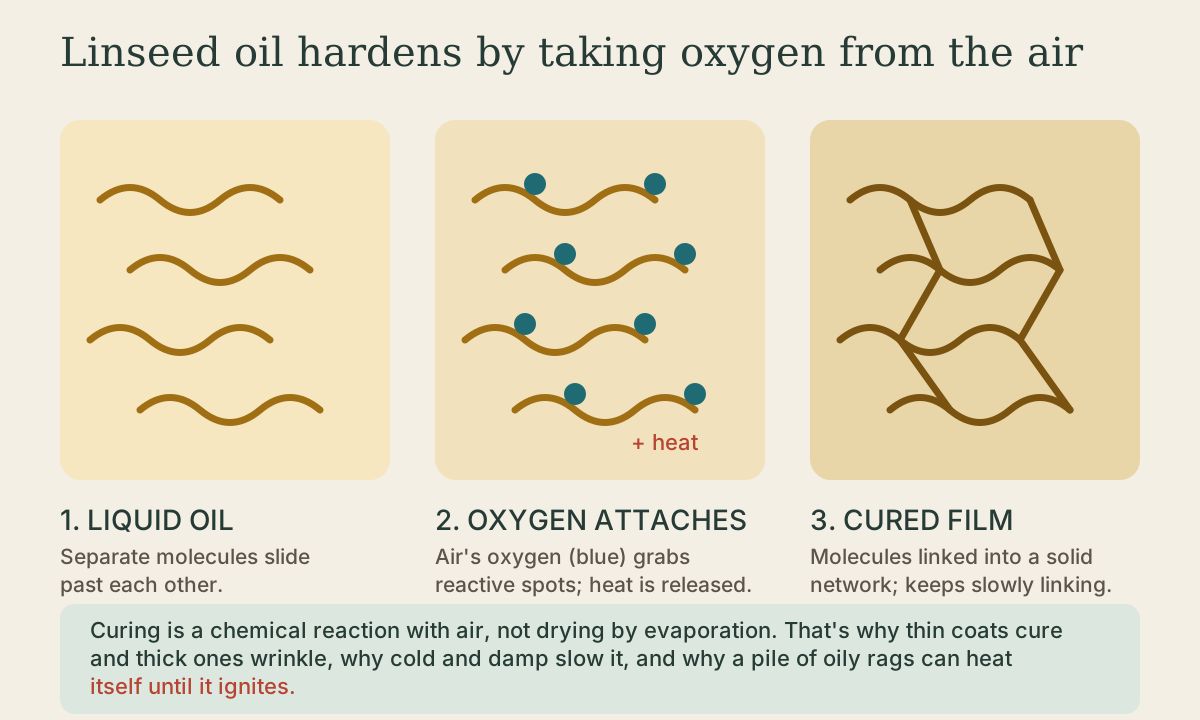
Three consequences follow, and they explain almost everything about working with linseed oil:
- It cures by reaction, not evaporation. Nothing needs to leave; oxygen has to come in. So thin coats cure and thick coats don’t: the surface skins over and seals the oil beneath away from air, and a thick coat wrinkles and stays soft underneath.
- It’s slow, and it keeps going. Linseed oil feels dry in a day or several, but it keeps cross-linking for years. The National Park Service notes that linseed oil paint “continues to dry, or more precisely, to cross-link, over decades,” gradually becoming brittle 2.
- The reaction makes heat. Usually you’d never notice it, but in a pile of oily rags it can build up until they ignite. That gets its own lesson.
Quick check
Cure is a reaction, not evaporation, so apply it thin.
Raw linseed oil
Raw linseed oil is simply pressed and filtered. Cold-pressed oil has been squeezed without heat; refined or purified oil has had proteins, mucilage, and other non-oil matter removed, which reduces mildew food and yellowing.
.jpg)
Raw oil cures slowly, often taking several days to feel dry and weeks to cure through, and longer in cold or damp weather. Its advantage is that slowness: it stays liquid long enough to soak deep into wood, which is why it’s used as a first, penetrating coat on bare exterior wood and why traditional linseed oil paints are often made with it.
Boiled linseed oil
Historically, oil was cooked with metal compounds called driers that speed the reaction with oxygen. The National Park Service notes that adding driers worked best in hot or boiling oil, so “boiled linseed oil was preferable” for paint 2. Lead compounds were once common driers; cobalt and manganese compounds replaced them.
Today, most hardware-store “boiled” linseed oil isn’t boiled at all. It’s raw oil with metallic driers stirred in, and sometimes solvent. It cures much faster, often dry to the touch within a day, which makes it the practical choice for oiling furniture or tool handles 1. Read the label: some products contain substantial mineral spirits.
There’s also genuine heat-treated oil, sold by traditional paint makers as boiled or “kokt” oil, which has been heated with air to start the reaction and dries faster without added driers.
Quick check
Historically driers were cooked into hot oil, hence the name. Today most ‘boiled’ oil is raw oil with metallic driers stirred in.
Polymerized and stand oil
Heating linseed oil to high temperatures without air links its molecules partway, making a thick, honey-like oil called stand oil or polymerized oil. It levels beautifully, dries to a tougher, more flexible, less yellowing film, and resists water better than raw oil. It’s used in high-quality oil paints, glazes, and varnishes, and sold thinned as “polymerized” wiping finishes. Because it’s already partly linked, it penetrates less than raw oil.
Choosing
| Oil | Cures | Penetrates | Typical use |
|---|---|---|---|
| Raw | Slowly (days to weeks) | Deeply | First coat on bare exterior wood; slow traditional paints |
| Boiled (with driers) | Fast (about a day to the touch) | Moderately | Furniture and handles; faster paints |
| Stand/polymerized | Moderate | Least | Durable films, glazes, better paints |
All of them yellow somewhat, especially in the dark (linseed films yellow more out of light and bleach back in it), and all of them are food for mildew to some degree, which matters outdoors.
Food, toys, and the term “food safe”
Once fully cured, drying oils are generally considered safe for food contact, and the Wood Handbook lists tung, linseed, and walnut oils as sealers for bowls and butcher blocks, noting they can take several weeks to cure 3. Boiled oil’s driers are a small fraction and are locked into the cured film; the handbook’s advice is to look for products labeled food grade. Raw oil and pure tung oil avoid the question, at the cost of slower curing.
What to take from this
Linseed oil hardens by reacting with oxygen and cross-linking, so apply it thin and give it air and time. Raw oil cures slowly and penetrates deeply; “boiled” oil usually means raw oil plus metal driers, curing in about a day; stand oil is pre-polymerized by heat for tougher, more level films. The reaction gives off heat, and it keeps going for years.
Practice
The surface skins over as it reacts with air, sealing the oil underneath away from oxygen, so it wrinkles and stays soft.
Lesson complete
Nice work.
Sources for this lesson
- 1Bob Flexner. Understanding Wood Finishing: How to Select and Apply the Right Finish. 3rd revised ed. Fox Chapel Publishing. 2021. verifiedThe standard reference on finish chemistry and practice - drying oils and driers, shellac cuts, waxes, and what each finish can and can't do. Cited at: Oil Finishes.
- 2Preservation Brief 28: Painting Historic Interiors. National Park Service, Technical Preservation Services. verifiedHistoric paint types - linseed oil paint with driers, whitewash, distemper, casein (milk) paint - and how linseed oil paint keeps cross-linking for decades. Cited at: Oil-Based and Water-Based Paints.
- 3Finishing Wood (Wood Handbook, Chapter 16). USDA Forest Service, Forest Products Laboratory, FPL-GTR-282. 2021. verifiedWeathering and UV damage to lignin, sunburned wood and the tape test, paint versus penetrating finishes, drying and nondrying oils, food-contact finishes, and the spontaneous-combustion warning for oily rags. Cited at: Food-Contact Finishes.