Falu Red and Swedish Flour Paint (Slamfärg)
The red of Swedish barns and cottages is a cooked paint of water, rye flour, iron vitriol, and iron-oxide pigment from the Falun copper mine; it breathes, weathers to a soft matte, and is renewed simply by brushing on more.
- 5 min
- 7 steps
- 3 questions
- Lesson 33 of 204
In this lesson
- The color of the Swedish countryside
- What is in it
- Cooking it
- Applying it
- How it ages
- Other colors
- What to take from this
Picking up where you left off.
The color of the Swedish countryside
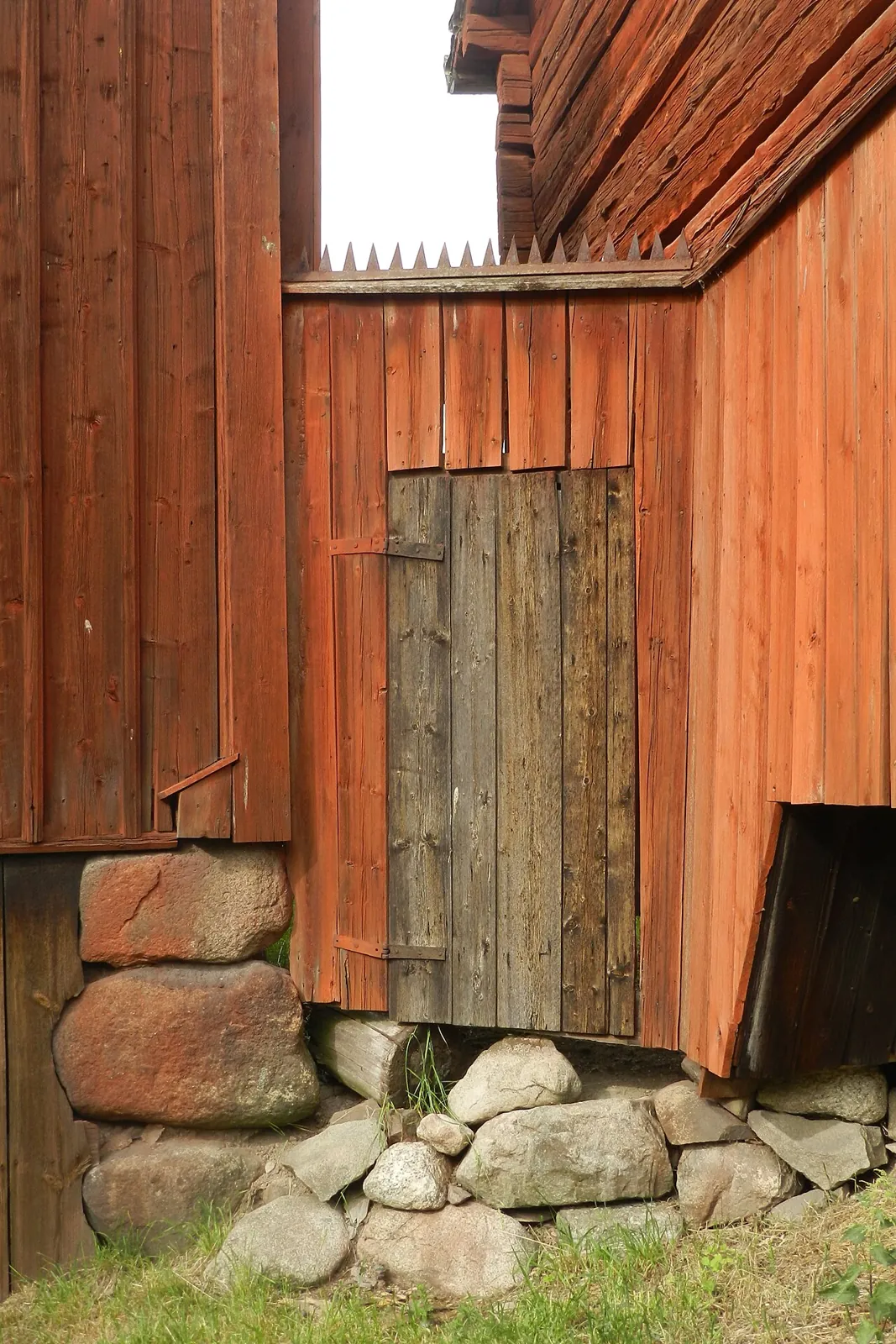
Drive through rural Sweden, Norway, or Finland and the barns, cottages, and outbuildings are a deep, matte, slightly brownish red. That’s Falu red (falu rödfärg), named for the copper mine at Falun in Dalarna, which was one of Europe’s great copper producers in the 1600s and is now a UNESCO World Heritage site. Over centuries the mine’s waste heaps weathered into iron-rich sludge; roasted, it turns from yellow to red, and ground, it becomes the pigment. Falun red was first used to imitate the brick houses of the wealthy, then spread to farms everywhere because it was cheap and protective. The company that still makes it at Falun has manufactured the pigment since 1764, and “Falu Rödfärg” is a protected name for paint made with Falun pigment 1.

Other red earth and iron oxide pigments make the same kind of paint; Swedes call the whole family slamfärg, literally “sludge paint,” or simply rödfärg.
What is in it
Slamfärg is a cooked flour paint:
- Water.
- Rye or wheat flour, cooked to a starch paste, the binder.
- Iron vitriol (iron(II) sulfate), which helps the paint adhere and resist mold and moss.
- Red pigment: Falun red, red ochre, or iron oxide red.
- Often a little linseed oil, emulsified with a bit of soft soap, for water resistance.
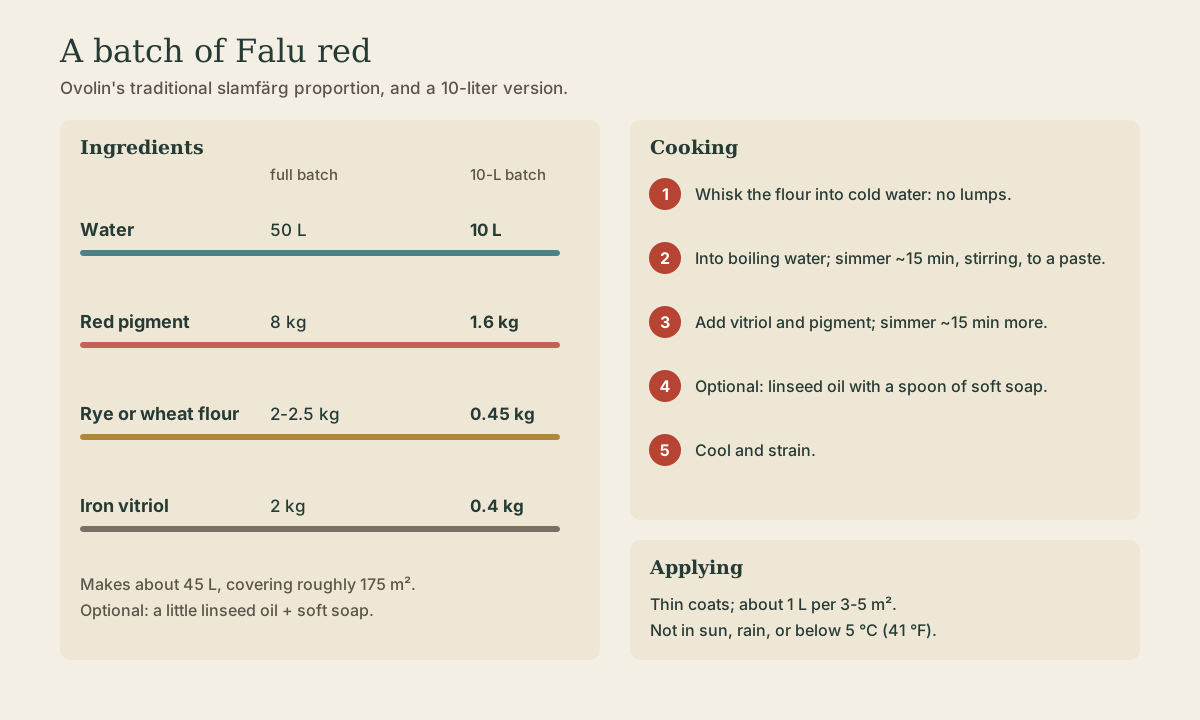
Ovolin, a Swedish paint maker, gives a traditional proportion: 50 liters of water, 2 kg iron vitriol, 2 to 2.5 kg rye or wheat flour, and 8 kg red pigment, for about 45 liters of paint covering roughly 175 square meters 2. Scaled down, that’s about 10 L water, 400 g vitriol, 450 g flour, and 1.6 kg pigment.
Quick check
Slamfärg is a cooked flour paste carrying pigment. Iron vitriol is added, and many recipes stir in a little linseed oil and soap.
Quick check
Iron vitriol helps adhesion and resists mold; a little emulsified linseed oil is optional.
Cooking it
The general method, scaled to a kitchen-pot batch:

- Whisk the flour into a few liters of cold water until there are no lumps.
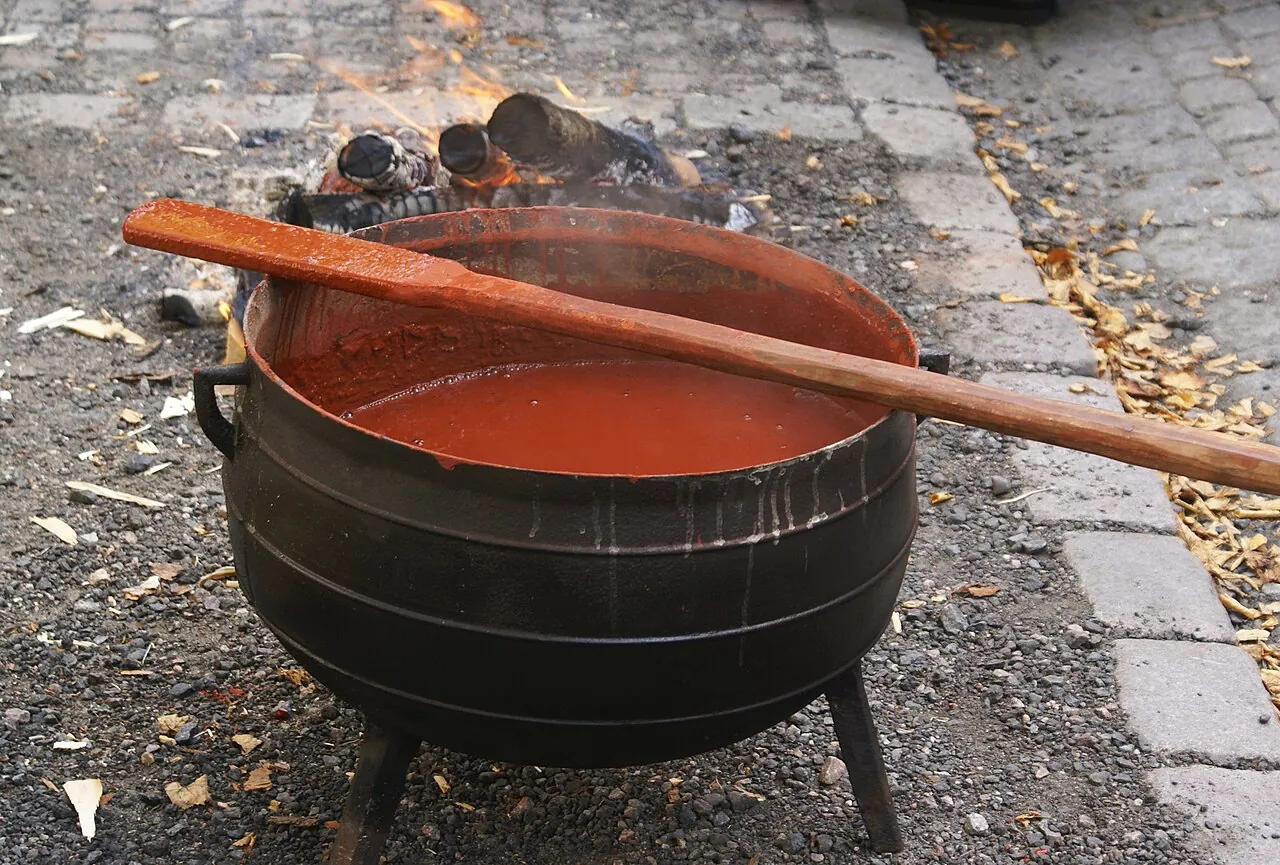
- Bring the rest of the water to a boil in a large old pot (one you won’t cook food in again) and stir in the flour slurry. Simmer, stirring constantly, about 15 minutes, until it thickens to a starch paste.
- Stir in the iron vitriol and the pigment and keep simmering and stirring another 15 minutes or so.
- If using linseed oil, stir in a modest amount with a spoonful of soft soap to emulsify it, and simmer a few minutes more.
- Let it cool and strain it.
Iron vitriol is an irritant: wear gloves and eye protection, and keep it away from children and pets. Work outdoors or with ventilation.
Applying it
Ovolin’s guidance 2:
- Prepare: brush off loose old paint and dirt, rinse with water, and let it dry.
- Apply thin. Thick coats flake. When repainting, the first coat can be thinned 15 to 20 percent with water.
- Coverage: about 1 liter per 3 to 5 square meters.
- Weather: not in direct sun or rain, and not below 5 °C (41 °F). A second coat can go on the next day.
Falu red is meant for rough-sawn boards. The Wood Handbook notes that coatings on saw-textured wood generally last longer because the rough surface takes more finish 3, and a thin porous paint suits that surface perfectly. On planed boards it wears faster.
Playback is optional. If the player is unavailable, open the video at its source.
How it ages
Slamfärg doesn’t form a film that peels. It breathes, letting the wood dry, and weathers by slowly chalking: the surface powder rubs off on your hand, and the color softens. After roughly a decade, sooner on sunny, weather-beaten walls, you brush off the loose powder and paint again. No scraping, no sanding. That’s the appeal: the same buildings have been repainted this way for centuries.
It doesn’t go over modern film paints, which it can’t penetrate, and it isn’t for planed trim, windows, or doors: Swedish practice is Falu red on the walls and linseed oil paint, often white, on trim, corner boards, and window frames, where a tougher film is needed 4.
Other colors
The same recipe with other earth pigments makes the yellow ochre, gray, and green slamfärg also seen on Nordic buildings, although red, the cheapest and most durable pigment, dominates.
What to take from this
Falu red is slamfärg: cooked rye or wheat flour paste with iron vitriol and red iron-oxide pigment, often with a little linseed oil. Cook it, strain it, and brush it thin onto rough-sawn wood in mild, dry weather above 5 °C. It breathes, weathers by chalking rather than peeling, and is renewed every decade or so by brushing off the dust and recoating; trim gets linseed oil paint instead.
Practice
Thin, penetrating coatings last longer on saw-textured wood because it takes up more finish, and a rough surface weathers more evenly.
Lesson complete
Nice work.
Sources for this lesson
- 1Falu Rödfärg. Falu Rödfärg (Stora Kopparbergs Bergslag). verifiedPigment manufactured from the Falun copper mine since 1764; Falu Rödfärg is a protected name for paint with Falun pigment.
- 2Slamfärg Recipe. Ovolin (Swedish paint maker). verifiedA traditional batch - 50 L water, 2 kg iron vitriol, 2 to 2.5 kg rye or wheat flour, 8 kg red pigment - covering about 175 m²; thin coats, not in sun, rain, or below 5 °C.
- 3Finishing Wood (Wood Handbook, Chapter 16). USDA Forest Service, Forest Products Laboratory, FPL-GTR-282. 2021. verifiedWeathering and UV damage to lignin, sunburned wood and the tape test, paint versus penetrating finishes, drying and nondrying oils, food-contact finishes, and the spontaneous-combustion warning for oily rags. Cited at: Textures.
- 4Kulturkulör: Traditional Swedish Colours. Swedish National Heritage Board (Riksantikvarieämbetet). verifiedLinseed oil paint on Scandinavian wooden buildings since the 17th century, and the traditional pigment palette - ochres, siennas, umbers, iron oxide reds, ultramarine, chromium oxide green.
Previous: Milk Paint on Furniture: Layers, Wear, and Topcoats