Rag Rugs (Trasmattor)
The Scandinavian rag rug: why farm households wove old clothes into runners, choosing and cutting fabric strips, a strong cotton warp at a wide sett, weft-faced plain weave with planned stripes, beating hard, and finishing the ends so they last.
- 4 min
- 6 steps
- 3 questions
- Lesson 70 of 204
In this lesson
- Why rag rugs
- Fabric
- Warp and sett
- Weaving the rug
- Finishing
- What to take from this
Picking up where you left off.
Why rag rugs
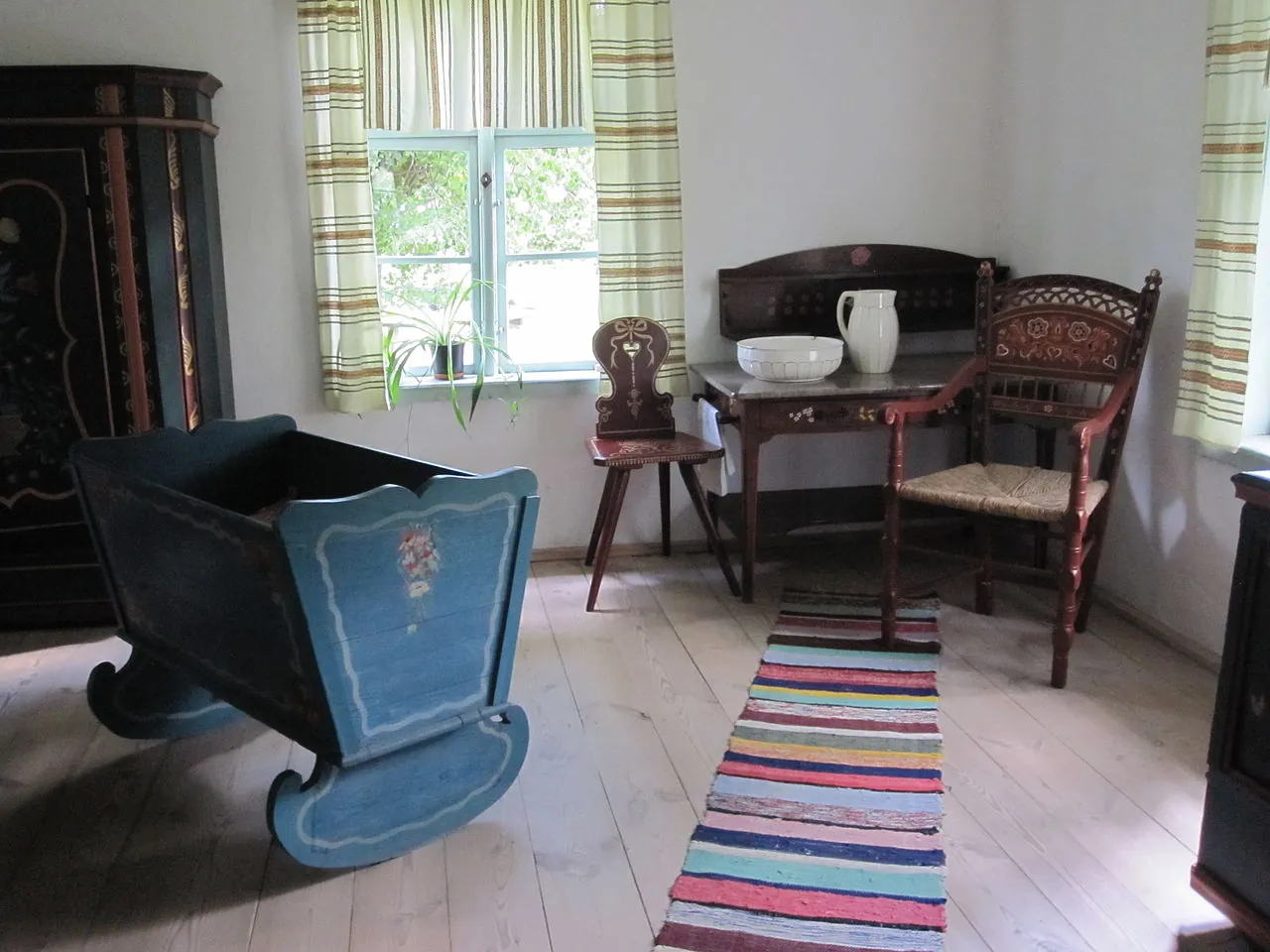
Scandinavian households have covered floors with trasmattor (rag rugs; singular trasmatta) for more than 150 years, weaving leftover and worn-out fabric into striped runners 1. They warmed cold floors, blocked drafts, and took the dirt, and in winter, when farm work slowed, the loom came out; some families wove rugs for sale 1. Runners about two feet wide and as long as a hallway were typical 1. The tradition came to the Upper Midwest with Swedish and Norwegian immigrants and is still widely woven.
.jpg)
Fabric
- Cotton sheeting, shirts, and quilting fabric give smooth, even weft; old jeans make heavy, durable rugs; knits stretch and pack softly.
- Strip width: thinner fabric is cut wider. Roughly 1-1.5 inches for light cotton sheeting, 1/2-3/4 inch for heavy denim or wool.
- Cutting: cut or tear across the fabric, joining strips by overlapping the ends in the shed, or cut one continuous strip by zigzagging across a garment.
- Amount: a lot. A 2 × 5 foot rug can use 3-5 pounds of fabric.
Sort strips by color before you start so you can plan stripes.
Warp and sett
Rag rugs are weft-faced plain weave: the thick weft packs down to cover a widely spaced warp 2.
- Warp: strong, smooth cotton - 8/4 carpet warp or cotton seine twine.
- Sett: wide, often around 8-12 ends per inch, so the weft can pack between the ends.
- Selvedges: double the outermost two or three ends for strength.
- Loom: a sturdy floor loom with a heavy beater is ideal; a rigid heddle works for small mats.
Quick check
A strong cotton warp at a wide sett, beaten hard, disappears under the rags.
Weaving the rug
- Weave a header of an inch or two in warp yarn to spread and anchor the warp.
- Weave the rags in plain weave, laying each strip in loosely with an angle or arc so it has enough slack to wrap the warp, folding the strip in half at the selvedge turns.
- Beat hard, often twice, with the shed closed for the second beat, so the weft packs tight.
- Stripes: change colors in planned bands. Repeating sequences, mirrored at the center, were the classic trasmatta design 1.
- Keep the width constant: measure often and loosen the weft if the rug draws in.
Playback is optional. If the player is unavailable, open the video at its source.
Quick check
Stripes were the most popular trasmatta design.
Finishing
Weave another header at the end. Cut the rug off, and knot the warp ends in groups of four or six against the header, or braid or weave them back into the rug. Machine or hand wash cotton rag rugs in cold water and dry them flat.
Quick check
A tight header plus knots keeps the weft from creeping out.
What to take from this
Trasmattor turn worn fabric into durable striped runners. Cut cotton strips about 1-1.5 inches wide (narrower for heavy fabric), warp in strong cotton at about 8-12 ends per inch, weave weft-faced plain weave with the rag laid in at an angle and beaten hard, plan the stripes, and finish with a header and knotted ends.
Lesson complete
Nice work.
Sources for this lesson
- 1The History of Trasmattas: The Swedish Rag Rugs. Doris Leslie Blau. verifiedDealer history of Scandinavian rag rugs woven from leftover fabric for more than 150 years; striped runners about two feet wide woven on home looms in late winter.
- 2Weaving. Wikipedia. 2026. verifiedWarp and weft, shed, heddles, shafts, reed and beater; plain, twill, and satin weaves; warp-weighted, backstrap, and floor looms; sett, ends and picks per inch.