Rigid Heddle Weaving
The simplest real loom: how a rigid heddle's slots and holes make both sheds, choosing a reed for your yarn, direct warping with a peg, threading, weaving a first scarf with even beat and clean selvedges, and finishing with a hemstitch or twisted fringe.
- 4 min
- 6 steps
- 3 questions
- Lesson 68 of 204
In this lesson
- Slots and holes
- Choosing a reed
- Warping
- Weaving
- Finishing
- What to take from this
Picking up where you left off.
Slots and holes
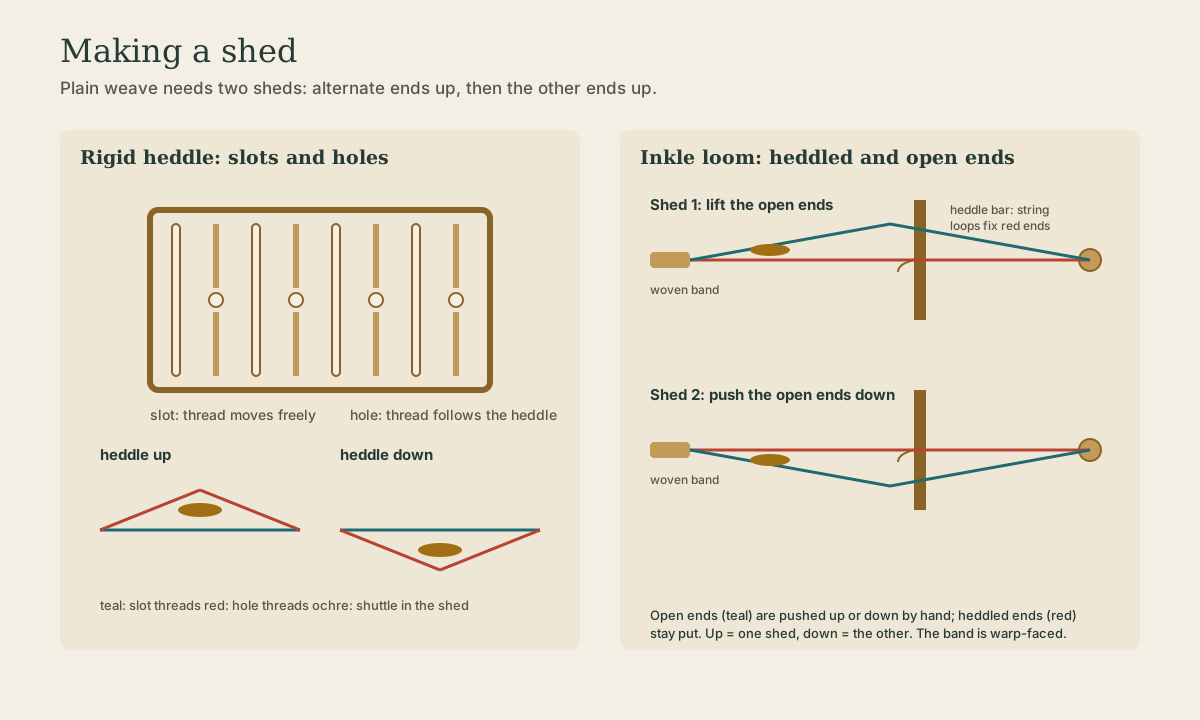
A rigid heddle is a single reed with alternating slots and holes (eyes) 1. Threads in the slots can move up and down freely; threads in the holes follow the heddle 1.
- Heddle up: hole threads rise above slot threads - one shed.
- Heddle down: hole threads drop below - the other shed.
That’s plain weave with one simple part. The same heddle is the beater, packing each pick into place 1. Pick-up sticks and a second heddle add patterns and finer setts.
Quick check
Threads in slots stay level; threads in holes follow the heddle.
Choosing a reed
The reed’s dents per inch set the sett. Ashford’s reeds run from about 2.5 to 15 dents per inch 1. A rough match: wrap the yarn around a ruler without overlapping, count wraps per inch, and use about half that for plain weave. Worsted-weight wool is often woven at 8 dents; sport weight at 10-12.
Warping
Direct peg warping threads the heddle and measures the warp in one pass 2:
- Clamp the loom to one end of a table and a warping peg at the warp length away (Ashford’s first scarf uses 2 m, allowing for fringe) 1.
- Tie the yarn to the back warp stick, and with a threading hook pull a loop of yarn through a slot and over the peg. Repeat across the width: each slot holds two ends 2.
- Cut the loops at the peg, and wind the warp onto the back beam under even tension, with paper or warp sticks between layers.
- Thread the holes: from each slot, move one end into the hole next to it 2.
- Tie the ends to the front stick in small bundles and even out the tension.
Playback is optional. If the player is unavailable, open the video at its source.
Quick check
Threading and measuring happen in one pass.
Weaving
- Spread the warp with a few picks of scrap yarn first.
- Pass the shuttle, lay the weft in at an angle (a gentle arc), change the shed, then beat. Pulling the weft straight across draws the cloth in and breaks edge threads.
- Aim for an even beat, about as many picks per inch as ends per inch for balanced cloth.
- Wrap the weft around the edge end at each turn for clean selvedges.
- Advance the warp often so you weave close to the front.
Quick check
Lay the weft in at an angle (an arc or ‘bubble’) so it has enough length to go over and under.
Finishing
Leave unwoven warp at each end. Secure the edge with a hemstitch worked with a needle on the loom, or tie overhand knots, or twist pairs of bundles into a twisted fringe. Wash woolens in warm water with gentle squeezing to full them slightly: the cloth softens and blooms.
What to take from this
A rigid heddle’s slots and holes make both plain-weave sheds as it moves up and down, and it doubles as the beater. Pick a reed at about half the yarn’s wraps per inch, direct-warp with a peg (two ends per slot, then one to each hole), lay the weft in at an angle, beat evenly, and finish with a hemstitch or twisted fringe.
Lesson complete
Nice work.
Sources for this lesson
- 1Learn to Weave on the Rigid Heddle Loom. Ashford Handicrafts. verifiedManufacturer booklet; reed with eyes (holes) and slots makes the shed and beats; reeds from 2.5 to 15 dents per inch; direct warping with a peg; a first scarf of 84 ends.
- 2Rigid Heddle Warping: Direct or Indirect?. Schacht Spindle Company. verifiedDirect peg warping threads the heddle and measures the warp in one pass; two ends per slot, then one moved to the adjacent hole.
Further reading
- Weaving. Wikipedia. 2026. verifiedWarp and weft, shed, heddles, shafts, reed and beater; plain, twill, and satin weaves; warp-weighted, backstrap, and floor looms; sett, ends and picks per inch.