How Cloth Is Built: Warp and Weft
The vocabulary of weaving: warp and weft, the shed, heddles, shafts, reed and beater; plain weave, twill, and satin; sett, ends and picks per inch; warp-faced and weft-faced cloth; and the main kinds of looms.
- 3 min
- 6 steps
- 3 questions
- Lesson 67 of 204
In this lesson
- Warp and weft
- Parts of a loom
- Three basic structures
- Density and balance
- Kinds of looms
- What to take from this
Picking up where you left off.
Warp and weft
All woven cloth is two sets of threads at right angles 1:

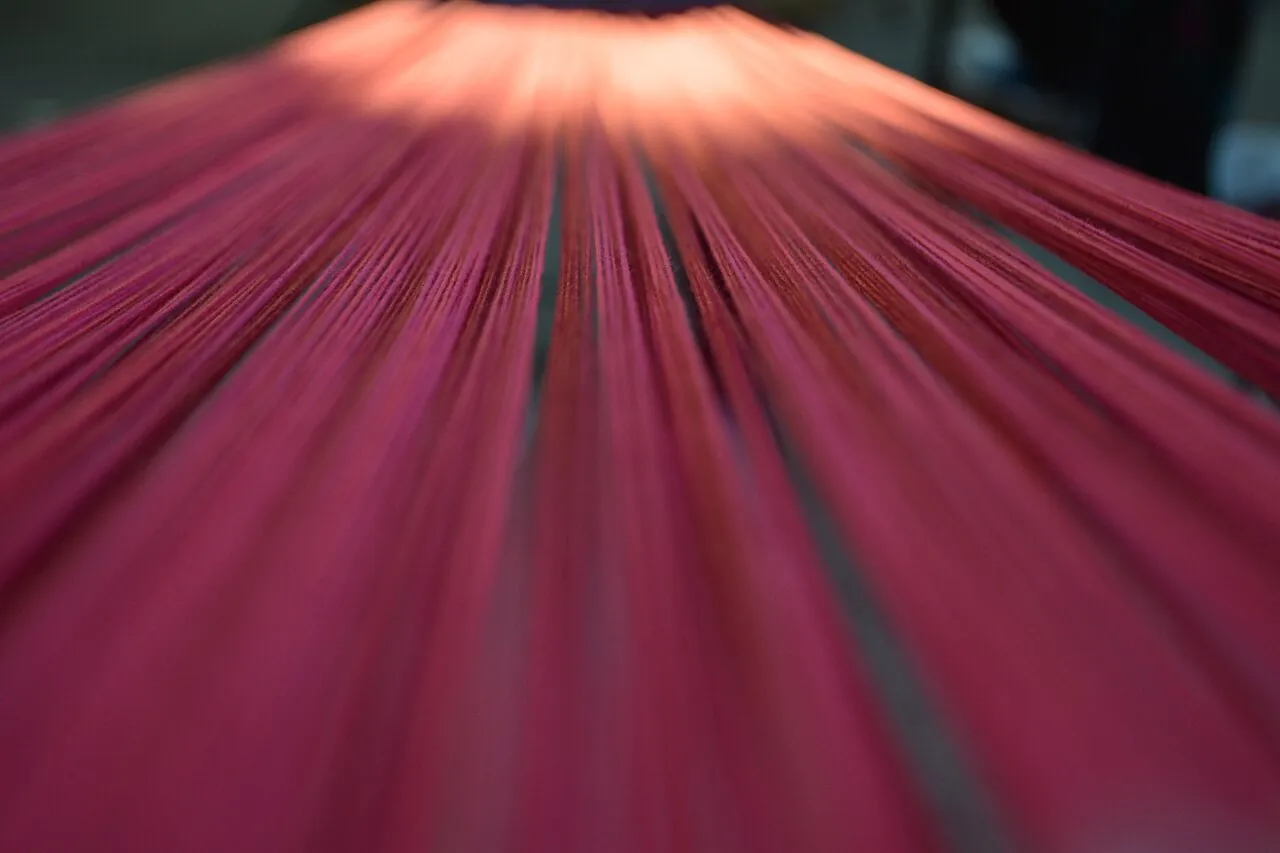
- Warp: the lengthwise threads, put on the loom first and held under tension. Each thread is an end.
- Weft: the crosswise thread passed over and under the warp. Each pass is a pick.
The edges where the weft turns are the selvedges.
Quick check
The weft is then passed over and under the warp, one pick at a time.
Parts of a loom
| Part | Job |
|---|---|
| Warp beam and cloth beam | hold the warp under tension; woven cloth winds onto the front beam |
| Heddles | wire or string loops, each holding one warp end |
| Shafts (harnesses) | frames carrying heddles; raising a shaft lifts its ends |
| Shed | the opening between raised and lowered ends |
| Shuttle | carries the weft through the shed |
| Reed | a comb that spaces the warp and, in the beater, packs each pick into place |
Weaving is a loop: open a shed, pass the weft, beat it in, change the shed, repeat.
Quick check
Heddles on shafts (or a rigid heddle) lift some ends to open it.
Three basic structures
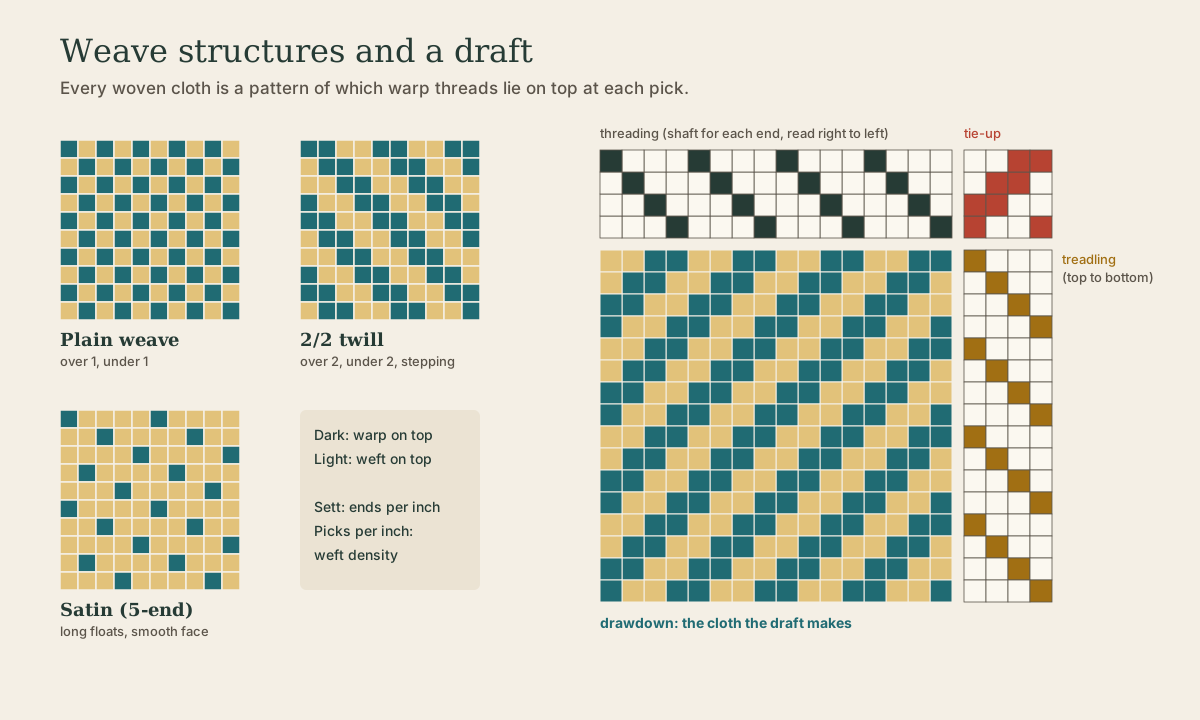
| Structure | Interlacing | Character | Examples |
|---|---|---|---|
| Plain (tabby) | over 1, under 1, alternating each pick | firm, the most interlacings | muslin, canvas, linen dish towels |
| Twill | over and under 2 or more, stepping one end each pick | diagonal lines, drapes, hides soil | denim, tweed, herringbone |
| Satin | long floats, interlacings spread out | smooth, shiny face, snags easily | satin, damask grounds |
Quick check
Denim is a twill; plain weave is over one, under one with no step.
Density and balance
- Sett: warp density, in ends per inch (EPI), set by the reed 1. Too open and the cloth is sleazy; too dense and it’s stiff.
- Picks per inch (PPI): weft density, set by how hard you beat.
- Balanced cloth has equal EPI and PPI, so warp and weft show equally.
- Warp-faced cloth packs the warp so tight it hides the weft (inkle bands).
- Weft-faced cloth packs the weft to hide the warp (tapestry, rag rugs).
Rigid heddle reeds come in about 2.5 to 15 dents per inch, setting the sett for that warp 2.
Kinds of looms
- Backstrap: the weaver’s body tensions the warp; portable and ancient 1.
- Warp-weighted: warp hangs from a beam with stone weights; Viking-age and earlier Nordic looms.
- Inkle and band looms: narrow warp-faced bands (next module).
- Rigid heddle: one heddle with slots and holes; plain weave on a small frame (next lesson).
- Table and floor looms: four or more shafts, lifted by levers or treadles, for twills and patterns.
What to take from this
Warp is lengthwise and tensioned; weft crosses it pick by pick through a shed opened by heddles on shafts, then beaten in with the reed. Plain weave goes over one, under one; twill steps to make diagonals; satin floats for a smooth face. Sett (EPI) and beat (PPI) decide whether cloth is balanced, warp-faced, or weft-faced.
Lesson complete
Nice work.
Sources for this lesson
- 1Weaving. Wikipedia. 2026. verifiedWarp and weft, shed, heddles, shafts, reed and beater; plain, twill, and satin weaves; warp-weighted, backstrap, and floor looms; sett, ends and picks per inch.
- 2Learn to Weave on the Rigid Heddle Loom. Ashford Handicrafts. verifiedManufacturer booklet; reed with eyes (holes) and slots makes the shed and beats; reeds from 2.5 to 15 dents per inch; direct warping with a peg; a first scarf of 84 ends.